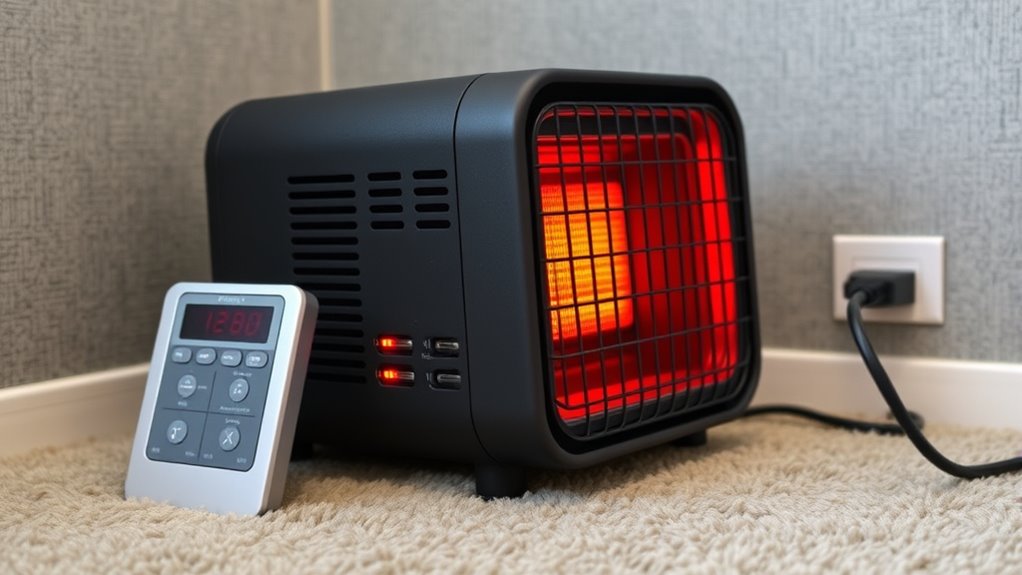
To keep yourself safe, place your space heater on a flat, stable surface away from flammable materials like curtains or bedding, and guarantee it’s at least three feet from anything combustible. Use heaters with built-in safety features such as tip-over and overheat protection, and double-check they’re working properly before use. Always turn off your heater when leaving the room or going to bed, and consider models with automatic shutoff. Continuing guarantees you’re aware of essential safety tips and features to prevent accidents.
Key Takeaways
- Place space heaters on stable, level surfaces away from flammable materials and obstructions for safe operation.
- Ensure safety features like tip-over and overheat protection are functional before use.
- Maintain at least a three-foot clearance around the heater from furniture, curtains, and bedding.
- Use heaters with automatic shutoff timers or turn them off when unattended or sleeping.
- Regularly inspect cords and units for damage, replacing or repairing as needed to prevent fire hazards.
Space heaters provide a convenient way to stay warm, but they can pose serious safety risks if not used properly. One of the most important aspects of safe operation is understanding fire hazard prevention. To minimize the risk of fire, always keep your space heater away from flammable materials like curtains, bedding, furniture, and paper. Never place the heater where it could be knocked over or come into contact with liquids, as this increases the chance of sparks or electrical shorts that could ignite a fire. Additionally, guarantee the space heater is on a stable, level surface to prevent accidental tipping. Regularly inspecting the unit for signs of damage—such as frayed cords, cracks, or scorch marks—is essential. Damaged heaters should be repaired or replaced immediately to prevent potential fires.
Electrical safety guidelines are equally critical in maintaining a safe environment. Use grounded outlets and avoid plugging the heater into extension cords or power strips, which can overload and cause overheating. If your space heater has a cord, keep it untangled and away from high-traffic areas to prevent tripping and accidental disconnection. When plugging in the heater, make sure the plug fits snugly into the outlet; loose connections can lead to overheating and increase fire risk. Never operate a space heater with a damaged cord or plug, and always unplug it when not in use or when you leave the room. Following these electrical safety guidelines helps prevent electrical fires and guarantees the heater functions efficiently.
Placement is another critical factor in guaranteeing safe operation. Position your heater in a location where it won’t be obstructed by furniture or curtains, as blocked airflow can cause overheating. Keep it at least three feet away from anything combustible, and never leave it running unattended for long periods. If your heater has shutoff features—such as tip-over or overheat protection—make sure they are functional and activated. These features are designed to automatically turn off the heater if it becomes unsafe, providing an added layer of protection. Always read and follow the manufacturer’s instructions regarding placement and safety features, because improper placement can negate these safety measures.
Finally, develop a habit of turning off your space heater when you go to bed or leave the house. Using a timer or a heater with an automatic shutoff helps prevent accidents caused by forgetfulness. Staying informed about industry transformations and safety innovations can further enhance your understanding of modern safety features. By adhering to fire hazard prevention techniques, electrical safety guidelines, and proper placement, you protect yourself and your loved ones from preventable fires. Remember, a little caution goes a long way in enjoying the warmth of your space heater without risking safety.
Frequently Asked Questions
Can Space Heaters Be Left Unattended Overnight Safely?
You shouldn’t leave space heaters unattended overnight because of the increased overnight safety risk. If you must, verify the heater has automatic shutoff features and is placed away from flammable objects. Always turn it off before going to bed, and never leave it running while you’re asleep. Staying vigilant minimizes the risk of fire or accidents, keeping your home safe during overnight hours.
Are There Specific Materials That Should Never Be Near a Heater?
You should never place flammable fabrics or heat-sensitive materials near your space heater. They can catch fire or melt quickly, creating dangerous situations. Keep curtains, paper, and plastic away, and never store items that could ignite nearby. If you want safe warmth, make certain nothing combustible is within a safe distance. Staying vigilant with what’s around your heater is the key to preventing accidents and keeping your space secure.
How Often Should I Inspect My Space Heater for Safety?
You should inspect your space heater for safety at least once a month. Regular heater maintenance involves checking for frayed cords, loose connections, and any signs of wear or damage. During your safety inspection, make certain vents are clear and the heater operates smoothly. This routine helps prevent hazards, keeps your heater functioning efficiently, and extends its lifespan, giving you peace of mind during colder months.
What Children’s Safety Features Should I Look for in a Heater?
You should look for childproof features like tip-over protection and cool-touch exteriors, which really reduce hazards. It’s also essential to check if the heater has safety certification from recognized agencies, confirming it meets safety standards. These features help prevent accidental burns or tip-overs, giving you peace of mind. Always choose a heater with built-in child safety measures, and regularly verify that these features are functioning properly to keep your kids safe.
Can a Space Heater Cause Carbon Monoxide Poisoning?
A space heater generally can’t cause carbon monoxide poisoning if it’s electric, but if you’re using a fuel-burning heater, ventilation concerns become critical. Poor heater exhaust safety can lead to dangerous CO buildup, especially in enclosed spaces. Always guarantee proper ventilation and keep fuel-burning heaters away from tight, poorly ventilated areas. Regular maintenance and proper placement help prevent CO risks, keeping your home safe and warm.
Conclusion
Remember, over 80% of fires caused by space heaters happen when they’re improperly placed or left unattended. Always keep your heater on a flat, stable surface, away from curtains, furniture, and other flammable items. Use safety features like automatic shutoff, and never leave it running overnight. By following these simple tips, you can enjoy the warmth safely and reduce the risk of fire or injury. Stay vigilant and prioritize safety every time you turn on your space heater.