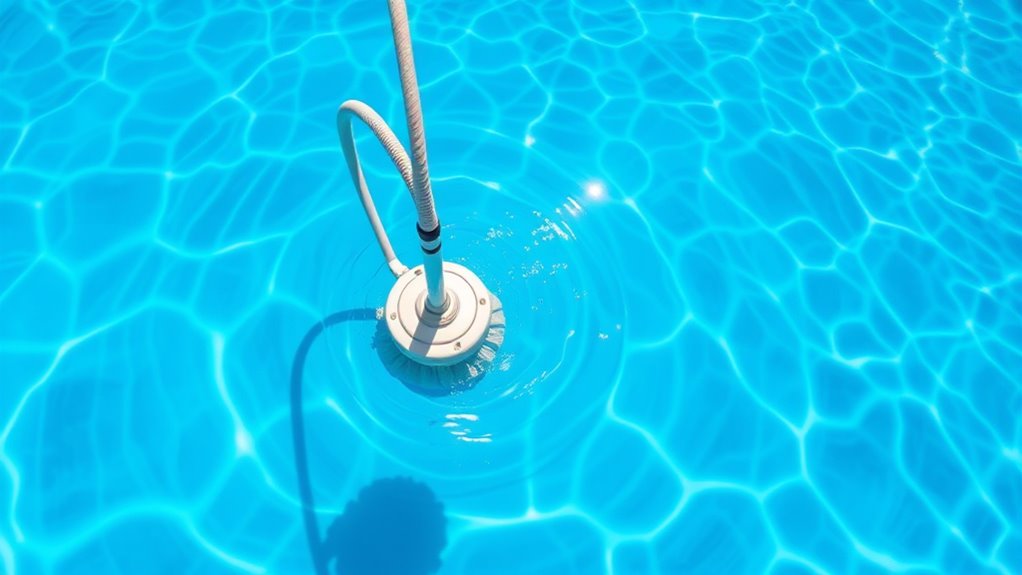

You should run your suction pool cleaner at least once a week to keep debris from building up and to maintain clear water. If your pool gathers more leaves, pollen, or dirt, consider cleaning it two or three times weekly. Less frequent cleaning may work during quieter periods or in less dusty environments. Monitoring water clarity and debris levels will help you know when to increase or decrease the cleaning schedule—keep exploring to learn more about perfecting your routine.

Get the little things that make your day delivered free with Prime
- Fast, free delivery on millions of items
- Prime Video, Amazon Music and more included
- Member-only deals all year
Key Takeaways
- Run the cleaner at least once a week to maintain water clarity and remove surface debris.
- Increase cleaning frequency to two or three times weekly during heavy debris fall or high usage.
- Adjust the schedule based on debris levels, water clarity, and environmental factors like trees or pollen.
- Regularly monitor water quality to determine if more frequent cleanings are necessary.
- Properly maintain the filtration system to support cleaner efficiency and extend equipment lifespan.

Maintaining a clean pool is essential for both safety and enjoyment, but knowing how often to run your pool cleaner can be confusing. Proper scheduling not only keeps your water clear and inviting but also helps optimize energy efficiency. Running your suction pool cleaner too frequently might waste power and put unnecessary wear on the equipment, while infrequent cleaning can lead to debris buildup and water quality issues. The key lies in establishing an effective maintenance schedule tailored to your pool’s specific needs.
Typically, you’d want to run your suction pool cleaner at least once a week. This frequency is usually enough to remove surface debris, dirt, and small particles that naturally accumulate. If you notice more debris—like leaves or pollen—more often, increasing the cleaning sessions to two or three times a week can prevent buildup. Conversely, during periods of low usage or in less dusty environments, reducing cleaning frequency might save energy without compromising water quality. Remember, a consistent maintenance schedule helps you strike a balance between keeping your pool pristine and conserving energy.
Run your pool cleaner weekly to keep debris at bay and maintain water clarity efficiently.
You should also consider the size of your pool, local environmental factors, and usage habits. For instance, if you have overhanging trees, you’ll need to run your cleaner more frequently to manage fallen leaves. If your pool is used daily by multiple people, more regular cleaning ensures the water stays safe and inviting. Adjusting the schedule based on these factors helps maintain energy efficiency, as running the cleaner only when needed prevents unnecessary power consumption. Additionally, a well-planned routine reduces wear and tear, extending the lifespan of your equipment. Understanding the importance of proper maintenance routines can also help you in managing your pool more effectively.
Monitoring the debris level and water clarity can guide you on whether you need to run your cleaner more or less often. If the water appears murky or debris starts to accumulate quickly, stepping up cleaning sessions is wise. On the other hand, if your pool remains clear and debris-free between cleanings, you might stretch the interval. Also, ensure your pool’s filtration system is working efficiently, as a clean filter complements the work of your suction cleaner and enhances overall energy efficiency. Incorporating regular maintenance checks can further optimize your pool’s performance and longevity, especially considering the regional divorce statistics that highlight the importance of routine management in various aspects of life.
Frequently Asked Questions
Can I Run My Pool Cleaner Daily Without Damaging It?
Running your suction pool cleaner daily isn’t necessary and could wear it out faster. Instead, maintain a consistent cleaning schedule based on your pool’s debris level; for example, run it 2-3 times a week if debris is light. This keeps your pool clean without risking damage to the cleaner. Regular use guarantees good circulation and prevents buildup, but avoid overuse to prolong your cleaner’s lifespan.
What Signs Indicate My Pool Cleaner Needs Maintenance?
Think of your pool cleaner like a trusted car; if it’s making strange noises or isn’t cleaning effectively, it’s telling you it needs a check-up. Signs include unusual sounds, poor suction, or debris left behind. Regular maintenance, like inspecting hoses and brushes, prolongs its lifespan. Follow a maintenance checklist to catch issues early, ensuring your cleaner runs smoothly and lasts longer, saving you money and hassle.
Is It Better to Run the Cleaner During the Day or Night?
You should run your suction pool cleaner during the day if you have solar panels, as sunlight helps keep your pool warm and reduces debris. Running it at night can be effective too, especially if you use a pool cover to prevent debris accumulation. Consider your pool’s environment and your energy use; daytime cleaning maximizes solar benefits, while nighttime cleaning with a cover minimizes debris and evaporation.
How Do Water Temperature and Chemistry Affect Cleaning Frequency?
Water temperature and chemistry directly impact your pool cleaner’s efficiency and how often you should run it. Warmer water accelerates dirt and algae growth, so you might need to clean more frequently during hot months. Poor water chemistry, like imbalanced pH or high algae levels, also demands more frequent cleaning. Regularly test and adjust water chemistry, and consider running your cleaner more often when temperature effects and water quality decline.
Can Running the Cleaner Too Often Cause Equipment Failure?
Oh sure, run your suction pool cleaner endlessly, and watch as your equipment’s lifespan shrinks faster than a snowman in July. Overusing it can cause wear and tear, leading to costly repairs. Stick to a sensible cleaning schedule, and you’ll keep your gear happy and functional longer. Running it too often isn’t just a waste of energy; it risks equipment failure, turning your pool paradise into a costly nightmare.
Conclusion
Think of your pool cleaner as a faithful guardian of your oasis, silently working to keep it pristine. Running it regularly is like tending to a garden—you nurture the health of your pool with consistent care. When you stay diligent, your pool remains a sparkling retreat, inviting you to unwind whenever you wish. So, keep the rhythm steady; your pool’s clarity is a mirror of your dedication, reflecting a space where relaxation and refreshment bloom endlessly.
NFL season / tailgating Picks
team gear
As an affiliate, we earn on qualifying purchases.