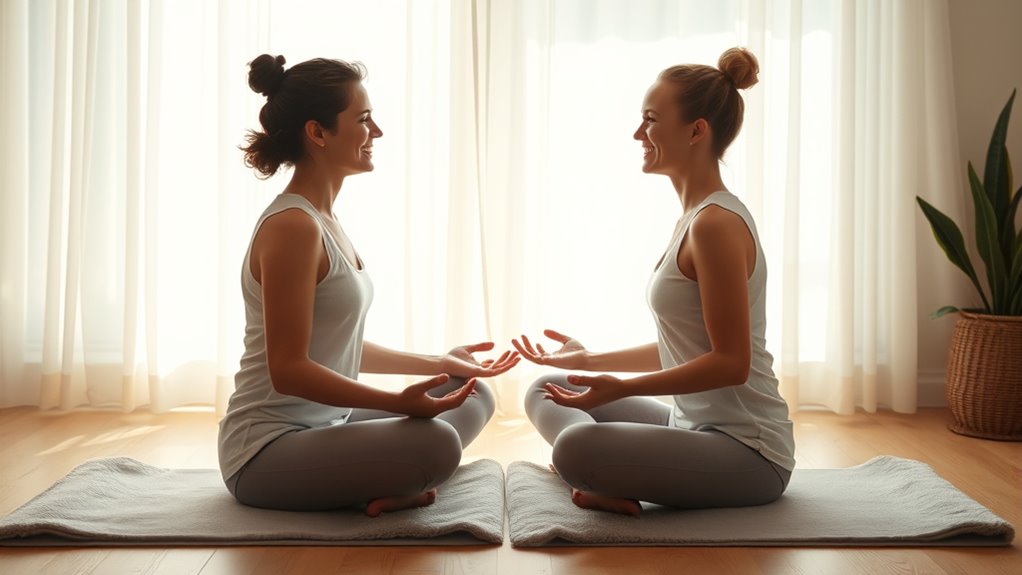

To do mindful breathing exercises together, sit facing each other and sync your breaths, inhaling slowly through your nose and exhaling calmly. Try box breathing: inhale for four counts, hold, exhale, and pause for four counts. You can also guide each other with calming visualizations or prompts. This shared practice reduces stress, boosts emotional connection, and creates a calm space for both of you. Keep exploring to discover more ways to strengthen your bond through mindful breathing.

Get the little things that make your day delivered free with Prime
- Fast, free delivery on millions of items
- Prime Video, Amazon Music and more included
- Member-only deals all year
Key Takeaways
- Practice synchronized deep breathing by inhaling and exhaling slowly together to promote calmness and connection.
- Use the box (square) breathing technique: inhale, hold, exhale, and pause for four counts each, in unison.
- Engage in guided visualization exercises, where one person leads the other through calming imagery while both breathe together.
- Focus on shared breath patterns during moments of tension to ground both individuals and foster emotional regulation.
- Establish a routine of regular mindful breathing sessions to strengthen mutual resilience and emotional connection.

Mindful breathing exercises are simple yet powerful tools that can help you reduce stress and improve mental clarity. When you practice these exercises with someone else, you not only deepen your own sense of calm but also foster connection and mutual support. Breathing together creates a shared experience that enhances emotional regulation, making it easier to manage feelings of anxiety, frustration, or overwhelm. By focusing on your breath in unison, you both cultivate a sense of presence that can translate into better communication and understanding.
Practicing mindful breathing together fosters calm, connection, and emotional regulation for deeper understanding and support.
One effective way to do this is to sit facing each other at a comfortable distance. Begin by taking deep, slow breaths together, inhaling through your nose and exhaling through your mouth or nose, whichever feels most natural. As you synchronize your breathing, pay attention to the rise and fall of your chests or the sensation of air passing through your nostrils. This shared rhythm not only calms your nervous system but also reinforces a sense of connection. When stress starts to build or emotions run high, turning to this practice can quickly ground you both, easing tension and promoting emotional regulation.
Another approach is to practice a simple breathing exercise called “box breathing” or “square breathing.” Instruct each other to inhale slowly for four counts, hold the breath for four counts, exhale for four counts, and then pause for another four counts before repeating. Doing this together helps synchronize your breath patterns, which can be especially helpful during tense moments or when feeling overwhelmed. The deliberate, rhythmic nature of box breathing encourages relaxation and reduces cortisol levels, supporting stress reduction on a physiological level. Sharing this practice can also foster a sense of teamwork, making it easier to face challenges with a calmer mindset.
You might also experiment with guided breathing exercises, where one person guides the other through a visualization or a series of calming prompts while both focus on their breath. For example, imagining inhaling calm and exhaling tension can amplify the calming effect. When practiced together regularly, these exercises strengthen emotional regulation skills, making it easier to handle everyday stressors. The act of breathing consciously alongside someone else creates a safe space where both of you can pause, reset, and approach problems with clarity and patience. Additionally, learning about divorce laws in your area can provide clarity and reduce uncertainties during challenging times, helping to foster a sense of control and stability.
Incorporating mindful breathing exercises into your routine with a partner or loved one offers practical benefits for stress reduction and emotional regulation. It’s a simple act that can transform moments of tension into opportunities for connection and tranquility. By making this a shared practice, you not only nurture your own well-being but also cultivate a supportive environment where both of you can thrive emotionally, even during life’s most challenging times.
Top picks for "mindful breath exercis"
As an affiliate, we earn on qualifying purchases.
Frequently Asked Questions
Can Children Benefit From Mindful Breathing Exercises?
Yes, children definitely benefit from mindful breathing exercises. By encouraging child participation, you help them develop essential emotional regulation skills and reduce stress. These exercises promote developmental benefits like improved focus, patience, and self-awareness. When you make it fun and engaging, kids are more likely to embrace mindful breathing as a helpful tool for managing their feelings and staying calm, which supports their overall growth and well-being.
How Long Should Each Session Last for Best Results?
For best results, aim for a breathing duration of 3-5 minutes per session. Imagine a child who practices daily; after two weeks, their calmness improves noticeably. Keep the session length manageable to maintain engagement and avoid frustration. Start with short sessions, like 3 minutes, and gradually increase as comfort grows. Consistency matters most, so prioritize regular practice over longer, infrequent sessions.
Are There Specific Breathing Techniques Suited for Couples?
Yes, specific breathing techniques for couples focus on partner synchronization and breathing pattern matching. Try synchronized deep breathing, where you both inhale and exhale together at a slow, steady pace. Practice alternate nostril breathing to enhance connection and calmness. These techniques help foster intimacy, reduce stress, and promote emotional bonding. Consistently practicing together strengthens your connection and encourages mindfulness, making your shared experience more meaningful and relaxing.
Can Mindful Breathing Help Reduce Anxiety in Social Settings?
Coincidentally, mindful breathing can considerably reduce your anxiety in social settings. By practicing mindfulness meditation, you become more aware of your breath and bodily sensations, which helps manage stress more effectively. As you focus on slow, deliberate breaths, your nervous system calms down, making social interactions feel less overwhelming. Incorporating these techniques into your routine enhances stress management, allowing you to stay centered and present even in challenging situations.
Is It Safe to Practice Mindfulness During Pregnancy?
Yes, practicing mindfulness during pregnancy is generally safe when you follow prenatal safety guidelines and breathing precautions. You should listen to your body, avoid deep or rapid breathing that causes dizziness, and consult your healthcare provider before starting any new exercises. Mindfulness can help reduce stress and improve your well-being, but always prioritize your comfort and safety during pregnancy.
Conclusion
Practicing mindful breathing together can deepen your connection and reduce stress. For example, imagine you and a partner taking five minutes daily to breathe in sync, feeling more relaxed and connected. Over time, these simple exercises can transform your relationship by fostering calm and understanding. So, give it a try—breathe together, stay present, and enjoy the peaceful moments that strengthen your bond. It’s a small step for your well-being with big rewards.
NFL season / tailgating Picks
team gear
As an affiliate, we earn on qualifying purchases.