
When it comes to bounce house safety, never ignore the wind rule. Always assess weather forecasts before setup and monitor conditions throughout the event. If wind exceeds the manufacturer’s limit, deflate immediately and secure the area. Use proper anchoring methods like stakes and weights, and rely on responsible adults, not children, to watch for gusts. Staying vigilant and prepared can prevent accidents—keep going to learn more about how to keep everyone safe.
Key Takeaways
- Always assess weather conditions before setup and monitor for wind increases during use.
- Deflate and secure the bounce house immediately if wind exceeds manufacturer limits.
- Use proper anchoring techniques, including stakes, sandbags, or weights, to prevent shifting or lifting.
- Ensure responsible adults, not children, make safety decisions regarding wind and weather.
- Prioritize safety over continued use when weather conditions, especially wind, become hazardous.
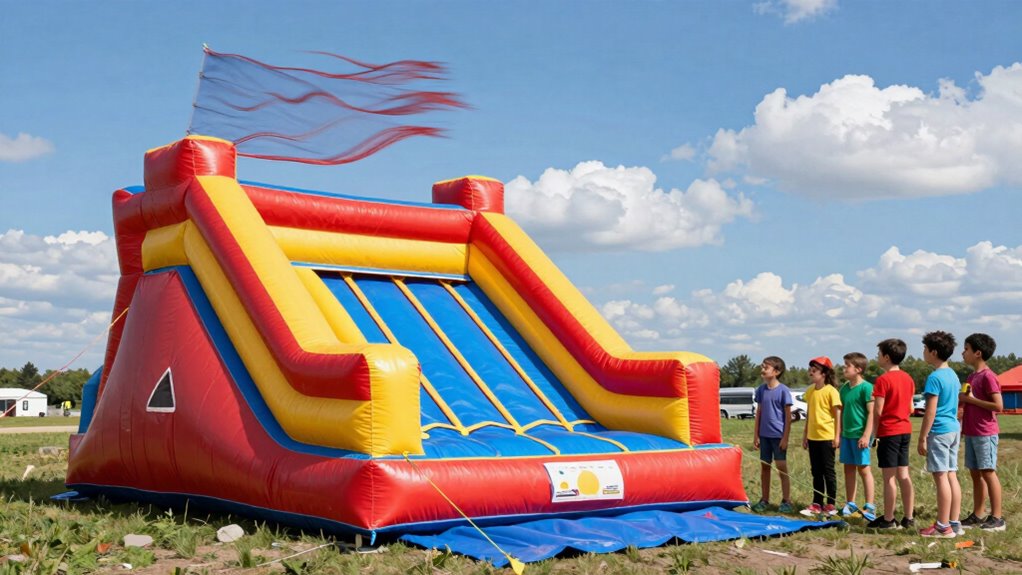
Bounce houses are a popular activity at parties and events, but ensuring safety is essential to prevent injuries. One of the most overlooked yet vital safety factors is understanding the wind rule. Wind can turn a fun bounce house into a dangerous projectile if not properly managed. Before any setup, you need to assess the weather forecast. If there’s even a slight chance of strong winds, it’s best to postpone or cancel the event. The wind can cause the bounce house to lift off the ground, especially if it isn’t securely anchored, posing serious risks to everyone nearby.
Always check weather forecasts and secure bounce houses properly to prevent dangerous wind-related accidents.
Adult supervision is vital to enforce the wind rule. When kids are bouncing, adults should be vigilant and ready to respond quickly if the weather changes. Keep a close eye on wind speeds, and if you notice gusts picking up, it’s time to deflate the bounce house immediately. Never rely on children or inexperienced individuals to judge wind conditions. Only trained staff or responsible adults should make safety decisions related to wind and weather.
Anchoring techniques are your first line of defense against wind-related accidents. Properly anchoring the bounce house involves using stakes, sandbags, or weights designed specifically for this purpose. Stakes should be driven deep into the ground at multiple points, creating a secure hold that prevents the bounce house from shifting or lifting. If you’re setting up on concrete or other hard surfaces, sandbags or heavy weights are essential to keep the structure firmly in place. Always double-check that all anchoring points are tight and secure before allowing children to enter. Proper anchoring techniques** are crucial for preventing accidents caused by wind. Additionally, understanding biodiversity** can help you recognize how environmental factors like wind impact structures and safety.
Remember that wind can increase suddenly and unpredictably. Even if the forecast is clear, keep monitoring weather conditions during the event. If wind speed exceeds the manufacturer’s recommended limit, deflate the bounce house immediately. Never assume it’s safe just because the wind is light initially. The safety of everyone at the event depends on your vigilance and adherence to the wind rule. By combining adult supervision with solid anchoring techniques, you markedly reduce the risk of accidents caused by unexpected gusts. Staying aware of weather conditions can help prevent dangerous situations before they occur.
In the end, understanding and respecting the wind rule isn’t just about following guidelines — it’s about protecting children and guests from preventable injuries. Keep a watchful eye, invest in proper anchoring, and never underestimate the power of wind. When you prioritize these safety measures, you create a fun, secure environment where everyone can enjoy the bounce house without worry. Proper weather assessment is an essential part of safe bounce house operation.
As an affiliate, we earn on qualifying purchases.
Frequently Asked Questions
How Strong Does the Wind Need to Be to Cancel a Bounce House Event?
You should cancel a bounce house event when wind thresholds reach 25 miles per hour or higher. Stronger winds compromise safety protocols, making the setup unstable and increasing risks for everyone involved. Always monitor weather conditions closely before the event, and if wind speeds approach or exceed this limit, it’s safest to postpone or reschedule. Prioritizing safety guarantees no one gets hurt during your bounce house fun.
Can Bounce Houses Be Safely Used During Light Rain?
You might think bounce houses are safe during light rain, but research shows that rain safety and weather precautions are vital. Light rain can make surfaces slippery and increase electrical hazards, so it’s best to avoid using bounce houses in these conditions. Always monitor weather forecasts closely, and if there’s any doubt, postpone the event. Prioritizing safety guarantees everyone stays protected, even during seemingly minor weather changes.
What Are the Signs of a Damaged Bounce House After Strong Winds?
After strong winds, you should check for signs of damage like material deterioration or compromised structural integrity. Look for tears, holes, or loose seams, and examine the frame for bends or cracks. If the bounce house appears to be weakened or shows any signs of damage, don’t use it until a professional inspects and repairs it. Ensuring both material integrity and structural soundness keeps everyone safe during play.
How Often Should Bounce Houses Be Inspected for Wind-Related Wear?
Think of your bounce house as a brave sailor facing changing seas. You should inspect it regularly, ideally before each event, to catch any signs of wear or damage caused by weather. Follow the manufacturer guidelines for inspection frequency, focusing on material durability. This proactive approach guarantees the bounce house remains safe and seaworthy, preventing accidents and extending its lifespan. Regular checks keep your inflatable a resilient vessel on any windy voyage.
Are There Specific Anchoring Techniques to Prevent Wind-Related Accidents?
You should use proper anchor techniques, like stakes, sandbags, or weighted anchors, to secure your bounce house effectively. Always consider the wind threshold—if wind speeds hit a certain limit, usually around 15 mph, it’s safest to deflate and remove the bounce house. Ensuring your anchoring methods are up to standard helps prevent accidents caused by strong winds, keeping everyone safe during your event.
Conclusion
So, next time the wind picks up, remember: ignoring the wind rule is the one bounce house mistake you definitely don’t want to make. After all, nothing screams “fun” like a flying inflatable and a trip to the emergency room. Play it safe, keep an eye on the weather, and you’ll keep your party afloat—literally. Because, honestly, a gust of wind turning your bounce house into a flying saucer isn’t exactly the party highlight you had in mind.