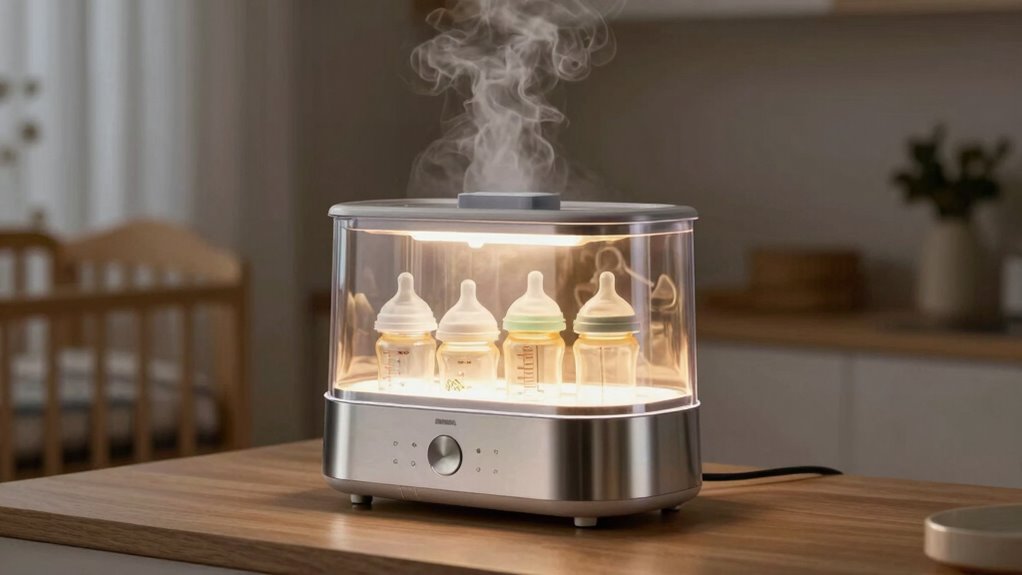

You should sterilize your bottles whenever your baby’s immune system is most vulnerable, especially during the first few months. Regular sterilization prevents bacteria build-up, reducing the risk of infections and illnesses. Use a sterilizer with safety features, compatible with all breastfeeding accessories, and keep it well-maintained. Incorporating proper techniques into your daily routine helps keep feeding items safe and hygienic. Keep exploring to discover more essential tips for effective sterilization.

Get the little things that make your day delivered free — and shop member deals
- Fast, free delivery on millions of items
- Access to Prime Big Deal Days deals on October 6–7
- Prime Video, Amazon Music and more included
Key Takeaways
- Sterilize bottles after each use during the first few months to protect your baby’s developing immune system.
- Use sterilizers before first use and regularly thereafter to prevent bacteria buildup and ensure safety.
- Sterilize breastfeeding accessories like nipples and pump parts whenever they are used or visibly dirty.
- Follow manufacturer guidelines and proper techniques to maintain sterilizer effectiveness and hygiene.
- Prioritize sterilization when preparing bottles for night feedings or if the baby shows signs of illness.

Are you unsure how to effectively sterilize your baby bottles? It’s a common concern for many new parents who want to ensure their little one stays safe and healthy. Proper sterilization is especially important in the first few months when your baby’s immune system is still developing. The good news is that with the right approach and equipment, sterilizing can become a quick and straightforward part of your routine. When choosing a sterilizer, it’s essential to consider sterilizer safety features. These features include automatic shut-off, secure lids, and safe materials that won’t leach harmful substances into bottles during the process. Making sure your sterilizer has these safety features helps you feel confident that your baby’s bottles are thoroughly sanitized without any risk of exposure to dangerous chemicals or heat mishaps.
Choose sterilizers with safety features for confident, thorough cleaning of your baby’s bottles.
Understanding breastfeeding compatibility is key when sterilizing bottles, especially if you’re combining breastfeeding with bottle feeding. Many parents switch between breast milk and formula in bottles, so it’s important to use a sterilizer that accommodates all types of feeding equipment. Most modern sterilizers are designed to be compatible with breastfeeding accessories, such as breast pump parts, storage caps, and nipples. This compatibility makes it easier to keep all breastfeeding-related items sterile, preventing bacteria from growing and ensuring your baby’s health is protected. It also saves you time and effort, since you don’t need separate sterilization methods for different items. Additionally, selecting a sterilizer made from safe materials ensures that no harmful chemicals will leach into your baby’s bottles during sterilization. Regularly inspecting your sterilizer for signs of wear and tear is also important to maintain its effectiveness and safety. Incorporating proper sterilization practices into your routine is crucial, especially when considering the sterilization process itself, which can vary depending on the method used. Being aware of appropriate sterilization methods can help you choose the most effective option for your needs. Using sterilizers with easy-to-clean components can also help prevent the buildup of residue or bacteria over time, maintaining optimal safety and hygiene.
baby bottle sterilizer with safety features
As an affiliate, we earn on qualifying purchases.
As an affiliate, we earn on qualifying purchases.
Frequently Asked Questions
Can I Sterilize Plastic Bottles With Boiling Water?
Yes, you can sterilize plastic bottles with boiling water, but you must verify they’re heat-resistant for plastic safety. Boiling water is a common sterilization method that kills germs effectively. However, check the bottle’s label or manufacturer’s guidelines to confirm if it can withstand high temperatures. Non-heat-resistant plastics may warp or release harmful chemicals, so always choose bottles labeled as safe for boiling or opt for other sterilization methods like steaming or chemical sterilizers.
How Often Should I Sterilize Bottles During My Baby’s First Month?
They say “better safe than sorry,” and in your baby’s first month, sterilize bottles after every feeding to keep germs at bay. Regular sterilization guarantees safety, especially given varying feeding schedules and the importance of bottle material safety. Use a sterilizer or boiling water for plastic or glass bottles, and be diligent with cleaning. This routine helps protect your little one and establishes healthy habits early on.
Is Sterilizing Necessary for Bottles Used Only Once Daily?
Sterilizing bottles used only once daily isn’t strictly necessary if you’re thorough with bottle cleaning. Focus on proper bottle cleaning after each use to remove milk residue and bacteria. Sterilization frequency can be reduced to once a day or every few days, especially for older babies. However, if your baby has health issues or a weakened immune system, stick to more frequent sterilization. Always follow your pediatrician’s advice for best results.
Are There Risks of Over-Sterilizing Baby Bottles?
You don’t need to over-sterilize your baby bottles, as doing so can increase risks like chemical residues and material degradation. While sterilizing is essential when contamination is a concern, excessive sterilization might weaken bottle materials or leave residues from cleaning agents. To keep your baby safe, sterilize only when necessary, rinse thoroughly, and choose gentle cleaning methods. This approach helps prevent potential health issues while maintaining bottle integrity.
Can Sterilizers Be Used for Breast Pump Parts?
Yes, you can use sterilizers for breast pump parts, but make certain to follow sterilizer safety guidelines. Check if the sterilizer is suitable for small, plastic items to guarantee they won’t melt or warp. Properly sterilize breast pump parts to maintain breast pump hygiene, reducing bacteria and mold. Always clean parts thoroughly before sterilizing, and avoid over-sterilizing, which can damage the materials over time.
Conclusion
Remember, a bottle sterilizer is like a guardian, shielding your baby’s health from unseen enemies. When you sterilize diligently, you’re planting seeds of safety that grow into a foundation of trust and well-being. Just as a lighthouse guides ships safely through dark waters, your careful sterilization guides your little one toward a healthy, happy future. Keep up this essential ritual, and watch your baby’s world bloom with cleanliness and love.
NFL season / tailgating Picks
team gear
As an affiliate, we earn on qualifying purchases.