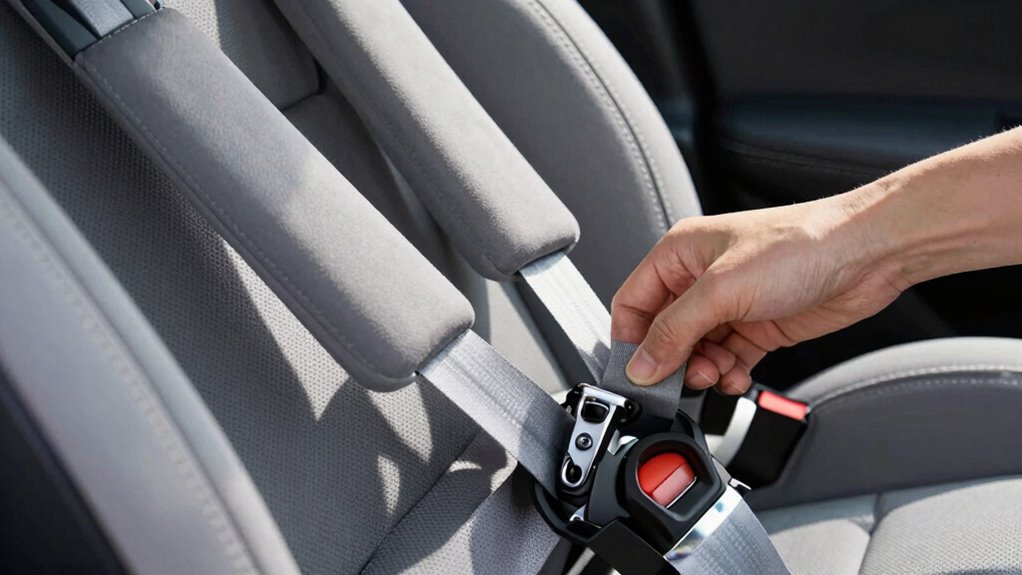

To guarantee your child’s safety, perform the one tug test after installing their car seat. Confirm it follows the manufacturer’s instructions using either the seat belt or LATCH system, then firmly tug at the base or edges. The seat should stay secure with minimal movement—no more than an inch. Making this a routine check helps keep your child safe on every trip. Keep going to discover more tips on perfecting your car seat installation.
Key Takeaways
- The one tug test verifies your car seat is securely installed, mimicking crash forces to ensure stability.
- Perform the tug test after installing or adjusting the seat to confirm minimal movement.
- The seat should resist movement but not shift more than one inch when tugged at the belt path.
- Regularly recheck the seat’s security to maintain safety as your child grows or if switching vehicles.
- Follow manufacturer instructions and consult safety technicians for proper tug test technique.
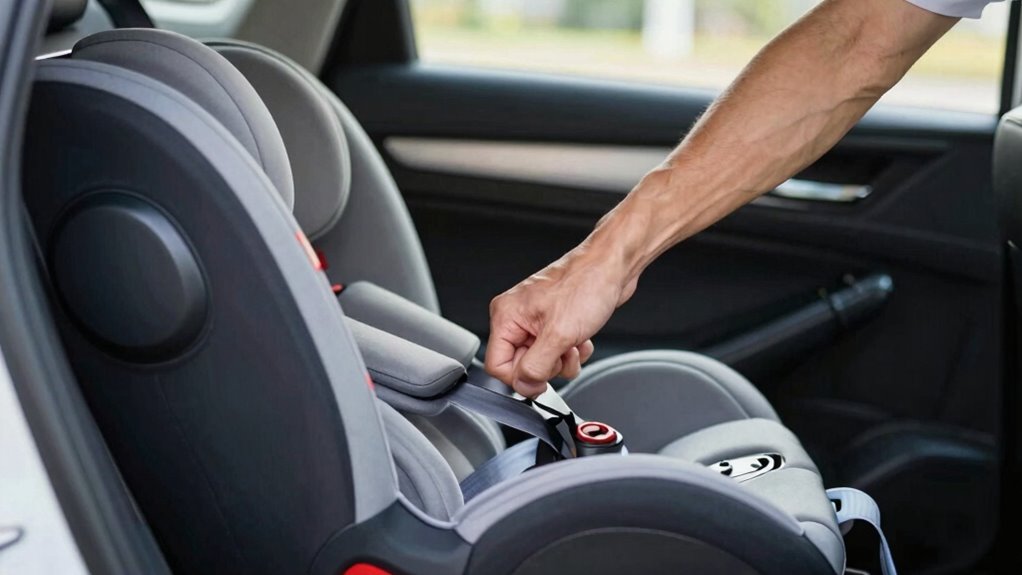
Ever wonder if your child’s car seat is installed correctly? Ensuring proper installation is essential for your child’s safety, and mastering a simple test can give you peace of mind. The one tug test is a straightforward way to verify that the car seat is secure. Many parents overlook this step, but it’s a key part of child safety that should never be skipped. When you install the car seat, you want to make sure it doesn’t move excessively. The tug test helps you confirm whether your installation is solid enough to keep your child safe in case of sudden stops or accidents.
Ensure your child’s safety with a quick tug test—verify your car seat is securely installed every time.
To perform the tug test, first, make sure the car seat is properly secured according to the manufacturer’s instructions. Whether you’re using the seat belt or the LATCH system, double-check that everything is tight and correctly positioned. Once you’re confident in the installation, grab the base or the seat itself, and give it a firm tug at the belt path or the seat’s edges. You should feel some resistance, but the seat should not shift more than an inch side to side or front to back. If it does, that indicates the seat isn’t secure enough, and you need to tighten the straps or reattach the connectors. Performing this check regularly ensures your installation remains secure as your child grows and your vehicle setup changes. Regularly inspecting your installation technique can help prevent common mistakes and maintain safety standards.
This simple test becomes your go-to check every time you install or adjust the car seat. It’s a quick step that can make a significant difference in child safety. Remember, a loosely installed car seat can be just as ineffective as no car seat at all. The tug test is effective because it mimics the forces a car seat might encounter during a crash—if it holds firm during the tug, it’s more likely to keep your child protected in real-world situations. Conducting regular child passenger safety checks helps ensure ongoing security and peace of mind as your child’s needs evolve. Additionally, familiarizing yourself with proper installation techniques can help you identify common mistakes and improve your overall safety practices. Becoming familiar with child passenger safety guidelines can further enhance your confidence in your installation skills.
Moreover, this test is especially useful if you switch the car seat between vehicles or if your child outgrows the harness. Each time, take a moment to recheck the installation. Keep in mind that some car seats come with specific instructions for the tug test, so refer to the manufacturer’s guidelines. If you’re unsure, don’t hesitate to ask a certified child passenger safety technician for assistance. Doing so guarantees you’re following the best installation tips, which ultimately means better child safety. Performing the one tug test consistently guarantees your child’s car seat remains secure, giving you confidence no matter where the road takes you.
child car seat installation check
As an affiliate, we earn on qualifying purchases.
As an affiliate, we earn on qualifying purchases.
Frequently Asked Questions
How Often Should I Recheck My Car Seat Installation?
You should recheck your car seat installation every time you place your child in the seat or if the seat gets disturbed, like during a long trip or after a crash. Regularly verifying the seat’s stability guarantees child safety and confirms seat compatibility with your vehicle. It’s a simple step that keeps your child safe, giving you peace of mind knowing the seat remains secure and properly installed at all times.
Can I Use the Tug Test on All Types of Car Seats?
You might wonder if the tug test works on all car seats, but keep in mind car seat compatibility varies. While the tug test is a helpful safety check, it has limitations depending on seat type and installation method. For example, some seats require different tests or tools to guarantee proper securement. Always consult your car seat’s manual and follow manufacturer instructions before relying solely on the tug test.
What Signs Indicate My Car Seat Is Not Properly Secured?
If your car seat isn’t properly secured, you’ll notice it moves more than an inch side-to-side or front-to-back after installation. It may also shift easily when you try to wiggle or tug it, indicating a loose fit. For maximum car seat safety, follow proper installation tips, like ensuring the harness is snug and the seat doesn’t tip or slide. Regularly check these signs to keep your child safe.
Is the Tug Test Necessary After Professional Installation?
Yes, the tug test is still necessary even after professional installation. Many believe installation myths or safety misconceptions suggest professional setup eliminates the need for further checks, but that’s not true. You should always perform the tug test to verify your car seat remains secure, as it confirms the seat is tightly anchored and safe for your child. Regularly checking with the tug test helps prevent accidents caused by loose installations.
How Do I Fix a Loose Car Seat After the Tug Test?
If your car seat feels loose after the tug test, first check the seat’s installation and verify it’s tightly secured according to the manufacturer’s instructions. Adjust the harness snugness and re-tighten the seat’s straps, making sure there’s minimal movement at the base. Re-run the tug test, focusing on seat stability. If it still feels loose, remove and reinstall the seat, or consult a professional to confirm proper installation and safety.
Conclusion
Remember, just like a ship needs a strong anchor, your child’s safety depends on a secure car seat. I once heard a parent say that after mastering the tug test, their child’s seat felt as solid as a fortress. That one simple test is your anchor—if it holds firm, you’re confident your little one is protected. Don’t rush; take the time to do the tug test properly. It’s the one step that truly makes a difference.