To blow up your chore chart and make it work, keep it simple, colorful, and personalized to engage your kids. Use visual elements like stickers or icons and set clear, attainable rewards to motivate them effectively. Incorporate a points system for chores, so children see progress and feel accomplished. Involve your kids in designing their charts to boost ownership. If you want tips on creating a fun, effective system, keep going—you’ll find plenty more ideas to try.
Key Takeaways
- Simplify the chore chart with clear, visual cues like colors or icons to boost understanding and engagement.
- Personalize rewards and tasks based on each child’s interests and abilities for better motivation.
- Use a points system that allows children to earn and exchange for meaningful, attainable rewards.
- Incorporate fun visuals and themes to make the chart appealing and maintain consistent effort.
- Involve children in designing and updating the chart to foster ownership and responsibility.
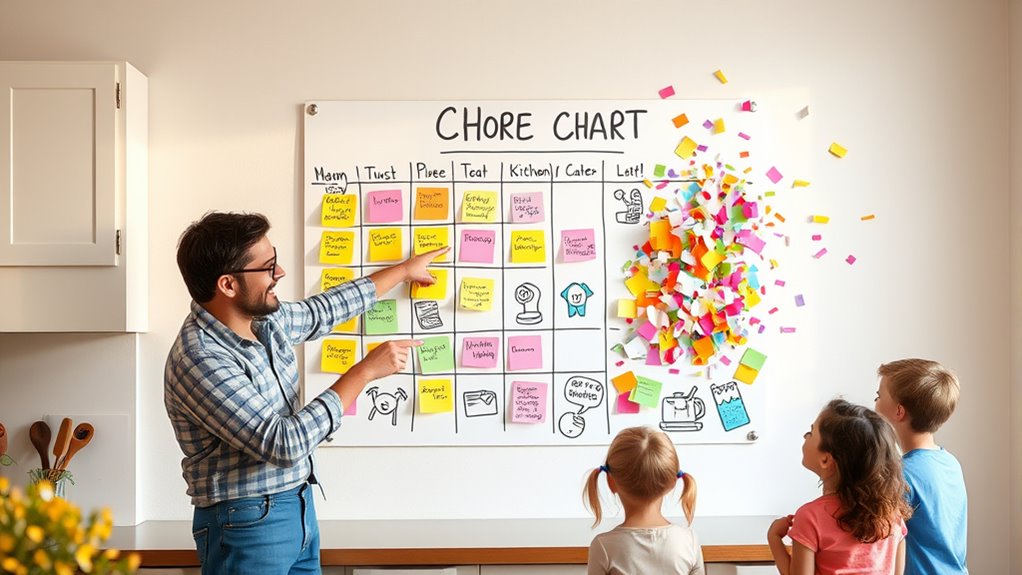
Are you struggling to keep your household chores organized and your kids motivated? It’s a common challenge, but one effective way to tackle it is by implementing a well-designed chore chart. The key is creating a system that feels engaging and rewarding, which means focusing on reward systems and chore chart customization. When your kids see their efforts acknowledged and tailored to their interests, they’re more likely to stay committed and even enjoy the process.
Start by thinking about reward systems. Kids respond well to positive reinforcement, so incorporate rewards that truly motivate them. Whether it’s earning extra screen time, a special treat, or a fun outing, make sure these incentives are clear and attainable. Using a points-based system can work wonders—kids earn points for completing chores, and those points can be exchanged for rewards. This not only encourages consistent effort but also helps teach the value of working toward a goal. Remember, the reward system should be simple enough for your children to understand and track, so it doesn’t become overwhelming or confusing.
Kids thrive with clear, simple reward systems like points for chores to motivate and teach goal-setting.
Chore chart customization is equally important. No two children are the same, so your chart shouldn’t be a one-size-fits-all solution. Personalize it to match each child’s age, interests, and abilities. For example, a younger child might prefer stickers or colorful visuals, while an older one might enjoy a more detailed chart with specific tasks and progress tracking. You can also involve your kids in designing their charts—this gives them ownership and makes them more invested in completing their chores. Use different colors, icons, or even themed elements to keep the chart visually appealing and engaging. When kids have a say in how their chores are presented, they’re more likely to take pride in their responsibilities.
Additionally, incorporating animated movies that touch hearts can be a fun way to motivate kids and reinforce positive behaviors indirectly. When children see characters overcoming challenges and working together, they often feel inspired to do the same in their chores. When kids see that their efforts lead to real rewards and that their charts are tailored to their personalities, they’ll develop a positive attitude toward chores. This approach not only helps keep your household running smoothly but also teaches your kids valuable lessons about responsibility and self-motivation.

Utron 80 Pack Reward Chart for Kids, Incentive Chart Behavior Chart for Kids at Home, 2 Designs with 2160 Star Sticker, Kids Chore Chart, Sticker Chart for Kids Behavior
Package Includes: The reward chart comes in two styles of cardstock, 40 each in black and white, with…
As an affiliate, we earn on qualifying purchases.
As an affiliate, we earn on qualifying purchases.
Frequently Asked Questions
How Can I Motivate Reluctant Children to Complete Chores?
To motivate reluctant children to complete chores, try using reward systems that highlight their achievements. Make sure the chores are age-appropriate tasks, so they don’t feel overwhelmed. Praise their efforts and offer small rewards or privileges for completed chores. Keep the routines consistent and positive, helping them see chores as a normal part of daily life. This approach builds motivation, responsibility, and confidence over time.
What Are Effective Ways to Handle Chore Disagreements?
When facing chore disagreements, you should practice parental negotiation and conflict resolution. Stay calm, listen to your child’s perspective, and acknowledge their feelings. Clearly explain your expectations and the importance of chores. Offer compromises when possible, like swapping tasks, to foster cooperation. Consistently enforce agreements and praise efforts. By actively engaging in respectful dialogue, you help your child learn problem-solving skills and foster a positive attitude toward chores.
How Do I Balance Chores With School and Extracurricular Activities?
Imagine juggling colorful balls, each representing school, chores, and activities. To balance them, prioritize your time management by creating a schedule that includes dedicated slots for chores, study, and fun. Show responsibility through role modeling, so others follow your lead. Break tasks into smaller steps, stay organized, and communicate your needs. This way, you keep all balls in the air without dropping any, maintaining harmony in your busy life.
What Tools Can I Use to Track Chore Progress Easily?
You can use digital apps like Todoist or ChoreMonster to track your chores easily. These apps offer visual trackers, making it simple to see your progress at a glance. You’ll get notifications and reminders, helping you stay on top of chores without hassle. Plus, many apps allow customization, so you can tailor your chore list to fit your schedule and preferences, making chores less overwhelming and more manageable.
How Often Should I Update or Change the Chore Chart?
You should update or modify your chore chart regularly, ideally every week or two, to keep your reward system fresh and engaging. Incorporate a chore rotation to prevent boredom and ensure fairness. As kids master tasks, swap chores around so everyone stays motivated. Regular updates maintain clarity and excitement, making chores feel less like a burden and more like a fun, rewarding routine.

Behavior Reward Chart System – Pad with 26 Chore Charts for Kids, 2800 Stickers to Motivate Responsibility & Good Habits
Sticker chore Chart pad for kids with 26 perforated pages and 2800 stickers
As an affiliate, we earn on qualifying purchases.
As an affiliate, we earn on qualifying purchases.
Conclusion
Remember, a chore chart isn’t just about ticking boxes; it’s about building trust and responsibility. When you make it fun and flexible, chores become a shared journey, not a source of frustration. Sometimes, it’s the small moments—laughter over a messy room—that matter most. By embracing imperfections, you create a space where everyone feels valued and motivated. Ultimately, a well-crafted chore chart can turn everyday chores into opportunities for connection and growth.

2 in 1 Bedtime/Morning Routine Chart for Kids Toddlers, Magnetic Chore Chart for Kids, Cute Visual Schedule for Kids Schedule Board for Home, Kids Checklist to Do List ADHD Tools for Kids
2024 UPGRADED 2-IN-1 MORNING/BEDTIME ROUTINE CHART FOR KIDS – The easy-to-slide sliders make it simple for little hands,…
As an affiliate, we earn on qualifying purchases.
As an affiliate, we earn on qualifying purchases.

Youngever 6 Pack Multi-Color Laminated Dry Erase Incentive Chart with 120 Reward Star Stickers for Chore Responsibility, School Attendance, Homework Progress Tracking Chart (17 Inch x 22 Inch)
INCENTIVE CHART – 6 Pack High end multi-color laminated dry erase incentive Chart and 120 Reward Star Stickers.
As an affiliate, we earn on qualifying purchases.
As an affiliate, we earn on qualifying purchases.