

To stay calm in a crisis, guarantee your family has a clear emergency plan with multiple escape routes and assigned roles. Practice evacuation drills regularly, keep essential supplies nearby, and establish a reliable communication strategy, such as designated contacts and meeting points. Using technology like emergency radios can boost your preparedness. Having these steps in place helps everyone stay composed and act decisively. There’s more you can do to strengthen your family’s safety when emergencies happen—continue to explore your options.
Key Takeaways
- Establish and regularly practice clear evacuation routes for all family members.
- Designate a central communication plan and family meeting point outside the home.
- Assign specific emergency roles to family members to ensure organized response.
- Conduct biannual drills simulating different scenarios to build confidence and reduce panic.
- Incorporate technology like emergency radios and AI tools to enhance hazard awareness and response.
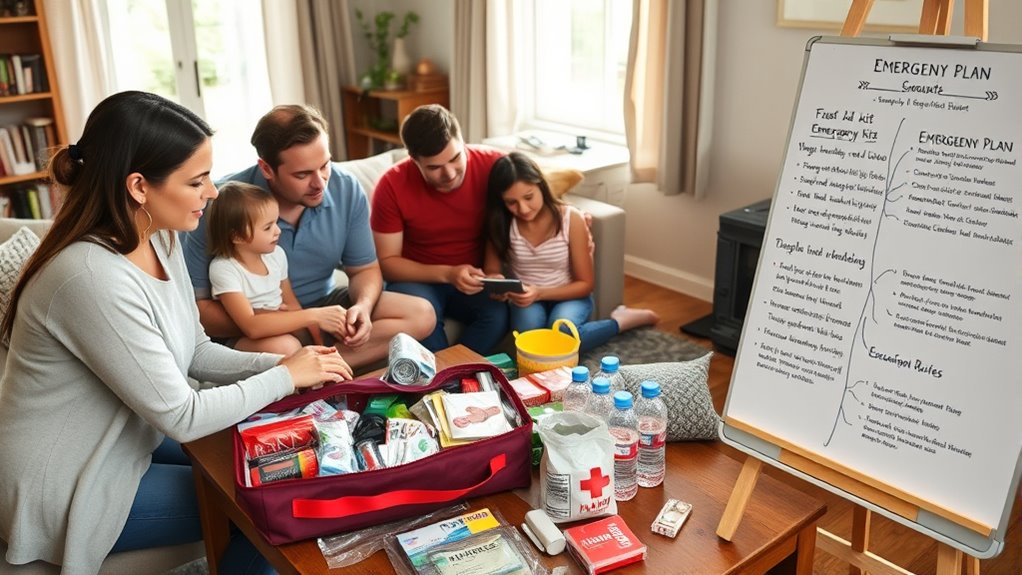
Have you ever wondered what you’d do if an emergency suddenly struck your family? It’s a formidable thought, but preparing beforehand can make all the difference when chaos unfolds. One of the most critical steps in any emergency plan is understanding evacuation procedures. You need to know exactly how to get everyone out of the house quickly and safely, whether it’s due to fire, severe weather, or other hazards. Walk through your home and identify multiple escape routes from each room. Practice these routes regularly so everyone is familiar with them. Keep emergency kits and important documents in easily accessible locations near your exits. Planning your evacuation routes ensures that, during high-stress moments, everyone remains calm and knows what to do without hesitation.
Identify and practice multiple emergency escape routes to ensure quick, safe evacuation during a crisis.
Alongside knowing how to evacuate, establishing effective communication strategies is essential. When an emergency happens, your family’s ability to stay connected can prevent confusion and help coordinate actions. Decide on a central communication plan—such as a designated family member to contact or a specific message chain. Teach everyone how to use their phones to send quick updates or call emergency services. It’s also wise to have a family meeting point outside your home or neighborhood where everyone can regroup if separated. Make sure each family member knows how to reach that spot. If cell service is disrupted, consider alternative methods like walkie-talkies or emergency radio devices. Having a clear communication plan reduces panic and ensures everyone stays informed about what’s happening and what steps to take next.
It’s also helpful to assign specific roles during an emergency. For example, one person might be responsible for gathering emergency kits, another for checking on neighbors, and someone else for contacting emergency services. Clear roles prevent chaos and ensure that all necessary actions are covered efficiently. Remember, practicing your evacuation procedures and communication strategies regularly builds confidence and reduces panic. Conduct drills at least twice a year, simulating different scenarios so your family can respond instinctively. Repetition cements these habits, making it second nature in a real crisis.
Additionally, understanding AI technologies can assist in enhancing your emergency preparedness by analyzing potential hazards and improving response strategies. Ultimately, having a well-thought-out plan that includes detailed evacuation procedures and reliable communication strategies prepares your family to face emergencies with confidence. It transforms potential chaos into manageable steps, helping everyone stay safe and calm when it matters most. Being proactive now means you won’t be caught off guard when disaster strikes. Instead, you’ll have a clear path to safety and the tools to keep everyone connected and informed until help arrives.
Frequently Asked Questions
How Often Should Families Review Their Emergency Plans?
You should review your emergency plan at least twice a year. Regular family drills help everyone remember their roles, and updating your emergency kit guarantees supplies are fresh and complete. Life changes, like a new address or family member, warrant a plan revision. Consistent reviews make your family more prepared, confident, and calm during a crisis. Set reminders to schedule these reviews so they become a routine.
What Are the Best Communication Methods During a Disaster?
During a disaster, you should rely on emergency communication devices like battery-powered radios, cell phones, and emergency alerts. While technology is crucial, having a solid family communication plan ensures everyone knows how to reach each other if networks fail. Combining these methods offers the best coverage—use emergency apps and designated meeting spots to stay connected, calm, and organized amid chaos.
How Can I Include Pets in Our Emergency Plan?
To include pets in your emergency plan, prioritize pet safety by having a designated pet emergency kit with essentials like food, water, medications, and a leash. Keep your pet’s records and a recent photo handy. Store emergency supplies in an accessible location and identify pet-friendly shelters in advance. Practice evacuation drills with your pets to ensure they stay safe and calm during a crisis, making sure everyone, including your furry friends, is prepared.
What Are Some Low-Cost Emergency Preparedness Options?
You don’t need to spend a fortune to prepare. Use budget-friendly supplies like bottled water, canned foods, and flashlights with extra batteries. Get creative with homemade safety tools such as DIY fire starters or first aid kits using everyday items. These low-cost options boost your readiness without breaking the bank, ensuring you’re prepared for emergencies while keeping costs minimal. Prioritize simplicity and resourcefulness to stay safe and calm in a crisis.
How Do I Handle Special Needs Family Members During a Crisis?
During a crisis, prioritize special needs communication by clearly explaining what’s happening and offering reassurance. Use adaptive safety measures tailored to your family member’s needs, like visual aids or sensory tools. Keep essential supplies accessible and maintain routines as much as possible. Stay calm, patient, and supportive, ensuring they feel safe and understood. Regularly practice your plan to build confidence and adaptability for any emergency situation.
Conclusion
Now that you’re prepared with a solid emergency plan, you’re ready for the unexpected. But what if the situation changes, or something you didn’t anticipate happens? Stay alert, keep your plan updated, and remember—your family’s safety depends on your quick thinking. The next crisis could be just around the corner. Are you truly ready to face it? Keep calm, stay vigilant, and never stop preparing. The future is uncertain, but your readiness makes all the difference.