
To help kids name their feelings effectively, use visual aids like emotion charts and facial expression flashcards to make recognition easier. Name feelings out loud during everyday moments, encouraging your child to identify and express emotions like happy, sad, or overwhelmed. Play acting games and discuss stories to reinforce understanding. Validating their feelings with empathetic phrases boosts emotional awareness. Keep practicing these tools, and you’ll discover more proven strategies to support your child’s emotional growth as you continue exploring.
Key Takeaways
- Use emotion charts and facial expression flashcards to visually teach children different feelings.
- Name emotions aloud during daily activities and emotional moments to reinforce understanding.
- Play acting games and read stories, pausing to discuss characters’ feelings for engaging recognition.
- Consistently validate and acknowledge children’s feelings with empathetic statements to foster emotional awareness.
- Create a safe environment that encourages children to express and explore their emotions through playful interactions.
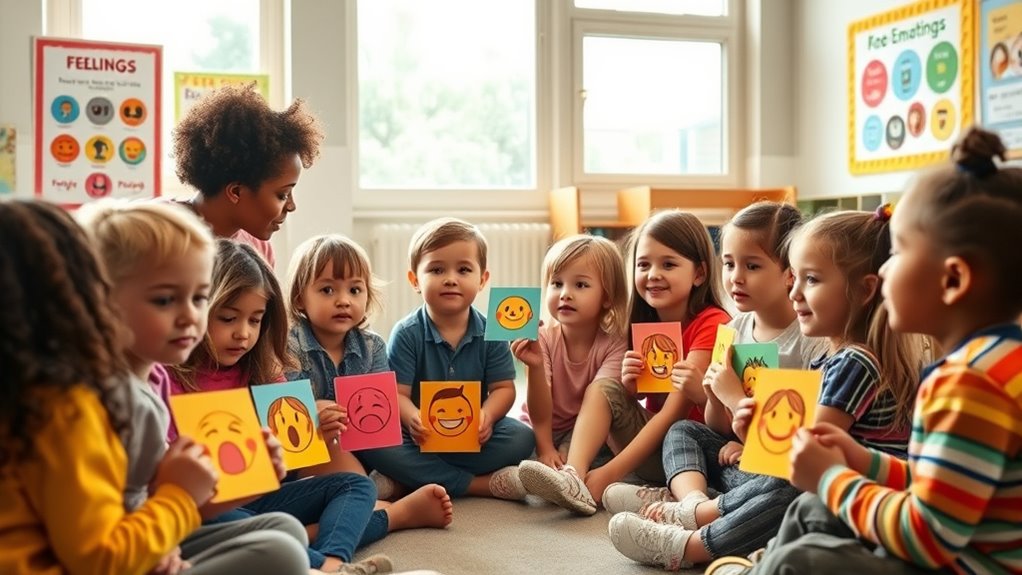
Have you ever noticed your child struggling to identify what they’re feeling? It can be tough for kids to put their emotions into words, especially when they’re overwhelmed or upset. One of the most effective ways to support them is by building their emotional vocabulary—helping them recognize emotions and understand what they’re experiencing. When children can label their feelings accurately, they gain a sense of control and clarity, which makes managing emotions easier. Recognizing emotions becomes the foundation for emotional intelligence, and your active role in this process can make a significant difference.
Start by naming emotions out loud. When your child is upset, instead of saying, “Calm down,” try, “It looks like you’re feeling angry or frustrated.” This simple act helps your child connect the behavior to the emotion behind it. Use everyday moments to introduce new words for feelings—words like disappointed, overwhelmed, excited, or nervous. The goal is to expand their emotional vocabulary gradually, so they aren’t just aware of basic feelings like happy or sad but can also identify more nuanced emotions.
Naming emotions aloud helps children connect behaviors with feelings and expand their emotional vocabulary gradually.
Another effective tool is using visual aids, such as emotion charts or facial expression flashcards. These tools serve as visual cues that help children recognize emotions in themselves and others. When they’re feeling confused or overwhelmed, point to the chart and ask, “Are you feeling this way?” or “Can you show me how you look when you’re angry?” This interactive approach encourages kids to connect words with their physical sensations and facial expressions, reinforcing their recognition skills.
You can also play games that focus on identifying emotions. For example, act out different feelings and ask your child to guess what they are. Or, read stories together and pause to discuss how the characters might be feeling at each moment. These activities not only make learning about emotions fun but also help your child practice recognizing emotions in a safe, supportive environment.
It’s important to validate your child’s feelings, even if they seem minor or confusing. Saying things like, “I see you’re upset because you can’t find your toy,” shows empathy and helps your child feel understood. When they learn to recognize and name their emotions, they’re better equipped to express themselves clearly, which reduces frustration and builds resilience. Additionally, consistent practice with retail hours and related tools can make this emotional learning more engaging and accessible for your child.
Frequently Asked Questions
How Can I Tell if My Child Is Accurately Identifying Their Feelings?
You can tell if your child is accurately identifying their feelings by observing their emotional recognition and vocabulary development. When they label emotions correctly, like saying “angry” instead of just crying, it shows understanding. Encourage them to describe their feelings with words and listen for consistent, specific responses. If they can explain their emotions clearly, it indicates they’re developing emotional recognition skills and expanding their emotional vocabulary effectively.
What Are Some Common Challenges Kids Face When Naming Emotions?
Imagine your child trying to find the right words like a lost explorer in a dense jungle. They often face emotional misunderstandings, struggling to label feelings like anger or sadness accurately. This challenge can hinder social communication, leading to frustration or withdrawal. Kids might also fear judgment or not recognize subtle emotional cues, making it harder for them to express themselves clearly and connect with others effectively.
How Can I Encourage My Child to Express Complex or Mixed Feelings?
To encourage your child to express complex or mixed feelings, ask open-ended questions that invite deeper reflection on their emotional experiences. Validate their emotions and remind them that it’s okay to feel multiple things at once. Use simple language to help them articulate emotional complexity, and share your own feelings to model healthy expressing emotions. This approach fosters emotional awareness and confidence in discussing intricate feelings.
Are There Age-Appropriate Tools for Teaching Emotional Vocabulary?
An ounce of prevention is worth a pound of cure. You can use age-appropriate tools like visual aids and storytelling techniques to teach emotional vocabulary. Visual aids such as emotion cards help children identify feelings easily, while storytelling makes complex emotions relatable and memorable. These methods are engaging and suitable for different ages, encouraging kids to express and understand their emotions better, building their emotional intelligence step by step.
How Do I Handle My Own Emotional Reactions During This Teaching Process?
When teaching kids about feelings, you should prioritize parent self-awareness and emotional regulation techniques. If you notice your emotions rising, pause and take deep breaths or a moment to collect yourself. Practicing mindfulness helps you stay calm and model healthy emotional responses. This not only keeps you in control but also teaches your child how to manage their own reactions. Your calmness encourages a safe space for learning and emotional growth.
Conclusion
By actively helping kids name their feelings, you equip them with essential emotional skills. Some might think it’s too much effort, but taking just a few moments daily can foster their self-awareness and resilience. Remember, teaching kids to recognize emotions isn’t about fixing everything immediately—it’s about building a foundation of trust and understanding. When you validate their feelings, you’re giving them tools to navigate life’s ups and downs with confidence and compassion.