To prevent the worst falls, always guarantee your child is securely strapped in every time they sit in the high chair. Check that the harness fits snugly around their waist, shoulders, and between the legs, and make sure the straps are properly adjusted as your child grows. Never leave them unattended once strapped in. Consistently practicing this strap habit creates a safe mealtime environment. Keep going for more tips to make safety second nature during every feeding.
Key Takeaways
- Always ensure the harness fits snugly around the child before every meal.
- Regularly check that straps are secure, properly adjusted, and not twisted.
- Use all straps and harnesses provided to prevent slipping or standing.
- Never leave the child unattended once secured in the high chair.
- Incorporate a routine safety check to confirm straps and stability before each use.
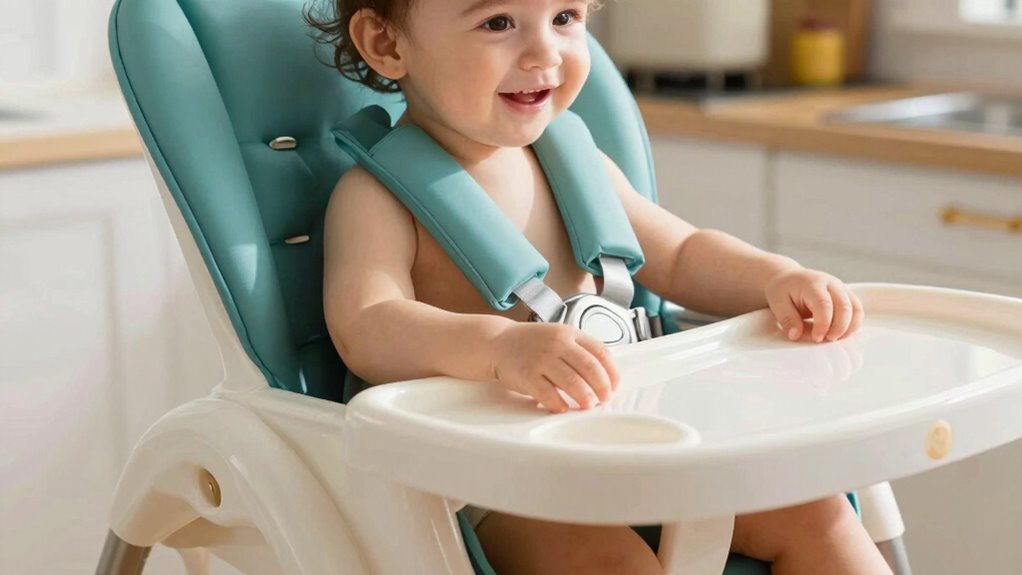
Ever wondered how to keep your little one safe while they’re seated in a high chair? Ensuring meal time safety is vital for both your child’s safety and your peace of mind. One of the most effective ways to achieve this is by making sure your child is securely strapped into their high chair every single time. It might seem simple, but neglecting this step can lead to serious falls or injuries. The strap habit isn’t just about keeping them in place; it’s about creating a secure environment where your child can enjoy their meal without the risk of slipping or tipping over.
Always strap your child securely in their high chair for safety and peace of mind.
A key aspect of high chair safety is maintaining chair stability. You should always check that the high chair is on a flat, even surface before placing your child in it. An unstable chair increases the risk of tipping, especially if your child wiggles or leans to one side. Double-check that all the legs are sturdy and that any locking mechanisms are engaged properly. Avoid placing the high chair near walls, sharp furniture edges, or on uneven floors, as these can compromise stability. When your child is seated, ensure the chair doesn’t wobble or shift when they move. It’s worth investing in a high chair with a wide base or anti-slip feet, which adds an extra layer of stability and prevents accidental tip-overs.
Using the straps correctly is essential. Make sure the harness fits snugly around your child’s waist, shoulders, and between their legs. Loose straps won’t do much to keep them secure, and overly tight ones can be uncomfortable. Adjust the straps as your child grows, and always double-check before each meal. Never leave your child unattended in the high chair, even if they seem secure. Children can wiggle free or try to stand up, risking falls if not properly strapped in. Remember, the goal is to prevent the worst falls, and that starts with consistent, correct strap use. Incorporating proper harness use and routine checks can significantly reduce injury risks.
Additionally, be mindful of your child’s behavior during mealtime. Avoid distractions that might cause them to suddenly lean forward or try to climb out of the chair. The straps work best when your child remains calm and seated. Incorporate a routine where you double-check the straps and the chair’s stability before every meal. This habit doesn’t take much time but can save your child from potential injuries. Making strap use a habit reinforces a safety-first mindset, giving you confidence that your little one is secured during mealtime. Ultimately, combining proper strap use with attention to chair stability creates a safe environment where your child can enjoy their food and grow without unnecessary risks.
Frequently Asked Questions
How Often Should I Check the Straps for Wear and Tear?
You should check the straps for wear and tear at least once a month. Inspect the strap material for fraying, weakening, or damage, especially around buckles and seams. If you notice any issues, follow the replacement procedures provided by the manufacturer to guarantee safety. Regularly maintaining and replacing worn straps keeps your child secure and helps prevent accidents during mealtime.
Are There Specific Types of Straps That Are Safer?
You might think all straps are created equal, but some are safer than others. Opt for straps made from durable, high-quality materials like reinforced nylon, which resist wear and tear. Always choose straps with secure buckles that lock firmly and are easy to fasten—because a “quick release” isn’t always safe in a fall. Irony? The most impressive safety features are often the simplest and most reliable.
Can I Use Additional Harnesses or Safety Belts?
Yes, you can use additional harnesses or safety belts to enhance your child’s safety in a high chair. Make sure any extra harnesses are compatible with your chair and securely fastened. Always follow the manufacturer’s instructions to guarantee proper installation and use. Using additional safety belts can provide extra security, especially if the original straps seem insufficient, giving you peace of mind during mealtime.
What Should I Do if the Straps Become Damaged?
If your straps become damaged, you should stop using the high chair immediately. Contact the manufacturer for strap replacement options and guarantee any replacements meet safety certification standards. Avoid attempting DIY fixes, as damaged straps compromise safety. Regularly inspect straps for wear and tear, and replace them promptly to maintain a secure seating environment. Always prioritize safety by using manufacturer-approved parts and following safety guidelines.
Are There Age or Weight Limits for Strap Use?
You should always follow the manufacturer’s age restrictions and weight guidelines for strap use. Typically, straps are designed for babies up to a certain age or weight limit, often around 3 years old or 35 pounds. Ignoring these limits can be unsafe, so regularly check the labels and adjust or replace straps as needed. Always guarantee your child is securely fastened within the recommended parameters for maximum safety.
Conclusion
By always buckling the straps, by consistently staying alert, and by never leaving your child unattended, you create a safer environment. Remember, a simple habit can prevent a serious fall, a small step can avoid a big accident, and attentive care can protect your little one from harm. Keep these routines in mind, keep your child secure, and keep safety your top priority—because prevention is always better than rescue.