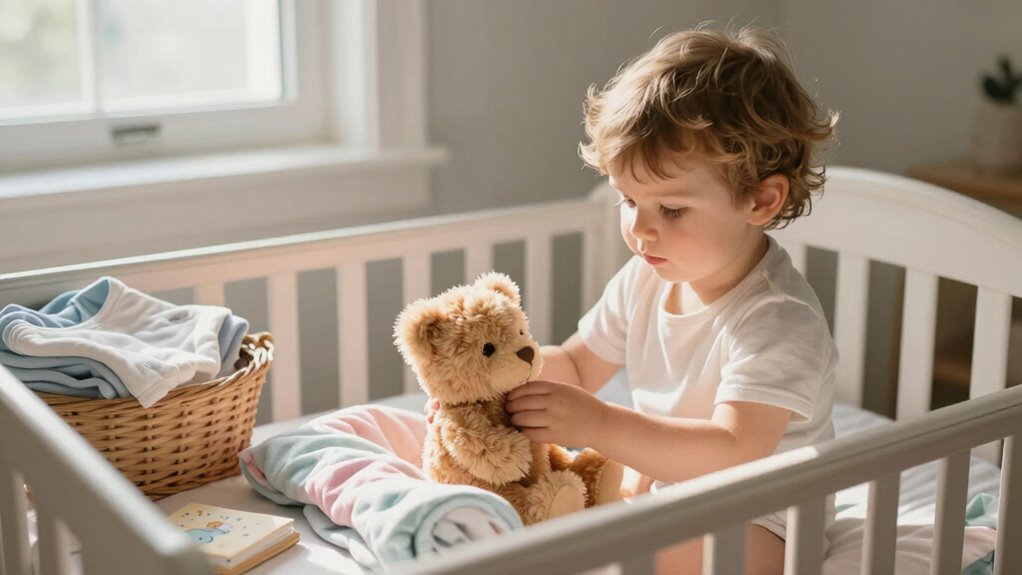

To prepare your older children for a new sibling, create simple rituals that make them feel involved and valued. Include tasks like choosing the baby’s outfit, helping with small chores, or taking walks together. Spend special one-on-one time to reinforce your bond. Explain changes honestly and reassure them that their love and role remain important. Keep these routines steady, and you’ll help ease their shift—there’s more helpful tips waiting if you keep exploring.

Get the little things that make your day delivered free with Prime
- Fast, free delivery on millions of items
- Prime Video, Amazon Music and more included
- Member-only deals all year
Key Takeaways
- Establish “big sibling” routines like choosing outfits or supervised holding to foster involvement and importance.
- Create dedicated one-on-one time for the older child to strengthen your bond.
- Use simple rituals, such as reading together or family walks, to make the older child feel secure.
- Explain the upcoming arrival early with age-appropriate language and clear responsibilities.
- Celebrate the child’s role as a big sibling to boost confidence and encourage positive bonding.

Bringing a new baby into the family can be exciting and overwhelming, especially for your older child. As you prepare for this big change, it’s natural for your child to experience some sibling jealousy. They might feel unsure about their place in the family or worry that they’ll be replaced. To ease these feelings, it’s important to offer age-appropriate explanations. Use simple language to tell your child that the new baby is a special addition, and that they are still loved just as much. Emphasize that the baby needs care and attention, but that your love for them remains unchanged. This clarity helps prevent misunderstandings and reassures your child that they are valued.
Creating small rituals can make a big difference in helping your older child adjust. For example, consider establishing a “big sibling” routine, where your child gets to help with certain tasks like choosing the baby’s outfit or holding the baby during supervised visits. These rituals make your child feel involved and important, rather than sidelined. It’s also helpful to set aside special one-on-one time with your older child, where you focus solely on them. This reassures them that they still matter, even with a new baby in the house. Incorporate simple activities like reading together, playing a favorite game, or going for a walk. These moments reinforce their sense of security and connection.
Create special routines and one-on-one time to help your older child feel secure and valued during the new baby’s arrival.
Another effective strategy is to prepare your child beforehand. Talk about the upcoming changes early, using language they can understand. If your child is very young, you might compare the new baby to a tiny new pet or a special new toy—something that’s exciting but not threatening. For older children, explain that they will have new responsibilities and privileges, like helping to care for the baby or receiving extra hugs from you. During this conversation, listen to their concerns and answer honestly. Acknowledging their feelings helps them feel heard and less anxious about the change. Additionally, understanding concepts like biodiversity and how different members of a family or ecosystem work together can provide a broader perspective on cooperation and harmony. Recognizing the importance of family dynamics can also help them see their role as part of a bigger picture.
It can also be helpful to introduce your child to family roles and responsibilities early on, to foster a sense of teamwork and shared purpose. Moreover, discussing the idea of emotional intelligence can help your child better understand and manage their feelings during this transition. Finally, keep communication open and ongoing after the baby arrives. Encourage your child to share how they’re feeling and remind them that it’s okay to have mixed emotions. Celebrate their role as a big sibling and highlight the unique bond they will develop with the new baby. By maintaining these simple rituals and providing age-appropriate explanations, you help your child navigate sibling jealousy with confidence and love. This steady support ensures a smoother transition and fosters a strong, positive relationship between your children.
big sibling baby outfit selection
As an affiliate, we earn on qualifying purchases.
As an affiliate, we earn on qualifying purchases.
Frequently Asked Questions
How Can I Make Older Siblings Feel Included During Pregnancy?
You can make older siblings feel included during pregnancy by involving them in sibling bonding activities and family traditions. Let them help prepare the nursery or pick out baby clothes, making them feel part of the process. Share stories about your family traditions that celebrate new arrivals, and encourage their participation. These actions foster a sense of importance and excitement, strengthening their bond with the new sibling even before they arrive.
What Are Quick Ways to Calm a Jealous Sibling?
To calm a jealous sibling quickly, encourage sharing feelings openly and listen without judgment. Acknowledge their emotions and reassure them they’re still loved and important. Engage in sibling bonding activities, like a special one-on-one moment, to reinforce your connection. This helps them feel valued and understood, easing jealousy. Remember, consistent reassurance and creating positive experiences foster a supportive environment for both siblings.
How Do I Handle Common Behavioral Regressions After a New Baby Arrives?
Think of behavioral regressions as temporary storms in your child’s development. To handle them, focus on fostering sibling bonding through shared activities and offering emotional reassurance. Stay patient and consistent, reinforcing that their feelings are valid. By creating special moments and openly communicating, you help your child feel secure and loved, easing their worries and guiding them smoothly through these temporary setbacks.
When Should I Start Preparing My Child for a New Sibling?
You should start preparing your child for a new sibling around 3 to 6 months before the baby arrives. Focus on fostering sibling bonding and evaluating their emotional readiness. Engage in age-appropriate conversations, read books about becoming a sibling, and involve them in preparations. This helps your child feel included and excited, easing the shift and strengthening their emotional connection with the new family member.
How Can I Balance Attention Between Existing Children and the New Baby?
You can balance attention by actively fostering sibling bonding through shared activities and special one-on-one time with each child. Make sure to provide parental support by reassuring your existing children that they’re loved and valued, even as you care for the new baby. Keep routines consistent, involve them in caring for the baby, and celebrate their unique roles in the family. This approach helps everyone feel secure and connected.
Conclusion
As you gently place your hand on your older child’s shoulder, imagine the quiet strength of a tree rooting itself firmly. With these simple rituals, you’re nurturing a bond that grows stronger each day, like a sunrise slowly brightening the sky. Your steady presence becomes a comforting melody, wrapping your children in warmth and love. Together, you’re creating a beautiful harmony, a peaceful moment etched into the story of your growing family.
NFL season / tailgating Picks
team gear
As an affiliate, we earn on qualifying purchases.