

To prevent demand barking when using a pet camera for treat training, avoid giving treats or attention when your dog barks at the camera. Instead, ignore the barking and reward calm, quiet behavior with treats and praise. Keep training consistent, using clear cues and gradually increasing session duration. Providing mental and physical stimulation beforehand also helps reduce demand barking. If you keep these tips in mind, you’ll see more effective training and calmer behavior over time.

Get the little things that make your day delivered free — and shop member deals
- Fast, free delivery on millions of items
- Access to Prime Big Deal Days deals on October 6–7
- Prime Video, Amazon Music and more included
Key Takeaways
- Do not reward barking at the camera; ignore demand barking and only reward calm, quiet behavior.
- Use consistent cues and responses to teach your dog that barking won’t lead to treats or attention.
- Reinforce positive behaviors like staying calm and quiet with treats delivered after periods of silence.
- Provide mental and physical stimulation before training to reduce boredom-driven demand barking.
- Incorporate two-way audio to communicate calmly, building trust and reducing anxiety that may trigger demand barking.
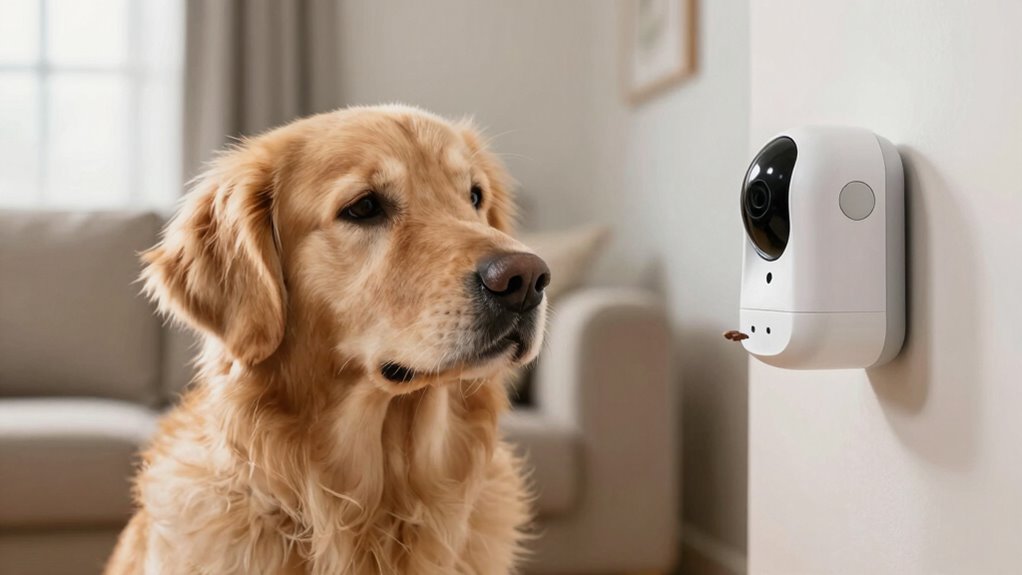
Have you ever wondered how to train your pet more effectively while keeping an eye on them from anywhere? Using a pet camera for treat training can be a game-changer, especially when it comes to managing dog behavior and reinforcing good habits. With the right approach, you can teach your dog new commands or routines without constantly being in the same room. However, it’s essential to implement training techniques that prevent demand barking—those persistent, attention-seeking yelps that can develop if your dog learns they’ll get your attention by barking.
When you’re using a pet camera for treat training, you want your dog to associate the camera with positive experiences, not demands for attention. Start by establishing clear boundaries: reward calm behavior and ignore barking or whining. If your dog begins to bark at the camera, avoid giving them treats or attention until they’re quiet. This teaches your dog that barking doesn’t bring rewards and helps reduce demand barking over time. Consistency is key—use the same cues and responses each time, so your dog learns what’s expected.
Training techniques should focus on reinforcing dog behavior that’s calm and controlled. When your pup remains quiet and relaxed during camera sessions, reward them with treats delivered via the pet camera or by a helper in the room. This positive reinforcement encourages your dog to stay composed rather than resorting to demand barking for attention. Over time, you can gradually increase the duration of these training sessions, helping your dog build patience and self-control. Remember, patience is essential; rushing the process can backfire and lead to more demand barking instead of less. Developing consistent training routines can further enhance the effectiveness of your efforts, especially when paired with understanding dog behavior and cues. Additionally, incorporating training progress tracking can help you identify what methods work best for your individual dog.
It’s also important to set your dog up for success. Provide mental stimulation and physical exercise before training sessions so they’re less likely to resort to barking out of boredom or excess energy. Using training techniques that focus on rewarding desired behaviors rather than punishing unwanted ones creates a more positive experience for your dog and reduces stress, which can trigger demand barking. Additionally, understanding the importance of biodiversity and conservation can remind us how interconnected our actions are, even in how we train and care for our pets, fostering a more compassionate and balanced environment. Incorporating positive reinforcement consistently will help your dog associate calm behavior with rewards, making training more effective.
Finally, utilizing the features of your pet camera—such as two-way audio—allows you to communicate calmly and confidently with your dog, reinforcing your presence even when you’re not physically there. This helps build trust and reduces anxiety, which are often underlying causes of demand barking. With patience, consistency, and the right training techniques, your pet camera can become a powerful tool for managing dog behavior and ensuring your training efforts lead to a calmer, happier pup.
As an affiliate, we earn on qualifying purchases.
Frequently Asked Questions
How Long Does It Typically Take to See Results?
You might see results within a few days to a couple of weeks, depending on consistency. Focus on proper reward timing—praising or treating your pet immediately after good behavior—to reinforce learning. Using treat variety keeps your pet engaged and motivated. Remember, patience is key; if you stay consistent with your training and reward appropriately, you’ll notice a reduction in demand barking over time.
Can Treat Training Be Effective for Aggressive Dogs?
Imagine guiding your aggressive dog through a calm, controlled path—treat training can indeed be effective if you stay consistent. It aids in aggression management by rewarding positive behaviors, which boosts your training motivation. While progress may take time, patience and clear boundaries help your dog learn better responses. Remember, treat training isn’t a quick fix but a gradual process that can transform your dog’s behavior over time.
What if My Pet Becomes Anxious During Training Sessions?
If your pet becomes anxious during training, you can help by incorporating stress reduction and calming techniques. Use gentle, soothing voice commands and keep training sessions short to prevent overwhelm. Providing a quiet, comfortable space and treats for relaxation can also ease anxiety. Consistency and patience are key; gradually increase training duration while observing your pet’s comfort level, ensuring they feel safe and secure throughout the process.
Are There Specific Treat Types Recommended for Training?
For training, you should choose treats that are small, soft, and highly appealing to keep your pet engaged and motivated. Treat selection is essential, so opt for healthy options that won’t upset their stomach. Consistency in offering these treats during training sessions helps reinforce good behavior. By sticking to a routine and selecting the right treats, you’ll make training more effective and enjoyable for both you and your pet.
How Do I Prevent My Pet From Developing Dependence on Treats?
To prevent your pet from developing dependence on treats, focus on treat habituation by gradually reducing treat frequency during training sessions. Incorporate independence building by encouraging your pet to follow commands without expecting a treat each time. Use praise and affection as rewards to reinforce good behavior, helping your pet learn that they don’t always need treats for positive reinforcement. This approach promotes confidence and self-control.
Conclusion
With consistent treat training using your pet camera, you can markedly reduce demand barking, making your home calmer. Did you know that studies show dogs that receive positive reinforcement are 60% less likely to bark excessively? Imagine your furry friend calmly waiting for treats instead of barking for attention. By staying patient and using your camera to monitor progress, you’ll build a stronger bond and enjoy peaceful, happy moments together. Keep at it—you’re on the right path!
NFL season / tailgating Picks
team gear
As an affiliate, we earn on qualifying purchases.