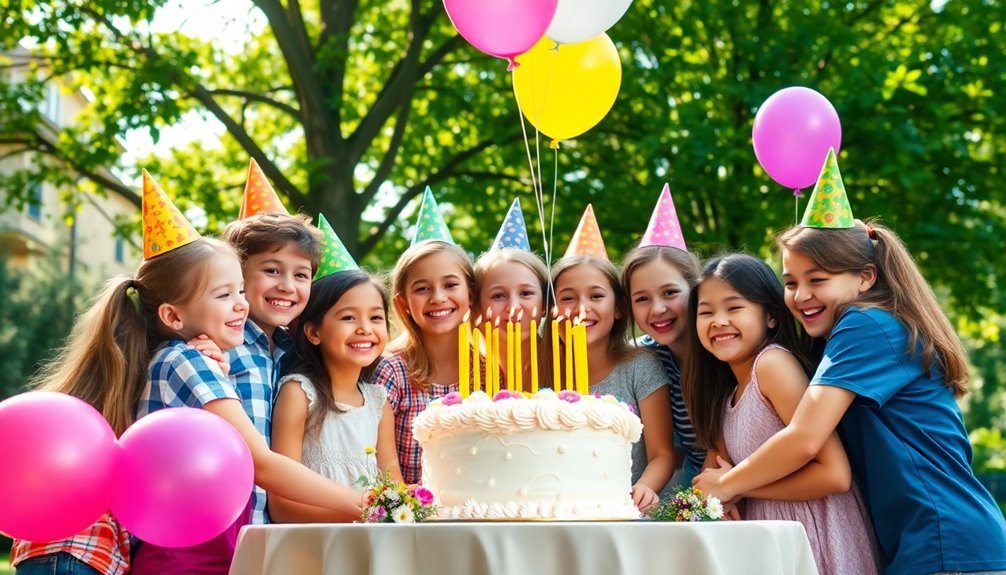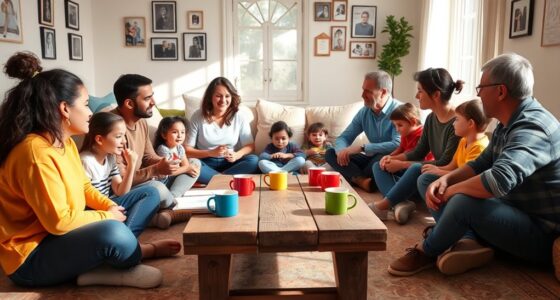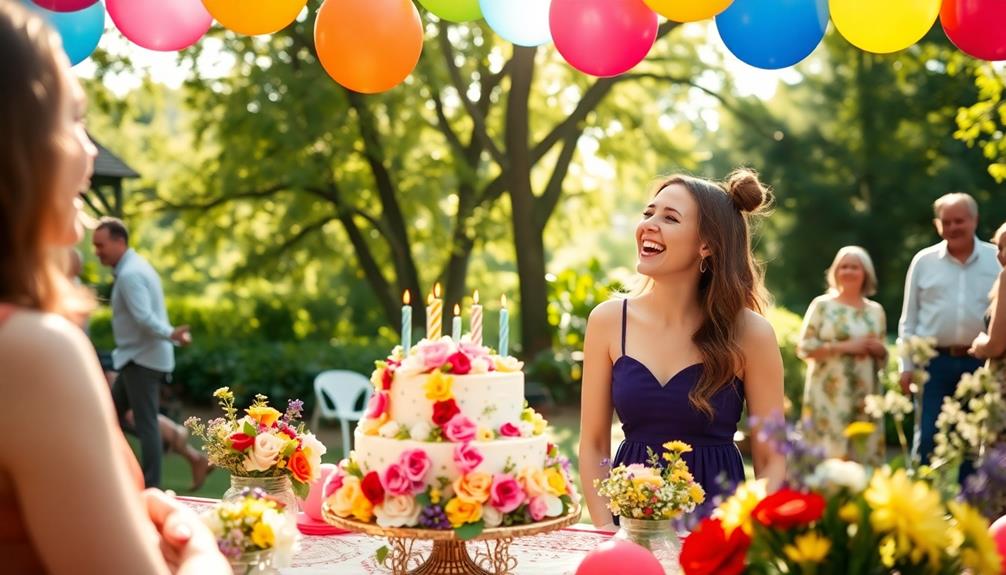
To raise kind kids, focus on daily habits that model empathy and kindness, like explaining feelings and practicing active listening. Encourage your child to contemplate others’ perspectives and guide them through conflict resolution with gentle questions. Incorporate acts of kindness into your routines and praise their caring efforts. Address missteps with patience and constructive feedback, creating a supportive environment that nurtures empathy. Keep nurturing these habits, and you’ll discover simple ways to reinforce kindness in everyday life.
Key Takeaways
- Model empathy and active listening in daily interactions to teach children compassionate behaviors.
- Guide kids through conflict resolution with reflective questions to develop perspective-taking skills.
- Incorporate regular acts of kindness like sharing and helping into daily routines for consistent practice.
- Address missteps with gentle explanations and emotional regulation guidance rather than punishment.
- Create a supportive environment by consistently demonstrating and reinforcing empathy and kindness.
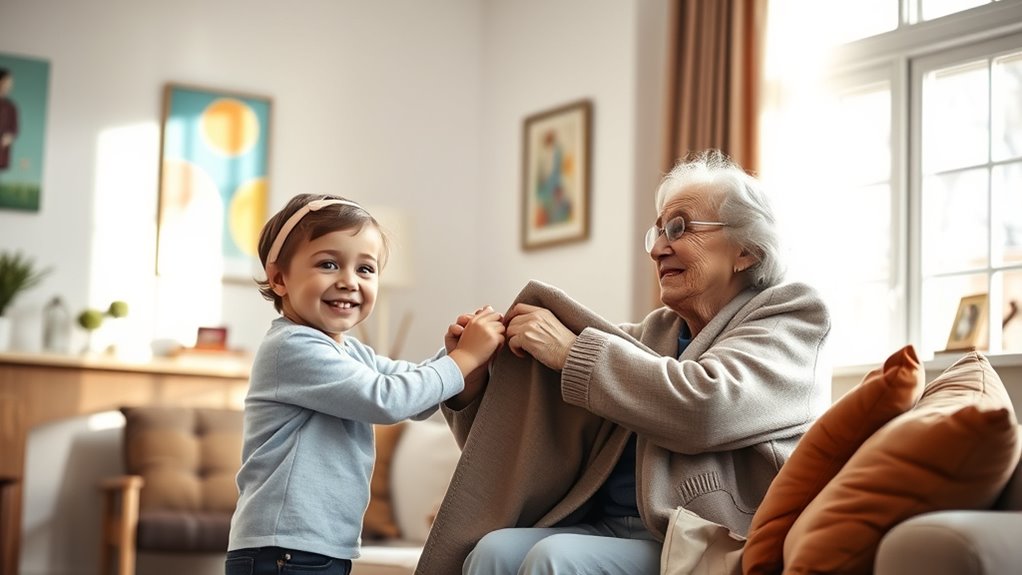
Have you ever wondered how to raise children who are genuinely kind and empathetic? The key lies in fostering empathy development from an early age and teaching effective conflict resolution skills. When you model empathy yourself, your child learns to recognize and respect others’ feelings. For instance, if you notice someone upset, explaining why they might feel that way shows your child how to interpret emotions. When your child sees you listening actively and responding compassionately, they internalize these behaviors, making empathy a natural part of their interactions.
Encouraging your child to consider others’ perspectives during everyday situations is vital. When disagreements arise, rather than immediately stepping in to solve the problem for them, guide them through conflict resolution processes. Ask questions like, “How do you think they felt?” or “What could you do to make things better?” This approach helps your child understand that conflicts are normal and manageable, and that resolving them thoughtfully builds stronger relationships. Over time, this fosters emotional intelligence and patience, core elements of kindness.
Guide children through conflict resolution to build emotional intelligence and stronger relationships.
Creating opportunities for your child to practice empathy can be as simple as involving them in acts of kindness, like sharing toys or helping neighbors. Praise their efforts when they show concern or understanding, reinforcing that these behaviors matter. Remember, children learn best through repetition and real-life examples. So, when they see you show kindness or resolve conflicts calmly, they absorb these lessons effortlessly.
Addressing missteps is equally important. If your child reacts harshly or dismisses someone’s feelings, instead of punishment, offer gentle guidance. Explain why their response may have hurt others and suggest better ways to express themselves. This teaches them emotional regulation and reinforces the importance of empathy in social settings. Additionally, consistent exposure to positive social interactions can significantly boost their social skills and compassion. By consistently providing a safe space for them to learn from mistakes, you help develop their capacity for compassion and understanding.
Ultimately, raising kind kids isn’t about grand gestures but consistent, everyday practices. When you prioritize empathy development and conflict resolution, you give your child tools to navigate social situations with kindness and confidence. They’ll learn that kindness isn’t just an act but a way of being—an integral part of who they are. Your ongoing support, modeling, and patience create an environment where empathy flourishes and kindness becomes second nature. In time, your child will carry these values into the world, making it a better place one compassionate act at a time.

Hzuaneri 16 LEDs and 8 LEDs Jewelry Cabinet Armoire JC15904BJC17004B
360° Swivel HD Glass Mirror: The full-length mirror swivels a full circle for effortless makeup application, jewelry try-on,...
As an affiliate, we earn on qualifying purchases.
Frequently Asked Questions
How Can I Model Kindness in Everyday Situations?
You can model kindness in everyday situations by sharing gestures like offering help, compliments, or listening attentively. Show your children how to be considerate through your daily modeling—whether it’s holding the door, saying thank you, or resolving conflicts calmly. These small acts teach them kindness naturally. Consistently demonstrate empathy and respect, and your children will learn to mirror these positive behaviors, making kindness a part of their everyday lives.
What Are Effective Ways to Handle a Child’s Unkind Behavior?
When your child acts unkindly, calmly address their behavior and explain why it’s wrong, emphasizing bullying prevention. Use kindness rewards to reinforce positive actions, like praising or offering small incentives for kindness. Model respectful communication yourself, and encourage your child to apologize and make amends. Consistent, gentle guidance helps them understand the importance of kindness, fostering a supportive environment where unkind behavior decreases over time.
How Do I Encourage Empathy in My Children?
Think of empathy as planting a seed that blooms with care. You can encourage this by involving your kids in empathy exercises, like role-playing or sharing stories. Practice perspective taking, asking them how others might feel in different situations. When they see the world through someone else’s eyes, empathy grows. Consistently nurture this understanding, and soon, kindness and compassion will flourish naturally in their hearts.
What Activities Promote Kindness Among Siblings?
You can promote kindness among siblings by encouraging them to share chores and work together on family tasks. Volunteering together also fosters empathy and teamwork, showing them the importance of helping others. You might assign joint responsibilities or organize activities where they support each other. These practices teach kids that kindness is part of everyday life, strengthening their bond and developing their caring instincts naturally.
How Can I Teach Kindness During Conflicts or Disagreements?
Ever wonder how to turn conflicts into kindness moments? You can teach your kids during disagreements by encouraging gratitude exercises, where they focus on what they appreciate about each other. Share kindness stories that highlight compassionate actions, making kindness relatable. Prompt your children to express thanks after disagreements, helping them see conflicts as opportunities to grow and connect. This active approach nurtures empathy and transforms conflicts into lessons in kindness.

DECOMIL LED Light Jewelry Cabinet Armoire with Mirror, Large Storage 57" Tall Mirrored Armoire Box Necklace Ring 27 Hook Girls Women, Modern Standing Jewelry Armories with 3 Adjustable Angles
Ample Storage: Tired of untangling necklaces and losing track of your favorite pieces? Our armoire offers ample storage...
As an affiliate, we earn on qualifying purchases.
Conclusion
Raising kind kids doesn’t mean perfection—it’s about consistent small acts, like sharing or saying thank you. Some might think it’s too much work, but imagine your child helping a friend or comforting someone in need; these moments show your efforts pay off. Keep practicing patience and empathy daily, and you’ll see kindness grow naturally. With time, those little acts will become your child’s default, shaping a compassionate, respectful person you’ll be proud of.

SONGMICS Mirror Jewelry Cabinet Armoire with Built-in LED Lights, Wall or Door Mounted Jewelry Storage Organizer, 3.8 x 14.6 x 26.4 Inches Hanging Mirror Cabinet, Gift Idea, White UJJC050W01
[Storage and Mirror in One] With this 2-in-1 jewelry cabinet, you get a 14.6" x 26.4" large frameless...
As an affiliate, we earn on qualifying purchases.

Emfogo Standing Jewelry Armoire, 7 Drawers & 2 Side Doors Jewelry Amoire Cabinet Standing with Top Flip Makeup Mirror, Jewelry Chest Jewelry Boxes
Keep Your Jewelry Safe and Organized: Our standing jewelry armoire features 5 pull-out drawers and 2 side doors...
As an affiliate, we earn on qualifying purchases.