To keep your food safe on long drives, pack your cooler with quality containers and pre-portion snacks to reduce opening it often. Use frozen ice packs layered between items and keep the cooler in the shade to maintain a temperature below 40°F. Regularly check the temperature and keep perishables in the coldest spot. Stay organized and plan your stops to avoid spoilage. Want more tips to keep everything fresh and safe? Keep exploring for expert advice.

Get the little things that make your day delivered free with Prime
- Fast, free delivery on millions of items
- Prime Video, Amazon Music and more included
- Member-only deals all year
Key Takeaways
- Keep the cooler at or below 40°F (4°C) by layering with frozen ice packs and replenishing them during stops.
- Store raw meats, dairy, and perishables in sealed containers in the coldest section of the cooler.
- Regularly monitor the cooler’s temperature and avoid opening large packages frequently to prevent warm air entry.
- Pack snacks in smaller containers to reduce opening large packages and minimize temperature fluctuations.
- Position the cooler in shade or cover it with reflective material to prevent overheating and maintain food safety.
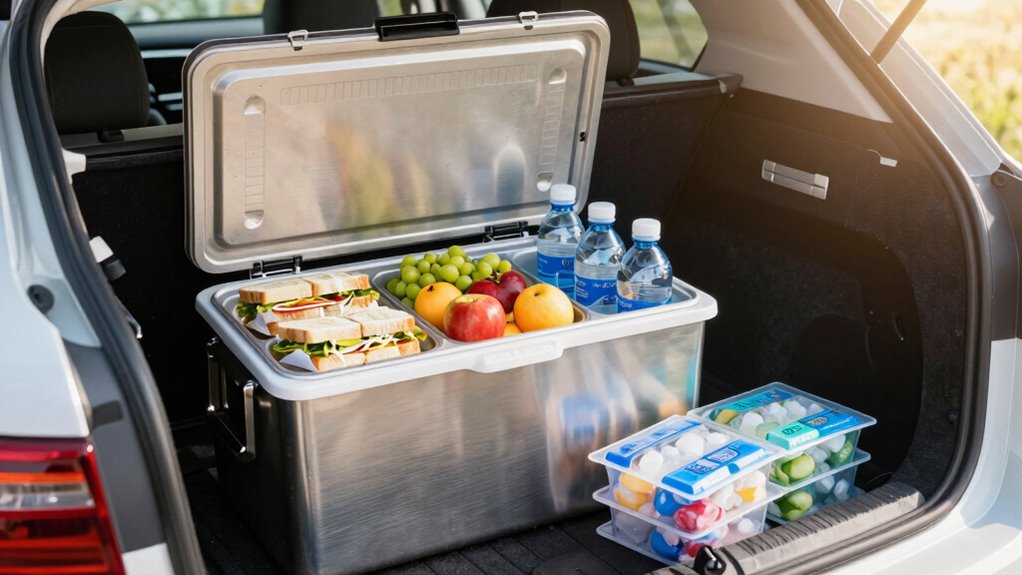
Planning your road trip cooler strategy can make or break your journey, guaranteeing you stay refreshed and avoid unnecessary stops. The key to a successful trip lies in how well you manage your food and beverages, especially with regard to safety and freshness. To start, invest in reliable food storage containers that are designed to keep your items organized and prevent leaks. Using quality containers helps maintain hygiene and makes it easier to access snacks and meals without rummaging through everything.
Alongside good containers, portable ice packs are essential. They keep your cooler cold for hours and prevent bacteria growth, which could spoil your food. Freeze your ice packs overnight before the trip, so they’re fully frozen when you pack your cooler. This guarantees your items stay chilled longer, especially during long stretches between gas stations or rest stops. Remember, the colder your cooler stays, the longer your food remains safe to eat. Ensuring a consistent temperature is crucial for food safety, which is why monitoring the cooler temperature is so important. Incorporating temperature control techniques can further optimize food safety during your trip.
Freeze ice packs overnight to keep your cooler colder longer and prevent food spoilage during long trips.
When packing, place raw meats, dairy, and other perishable items in the coldest part of the cooler—usually at the bottom or in a separate compartment if available. This minimizes the risk of cross-contamination. Keep your food in sealed containers, and avoid leaving leftovers or open packages in the cooler to prevent spoilage. Pre-portion snacks and meals into smaller containers to avoid opening larger packages repeatedly, which can introduce warm air into the cooler.
Temperature control is essential. Aim to keep the cooler at or below 40°F (4°C). Check the temperature periodically, especially during extended stops, and add more ice packs if needed. Some travelers find that layering items with ice packs between them provides more consistent cooling. If you’re packing perishables, plan to consume them within a couple of days. For longer trips, consider bringing extra ice packs or switching to a portable refrigerator if possible. Properly managing food safety is critical to prevent foodborne illnesses during your journey. Additionally, regularly cleaning your cooler helps eliminate bacteria and odors that could compromise food safety.
Hydration is just as important as food safety, so include plenty of cold drinks in your cooler to encourage regular sipping. This keeps everyone refreshed and helps maintain the cooler’s temperature. Keep your cooler out of direct sunlight by storing it in the shade or covering it with a reflective blanket. This simple step prevents the interior from overheating, making sure your food stays safe longer.
With these strategies—using quality food storage containers, portable ice packs, and paying attention to temperature—you can enjoy a safe, convenient, and enjoyable road trip. Proper planning means fewer stops for replacements or concerns about spoiled food, letting you focus on the journey and the sights ahead.
portable cooler with temperature control
As an affiliate, we earn on qualifying purchases.
As an affiliate, we earn on qualifying purchases.
Frequently Asked Questions
How Long Can Cooked Food Stay Safe in a Cooler?
Cooked food can stay safe in your cooler for about 2 to 4 hours if kept at the right temperature. To guarantee safety, monitor the cooler’s temperature regularly and keep it below 40°F. Proper cooler organization helps maintain consistent coldness and prevents cross-contamination. Consider using ice packs or ice to keep the food chilled, and discard any cooked items that have been outside the cooler longer than the recommended time.
What Is the Best Way to Prevent Cross-Contamination?
Cross-contamination is a ticking time bomb, but you can defuse it by practicing proper hygiene and using food packaging wisely. Always wash your hands before handling food and keep raw and cooked items separated in your cooler. Use airtight containers to prevent leaks and cross-contact. These simple steps create a barrier against bacteria, making your snacks safer and your trip more enjoyable. Stay vigilant, and your food stays fresh and safe!
Can I Refreeze Thawed Food During a Trip?
You shouldn’t refreeze thawed food during a trip, especially if it’s been at room temperature for more than two hours, as bacteria can grow. Keep your cooler organized by placing thawed items on top and refrozen items on the bottom to prevent cross-contamination. If you must refreeze, do it promptly while the food is still cold, but it’s safer to consume or discard perishable items rather than refreeze them.
How Often Should I Check the Cooler’s Temperature?
You should check your cooler’s temperature at least every two to four hours using a portable thermometer. Cooler insulation helps maintain a consistent temperature, but frequent checks guarantee your food stays safe. If the thermometer reads above 40°F, add ice or ice packs promptly. Regular monitoring prevents spoilage and keeps your food safe throughout your long drive. Stay vigilant and make certain your cooler remains cold enough for safe storage.
What Are Signs of Food Spoilage During Travel?
Spotting spoiled food during your trip is simple—look for sour smells, slimy textures, or strange colors. If your food packaging is bulging or leaks, it’s a clear sign to discard it. Maintain cooler organization by keeping perishables at the right temperature and separate from ready-to-eat foods. Regularly check for these signs to prevent food poisoning, ensuring your journey stays joyful and safe from spoilage surprises.
Conclusion
By planning your cooler, packing wisely, and maintaining proper temperatures, you safeguard your snacks and meals, ensuring freshness and safety. By staying organized, staying vigilant, and staying prepared, you create a stress-free journey filled with delicious, safe food. With these strategies, you enjoy your road trip without worry, with fresh food at your fingertips, and peace of mind in your heart. Keep these tips in mind, and your adventure will be as safe as it is memorable.
Halloween Picks
halloween
As an affiliate, we earn on qualifying purchases.