
To enforce screen time rules you’ll stick to, set clear, age-appropriate limits and establish tech-free zones like during meals or bedtime. Model healthy habits yourself by reducing your device use around family. Be consistent with boundaries and allow some flexibility for life’s surprises. Communicate your expectations clearly and focus on balanced activities like outdoor play and face-to-face conversations. Keep these strategies in mind, and you’ll find that managing tech use becomes easier for everyone involved.
Key Takeaways
- Set clear, age-appropriate limits and stick consistently to reinforce boundaries.
- Model healthy digital habits by limiting your own screen time during family interactions.
- Establish designated screen-free zones like bedrooms and dining areas to promote engagement elsewhere.
- Implement device-free periods, such as during meals and before bedtime, to encourage other activities.
- Communicate rules clearly and involve children in setting boundaries to ensure understanding and buy-in.
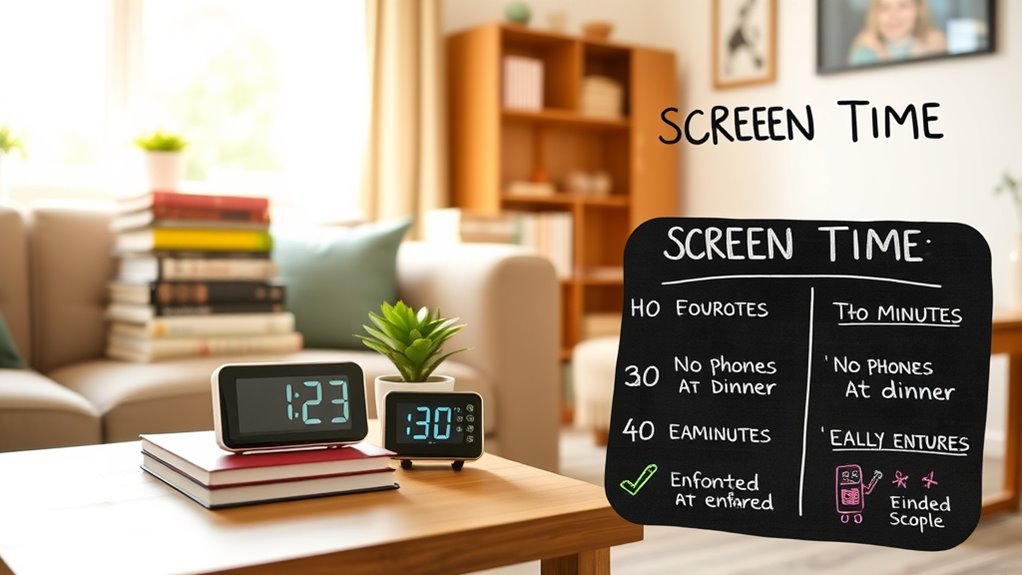
Setting clear screen time rules is essential for maintaining a healthy balance between digital activities and other aspects of life. When you establish boundaries around device use, you help create a structured environment where screens don’t dominate every moment. Digital boundaries serve as guidelines that keep your family’s technology use in check, ensuring that digital devices enhance rather than interfere with daily routines. To make these rules effective, you need to be consistent and realistic, recognizing that complete elimination isn’t practical or necessary. Instead, focus on fostering a sustainable technology balance that supports your child’s development, social skills, and overall well-being.
Start by setting specific, age-appropriate limits on screen time. For example, you might decide that devices are off during meals or an hour before bedtime. These boundaries help your children understand when screens are appropriate and when other activities, like reading, playing outside, or family conversations, take priority. When you clearly communicate these expectations, your kids are more likely to follow through because they understand the reasoning behind the rules. Make sure the rules are easy to remember and apply consistently so that everyone knows what to expect.
Another key aspect of enforcing screen time rules is leading by example. If you want your children to develop good digital boundaries, you need to model those behaviors yourself. Limit your own screen use during family time, prioritize face-to-face interactions, and avoid being glued to devices during meals or outings. When your children see you practicing a healthy technology balance, they’re more inclined to mimic those habits. This not only reinforces the rules but also shows that maintaining boundaries benefits the whole family.
In addition to setting limits, consider creating tech-free zones in your home—like bedrooms or the dining area—where screens are simply not allowed. These designated spaces encourage your children to engage in other activities and foster more meaningful connections with family members. Research shows that screen-free zones can improve overall family cohesion and emotional well-being. Remember to be flexible when necessary; life’s unpredictable, and occasional exceptions can help your children feel respected and understood. However, always circle back to the core boundaries to reinforce the importance of managing screen time responsibly.
Ultimately, enforcing screen time rules isn’t about restriction for its own sake. It’s about nurturing a healthy relationship with technology that supports your child’s growth and happiness. By establishing clear digital boundaries and promoting a well-rounded lifestyle, you help your children develop habits that will serve them well into the future. Consistency, modeling good behavior, and creating a balanced environment are the keys to making these rules stick and ensuring a positive technology balance in your home.

FURNIMAT 2026 Massage Chair Full Body, Zero Gravity Massage Chair with 10 Fix Rollers, Airbags, Heating, Foot Massage, Auto Modes, Bluetooth Speaker, Smart Screen Controller(Brown Premium)
[FULL BODY MASSAGE CHAIR]: After inviting hundreds of massage therapists to test and experience, we launch this upgraded...
As an affiliate, we earn on qualifying purchases.
Frequently Asked Questions
How Can I Track My Child’s Screen Time Effectively?
To track your child’s screen time effectively, set clear parental boundaries and use built-in monitoring tools or apps. Establish tech-free zones like mealtimes or bedrooms to reduce screen use. Regularly review their activity logs and have open conversations about their online habits. Consistency is key—by enforcing these boundaries and creating designated tech-free zones, you help your child develop healthier screen habits.
What Are Age-Appropriate Screen Time Limits?
Research shows kids spend over seven hours daily on screens, highlighting the need for age-appropriate limits. You should set boundaries based on your child’s age—under two, avoid screens altogether; ages 2-5, limit to one hour; and older children, encourage offline activities and set clear daily time caps. Consistent rules help children develop healthy habits, ensuring they balance screen time with play and learning.
How Do I Handle Resistance to Screen Time Rules?
When your child resists screen time rules, focus on setting boundaries and establishing routines. Talk openly about why limits matter, and involve them in creating the rules, so they feel empowered. Consistently enforce the boundaries and stick to the routines you’ve set. Acknowledge their feelings, but stay firm. Over time, this approach helps them understand the importance of balance, making it easier to accept and follow the rules.
Are There Tools to Monitor Online Activity?
Did you know that 92% of parents use parental controls? You can easily find tools for internet monitoring that help you keep track of your child’s online activity. These tools allow you to set boundaries, block inappropriate content, and receive reports on usage. With reliable parental controls, you stay informed and can enforce your screen time rules effectively, giving you peace of mind while your kid explores online safely.
How Can I Balance Screen Time With Other Activities?
To balance screen time with other activities, set clear limits and encourage healthy habits. Make outdoor play a priority by scheduling regular breaks outside, which helps your child stay active and engaged. Create a routine that includes a mix of screen time, outdoor activities, and family time. By actively promoting these healthy habits, you’ll help your child develop a balanced lifestyle and reduce excessive screen exposure.

Massage Chair Full Body,Zero Gravity 3D SL-Track Shiatsu Massage Recliner Chair Built-in Heat System Airbag Massage with Body Scan, Deep Yoga Stretch, Calfrest Extension And Foot And Back massage
Zero Gravity & Sleep Cabin Design – One-touch zero gravity mode combined with a shading sleep cabin blocks...
As an affiliate, we earn on qualifying purchases.
Conclusion
By setting clear screen time rules, you’re the captain steering your family’s ship through digital waters. With boundaries in place, you’ll create a safe harbor where kids can explore the world beyond screens, like stars guiding their dreams. Remember, these rules are your compass—helping everyone stay balanced and grounded. So, chart your course with confidence, knowing you’re nurturing healthy habits that will light up their future like a sunrise after a long night.

AYJOIR 2026 Massage Chair Full Body, Zero Gravity SL-Track Shiatsu Massage Recliner Chair with Body Scan, 6 Fix Point Rollers,Airbags,Deep Yoga Stretch, Heating Function, Black
[Full-body Massage] This massage chair features 6 fixed rollers on the back to target your neck, back, and...
As an affiliate, we earn on qualifying purchases.

KoziSense A18 3D Massage Chair Full Body, Zero Gravity SL-Track Shiatsu Massage Recliner Chair with Heat, AI Control, Body Scan and Calfrest Extension (Upgraded)
【NO ASSEMBLY REQUIRED + U.S.-BASED SUPPORT YOU CAN TRUST】 Enjoy total peace of mind with our 3-year limited...
As an affiliate, we earn on qualifying purchases.