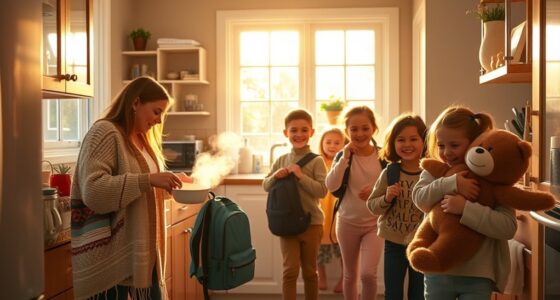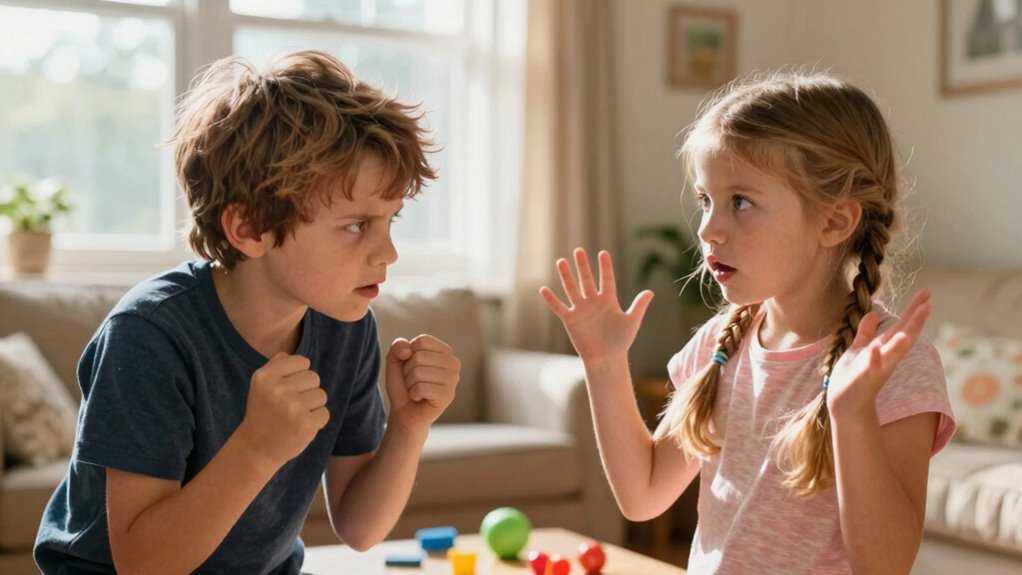

Instead of saying “Stop it,” try encouraging your child to express their feelings and needs clearly. You might ask, “Can you tell your brother what’s bothering you?” or suggest they say, “I don’t like it when you take my toy.” Teaching them to articulate emotions fosters understanding and respect. Focus on helping children understand boundaries and communicate respectfully. Keep exploring ways to guide conflict resolution and help your kids build stronger, more respectful relationships.

Get the little things that make your day delivered free with Prime
- Fast, free delivery on millions of items
- Prime Video, Amazon Music and more included
- Member-only deals all year
Key Takeaways
- Encourage children to express their feelings and needs clearly instead of using dismissive commands.
- Use prompts like “Can you tell your brother what’s bothering you?” to promote communication.
- Teach kids to articulate boundaries, such as “Please don’t take my toys without asking.”
- Promote active listening and taking turns to foster understanding during disagreements.
- Suggest solutions collaboratively, like “Let’s each share what made us upset,” to resolve conflicts constructively.
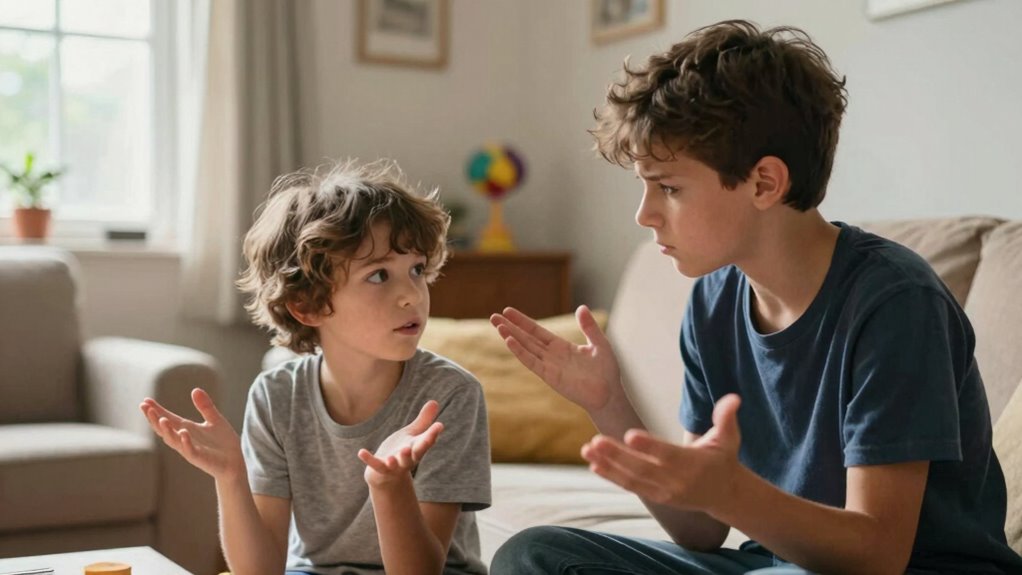
Have you ever wondered why sibling conflicts seem inevitable? It’s natural for brothers and sisters to clash—they’re learning how to share boundaries, manage emotions, and coexist within the same space. Instead of reacting with “Stop it,” which often escalates tensions, you can guide your kids toward healthier conflict resolution. When conflicts arise, encouraging them to express their feelings and needs can make a big difference. For example, instead of dismissing the issue with a blunt command, you might say, “Can you tell your brother what’s bothering you?” This invites communication and helps children understand their own emotions while respecting each other’s boundaries.
Focusing on sharing boundaries is essential during disagreements. Kids need to learn that boundaries aren’t meant to punish but to protect their sense of safety and comfort. When conflicts happen, instead of shouting “Stop it,” teach your children to articulate what they need—like “Please don’t take my toys without asking” or “I need some space right now.” This approach fosters respect and helps them recognize their own limits. It also shows them that conflicts aren’t just about winning or losing, but about understanding each other’s needs and finding common ground. Recognizing that conflict resolution skills are teachable can empower children to handle future disagreements more effectively.
Conflict resolution isn’t just about stopping the fighting; it’s about teaching your children how to handle disagreements constructively. When they start arguing, instead of saying “Stop it,” you could encourage them to take turns talking, listen actively, and suggest solutions. For instance, “Let’s each share what made us upset and see if we can find a way to fix it.” This method helps them develop problem-solving skills and empathy, which are crucial for maintaining peaceful relationships over time. Recognizing that some conflicts stem from differing needs or perspectives can help children appreciate diverse viewpoints and develop greater understanding. Additionally, teaching effective communication skills can greatly improve their ability to resolve disagreements amicably. Remember, it’s okay for conflicts to happen—they’re opportunities for growth. Your role is to guide them in navigating these moments with patience and clarity. Recognizing the importance of conflict management strategies can support their emotional development and foster lasting respect.
children's conflict resolution books
As an affiliate, we earn on qualifying purchases.
As an affiliate, we earn on qualifying purchases.
Frequently Asked Questions
How Can I Prevent Sibling Conflicts Before They Start?
To prevent sibling conflicts before they start, you should set clear sibling boundaries and communicate them consistently. Pay attention to conflict triggers—those moments or topics that often cause disagreements—and try to steer away from them or address them proactively. Encouraging respectful sharing, giving each child their own space, and modeling calm behavior helps create a peaceful environment, reducing the chances of conflicts erupting unexpectedly.
What Are Effective Ways to Teach Sharing to Siblings?
Think of sharing as planting a seed that grows into understanding. Use sharing strategies like taking turns, offering praise, and setting clear rules. Encourage open communication and model conflict resolution skills to resolve disputes calmly. Praise your siblings when they share and cooperate. This approach helps them see sharing as a positive experience, reducing conflicts and fostering teamwork. Consistent practice turns sharing into a natural part of their relationship.
How Do I Handle Persistent Sibling Rivalry?
When dealing with persistent sibling rivalry, you should encourage sibling empathy and teach conflict resolution. Help each child understand their sibling’s feelings, fostering empathy. Guide them in expressing their emotions calmly and listening to each other. Reinforce positive behavior by praising cooperation. By modeling respectful communication and teaching them how to resolve conflicts peacefully, you create a foundation for better sibling relationships and reduce ongoing rivalry.
When Should I Seek Outside Help for Sibling Issues?
When sibling conflicts escalate despite your efforts, it’s time to seek outside help. If you notice ongoing issues affecting emotional boundaries or hindering conflict resolution, consider talking to a counselor or family therapist. They can offer guidance tailored to your situation, help your siblings communicate better, and restore harmony. Don’t hesitate when conflicts persist or deepen—professional support can make a meaningful difference for everyone involved.
How Can I Encourage Positive Interactions Between Siblings?
You can encourage positive interactions by fostering sibling empathy and teaching conflict resolution skills. Encourage them to listen to each other’s feelings and share their own calmly. Praise respectful behavior and model effective communication. When conflicts arise, guide them to find solutions together instead of arguing. Creating opportunities for cooperative activities also helps build a sense of teamwork, making positive interactions more natural and frequent between siblings.
Conclusion
Instead of simply saying “stop it,” try addressing your sibling’s feelings and offering solutions. This approach encourages understanding and cooperation, reducing ongoing conflicts. Some might think this takes too much time or effort, but in reality, fostering respectful communication builds stronger relationships. When you listen and respond thoughtfully, you create a more peaceful environment where both of you feel heard and valued. Over time, this can turn sibling squabbles into opportunities for growth and connection.
Fall Picks
fall essentials
As an affiliate, we earn on qualifying purchases.