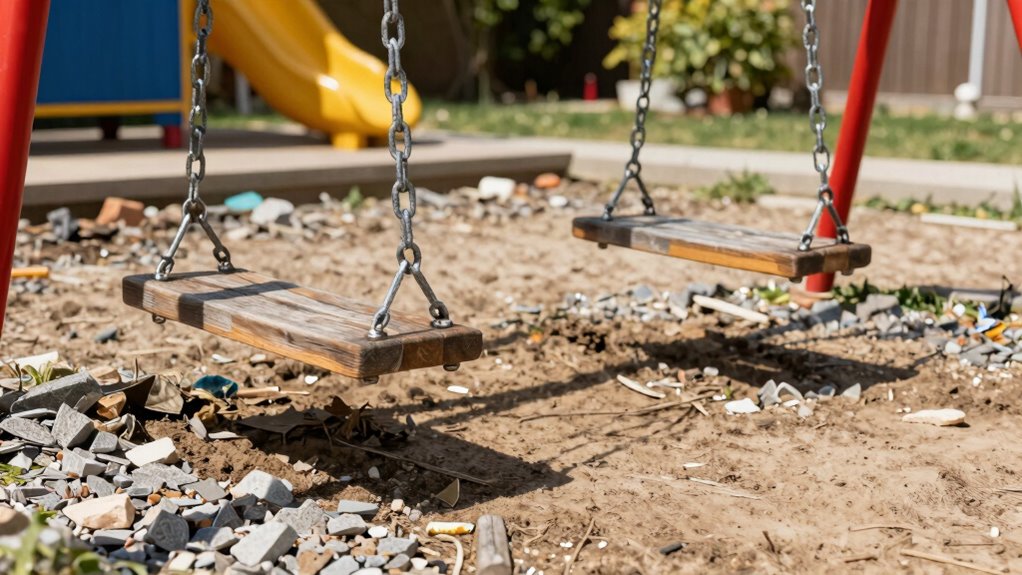
One common mistake parents regret is choosing a hard, unshock-absorbing ground surface like concrete or asphalt under the swing set. These surfaces can cause serious injuries if a child falls and increase wear and tear on the equipment. Instead, opt for impact-absorbing materials such as rubber mulch, wood chips, or sand, which cushion falls and support stability. To avoid safety hazards and protect your investment, consider the key factors involved—if you want to know more, keep exploring the essentials of a secure setup.
Key Takeaways
- Choosing a hard surface like concrete increases injury severity and is a common ground mistake parents regret.
- Skipping proper ground assessment and site preparation can lead to swing set instability and safety hazards.
- Failing to use impact-absorbing materials, such as rubber mulch or sand, compromises safety and increases injury risk.
- Not verifying the ground’s levelness and stability before installation can cause wobbling or tipping.
- Neglecting to follow manufacturer guidelines for ground surface requirements may void warranties and reduce safety.
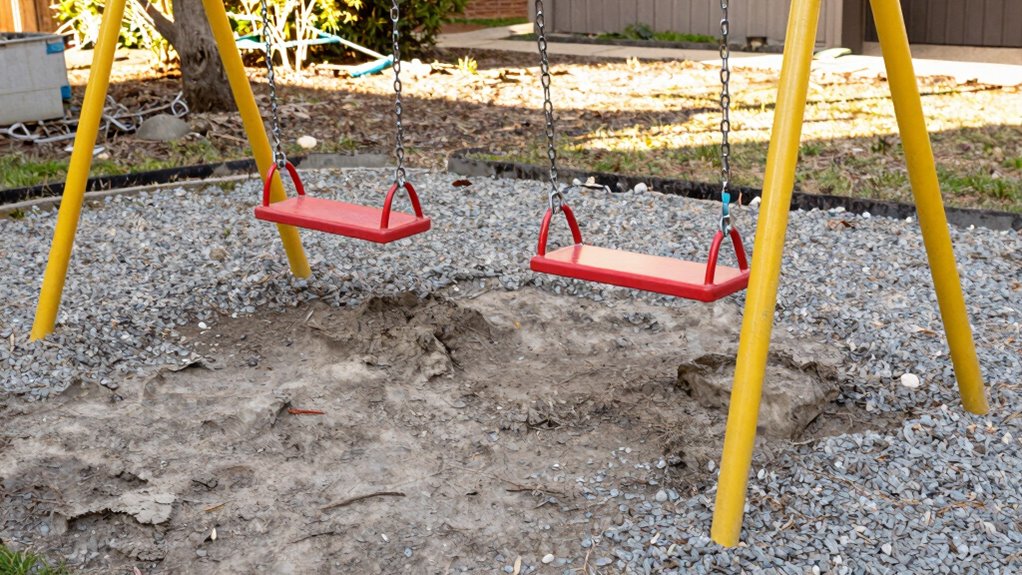
Setting up a swing set might seem straightforward, but careful planning guarantees safety and durability. One of the most overlooked aspects of installation is selecting the right ground surface. Many parents rush through this step, only to regret it later when their children face unnecessary risks or the swing set becomes unstable. To avoid these mistakes, you need to follow essential safety guidelines and have the proper installation tools on hand.
First, assess your yard and identify the best area for the swing set. Choose a flat, level surface away from trees, fences, or other obstacles. This not only provides a stable foundation but also reduces the chance of accidents. Once you’ve pinpointed the spot, it’s vital to prepare the ground properly. Installing a soft, impact-absorbing surface like rubber mulch, wood chips, or sand is ideal. These materials cushion falls and considerably decrease injury risks. Avoid hard surfaces like concrete or asphalt, which can cause severe injuries if a fall occurs.
Choose a flat, obstacle-free area and install impact-absorbing surfacing for safe swing set use.
Before you begin digging or leveling the ground, familiarize yourself with the safety guidelines for swing set installation. Read the manufacturer’s instructions carefully, noting any specific requirements for the ground surface and spacing. These safety guidelines are designed to guarantee the structure remains stable over time. Having the right installation tools is equally important. Gather a shovel, level, tape measure, wrench, and possibly a post-hole digger. Using the correct tools helps you achieve a precise, secure setup. For example, a level guarantees the swing set frame is perfectly upright, preventing uneven wear or tipping. A post-hole digger makes the process faster and safer, especially when working with deep foundations.
Properly preparing the ground surface also involves checking for underground utilities and ensuring the soil is compacted and stable. Use a level to verify the ground’s flatness, and double-check measurements before anchoring the swing set. Anchoring is critical for stability; make sure you follow the safety guidelines for anchoring your specific swing set model. Secure anchors into the ground at the recommended depth, which helps prevent wobbling or tipping during vigorous play. Additionally, considering smart home technology options such as sensor-based safety features can add an extra layer of protection to your setup.
Neglecting these precautions can lead to safety hazards, such as the swing set shifting or collapsing. Investing time and effort into creating a safe ground surface from the start pays off in the long run. It not only prolongs the life of the swing set but also provides peace of mind, knowing your children can play safely. Remember, a well-installed swing set is the foundation of countless hours of fun and safety for your kids.
Frequently Asked Questions
How Often Should I Inspect the Ground Surface Under the Swing Set?
You should inspect the ground surface under your swing set monthly to make certain it meets safety surface standards and maintains durability. Regular checks help you spot wear, erosion, or debris that could compromise safety. If you notice any damage or unevenness, replace or repair the surface promptly. This ongoing maintenance keeps the area safe, reducing the risk of injuries and extending the lifespan of the safety surface standards.
What Are the Best Materials for a Safe Ground Surface?
For playground safety, choose soft, impact-absorbing ground material options like rubber mulch, rubber mats, or engineered wood chips. These materials cushion falls and reduce injury risk. Avoid hard surfaces like concrete or asphalt. Regularly inspect and maintain your chosen ground surface to guarantee it remains safe and effective, keeping your kids protected during play. Proper ground material choices are essential for a safe and fun playground environment.
Can I Install a Swing Set on Concrete or Asphalt?
You shouldn’t install a swing set directly on concrete or asphalt because these surfaces lack proper shock absorption. Instead, use swing set anchors to secure the frame and add ground surface padding like rubber mats or mulch around the base. This setup guarantees safety, minimizes injury risk from falls, and provides a stable foundation. Always prioritize adequate padding and proper anchoring for a safe, enjoyable swing experience.
How Do I Maintain the Ground Surface Over Time?
To maintain the ground surface over time, regularly inspect for signs of wear and tear, especially from weather effects. You should add fresh mulch, gravel, or rubber mats as needed to keep the surface durable and safe. Raking and leveling the area helps prevent unevenness, while addressing drainage issues ensures water doesn’t cause damage. Consistent maintenance keeps your ground surface resilient and safe for your kids’ play.
What Are Signs the Ground Surface Needs Replacement or Repair?
Your ground surface is practically crying out for help if you notice excessive wear, cracks, or uneven patches, which are signs it’s time for repair. Loose or missing mulch, exposed concrete, or soft spots can turn into safety hazards, risking injury. Don’t ignore these signs; addressing them promptly keeps your kids safe and prevents more costly repairs down the line. Regular checks are your best defense against hidden dangers.
Conclusion
To guarantee endless joyful moments and peaceful afternoons, take the time to carefully prepare the ground beneath your swing set. A well-chosen surface acts like a gentle guardian, softening any unintended surprises and allowing your little ones to enjoy their playtime worry-free. When you give this small detail the attention it deserves, you’re creating a safe haven where laughter and memories can flourish, making every swing and giggle truly priceless.