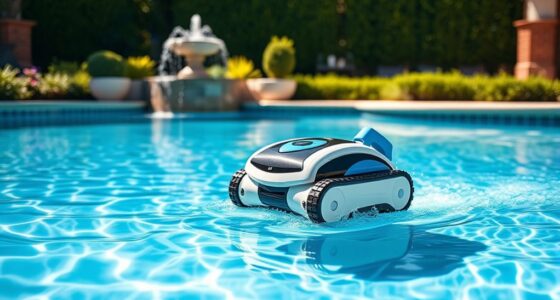
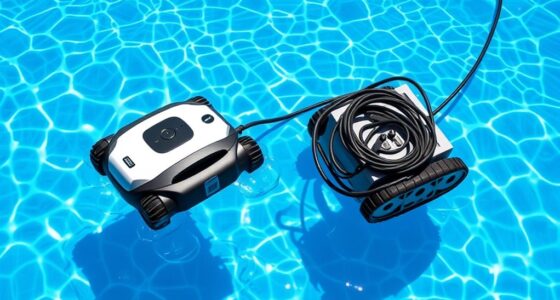
Automatic pool cleaners can handle surface debris, dirt, and some organic matter, but they can’t fully eliminate algae or clear cloudy water on their own. To effectively combat algae and cloudiness, you need to combine the cleaner with chemical treatments like algaecides and chlorine shocks. Regular filter maintenance is also essential for maximum performance. If you want to discover how to get the best results with your pool, keep exploring what strategies work best.

Get the little things that make your day delivered free with Prime
- Fast, free delivery on millions of items
- Prime Video, Amazon Music and more included
- Member-only deals all year
Key Takeaways
- Robotic pool cleaners effectively remove surface and fine debris but cannot eliminate algae or cloudiness alone.
- They work best when combined with chemical treatments like algaecides and chlorine shocks.
- Regular filter maintenance enhances robotic cleaner performance and overall water clarity.
- Severe algae blooms require chemical intervention before robotic cleaning can be fully effective.
- An integrated approach using chemicals and robotic cleaners provides the most thorough pool maintenance.

Keeping your pool clean can be a constant challenge, especially when algae and cloudiness take over. You want your pool to be clear and inviting, but stubborn algae blooms and murky water can make that difficult. That’s where automatic pool cleaners come into play, offering a convenient solution to keep your pool in top shape. But can they truly handle the tough job of managing algae and cloudy water? The answer depends on the type of cleaner you choose and how you maintain it.
Robotic pool cleaners, in particular, have made significant strides thanks to advanced robotic navigation systems. These devices use sensors and intelligent programming to map out your pool’s surfaces, ensuring thorough coverage without missing spots. Their robotic navigation allows them to efficiently navigate around obstacles, climb walls, and clean tight corners, which manual cleaning often misses. This thorough approach helps in reducing algae buildup by removing debris, algae spores, and organic matter that encourage algae growth in the first place.
However, robotic cleaners are most effective when paired with proper filter maintenance. These devices rely heavily on their filters to trap dirt, algae, and other particles. Regularly cleaning or replacing filters ensures the robot operates at peak performance, preventing clogs that could reduce suction power and cleaning efficiency. Neglecting filter maintenance can lead to poor cleaning results, leaving algae and cloudiness behind. It’s vital to check and service your robotic cleaner’s filters frequently, especially during algae-prone seasons or after heavy debris storms.
While robotic cleaners excel at removing surface debris and fine particles, they are not a complete solution for severe algae blooms or heavily cloudy water. In such cases, chemical treatment—like algaecides and chlorine shock—is essential before or alongside robotic cleaning. These chemicals kill algae at the source, ensuring the water clears up, while the robotic cleaner handles the physical removal of remaining debris. Combining chemical treatments with regular filter maintenance and robotic navigation creates an all-encompassing approach to pool cleaning, tackling algae and cloudiness effectively. Additionally, understanding the importance of somatic therapy can help pool owners manage stress and maintain a calm mindset during ongoing cleaning efforts.
Frequently Asked Questions
How Often Should I Run My Automatic Pool Cleaner for Algae Control?
You should run your automatic pool cleaner daily during algae blooms or cloudy pools to keep debris at bay. Regular use aids filter maintenance by preventing algae buildup and guarantees cleaner water. The type of cleaner you have, whether robotic or suction-side, determines the frequency; robotic cleaners often need less frequent runs. Keep an eye on your pool’s condition and adjust the schedule as needed for ideal algae control and crystal-clear water.
Can Automatic Cleaners Remove Algae Stains From Pool Surfaces?
You might think automatic pool cleaners can’t handle algae stains, but they do a decent job with surface stains during regular cleaning. While they excel at algae removal from pool floors and walls, stubborn surface stains often require manual scrubbing or chemical treatments. Using your cleaner consistently helps maintain a clean pool, but for tougher algae and stains, you’ll still need to supplement with proper pool chemicals to guarantee thorough algae removal.
Are Certain Types of Pool Cleaners Better for Cloudy Water?
You might wonder if certain pool cleaners are better for cloudy water. Robotic cleaners often excel in this area because of their robotic efficiency, ensuring thorough coverage and debris removal. Additionally, choosing a cleaner compatible with your pool’s chemicals helps prevent damage and enhances effectiveness. While no cleaner single-handedly clears all cloudiness, selecting one with strong robotic efficiency and chemical compatibility gives you the best chance of improving your pool’s clarity.
Do Automatic Cleaners Require Special Filters for Algae Removal?
They say, “prevention is better than cure,” and that’s true for pool maintenance. Automatic cleaners generally don’t need special filters for algae removal, but using algae-specific filters can boost their effectiveness. Check your cleaner’s filter requirements—most work with standard filters, but algae-specific ones trap more spores. If algae persists, a chemical treatment might be necessary, as filters alone can’t handle all algae.
How Can I Prevent Algae Buildup While Using an Automatic Cleaner?
You can prevent algae buildup while using your automatic cleaner by maintaining proper chemical balancing. Regularly test and adjust your pool’s pH, chlorine, and algaecide levels to keep algae at bay. Algae prevention also involves brushing the pool walls and floor before cleaning and ensuring your filter is clean. These steps work together to create an environment that discourages algae growth, making your automatic cleaner more effective and your pool clearer.
Conclusion
So, can automatic pool cleaners really tackle algae and cloudy water? While they do a great job with debris and dirt, they might not be enough on their own for stubborn algae or persistent cloudiness. Think of them as a helpful tool in your pool maintenance kit, but don’t forget to regularly shock your pool and balance chemicals. Combining manual and automated efforts will give you a sparkling, algae-free pool you can enjoy all season long.
NFL season / tailgating Picks
team gear
As an affiliate, we earn on qualifying purchases.