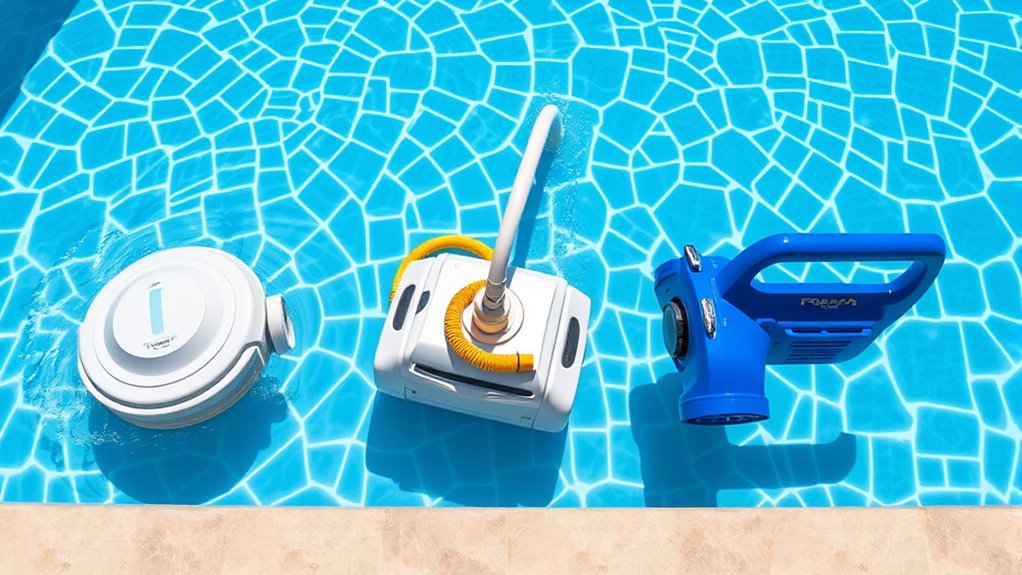
Automatic pool cleaners make maintaining your pool easier by using different technologies for debris removal. Robotic cleaners are smart, map your pool, and clean efficiently with minimal effort, while suction-side models connect to your skimmer and are budget-friendly. Pressure-side cleaners use water pressure to power through debris bags. Each type offers unique benefits depending on your pool’s size, shape, and your preferences. Keep exploring to discover which option best suits your needs.

Get the little things that make your day delivered free with Prime
- Fast, free delivery on millions of items
- Prime Video, Amazon Music and more included
- Member-only deals all year
Key Takeaways
- Robotic pool cleaners use advanced sensors and algorithms for efficient, thorough cleaning and obstacle navigation.
- Debris collection varies from vacuum suction to scrubbing, with filters capturing particles and some models featuring self-cleaning filters.
- Types include robotic (automatic, quiet, advanced navigation), suction-side (affordable, connected to skimmer), and pressure-side (uses water pressure, has debris bags).
- Choosing the right cleaner depends on pool size, shape, budget, and desired features like energy efficiency and ease of maintenance.
- Regular filter maintenance and selecting models with easy-to-clean filters help maintain optimal cleaning performance and longevity.
Have you ever wondered how to keep your pool spotless without the hassle of manual cleaning? Automatic pool cleaners make this possible, and understanding their types can help you choose the right one. One of the key features that set robotic pool cleaners apart is robotic navigation. These devices use advanced algorithms and sensors to map out your pool’s shape, ensuring thorough coverage without missing spots. This navigation technology allows the cleaner to move intelligently around obstacles and corners, making the cleaning process efficient and effective.
Robotic navigation ensures thorough, efficient pool cleaning by intelligently mapping and maneuvering around obstacles.
When it comes to debris collection methods, automatic pool cleaners vary considerably. Some use vacuum-style suction to pull dirt, leaves, and debris into their built-in filter bags or cartridges. These models often connect to your pool’s filtration system or operate independently with their own power source. Others employ brushing or scrubbing mechanisms to loosen algae and dirt from the pool surfaces, then collect the debris through their suction systems. The most advanced models combine both methods—powerful suction paired with scrubbing brushes—resulting in a deep clean that leaves your pool sparkling.
Robotic pool cleaners, in particular, excel in debris collection because they typically have multiple filters or cartridges designed to trap particles of various sizes. Many come with fine mesh filters for tiny debris like pollen or algae, and some even feature self-cleaning filters that rinse themselves after each use, saving you time and effort. The debris collection process is generally automated, so once you set the cleaner in your pool, it handles all the dirty work. You’ll appreciate how much less manual labor is involved, especially during the peak swimming season. Additionally, some models feature advanced debris filtration that captures even microscopic particles, enhancing overall water quality.
Choosing between different types of automatic pool cleaners depends on your pool size, shape, and personal preference. Robotic models are usually more expensive but offer superior navigation and debris collection capabilities. They are also energy-efficient and quiet, making them ideal for regular maintenance. Suction-side cleaners are typically more affordable and connect directly to your existing pool’s skimmer or dedicated suction line. Pressure-side cleaners use higher water pressure to move around and often have their own debris bag, making them suitable for larger pools or heavier debris loads.
In essence, understanding robotic navigation and debris collection methods helps you pick a cleaner that fits your needs. Whether you opt for a sophisticated robotic model or a simpler suction-side cleaner, these devices take the effort out of pool maintenance. Another essential feature to consider is the ease of maintenance and filter cleaning, which can significantly impact how often your cleaner needs servicing. Regularly inspecting and replacing filters can extend the lifespan of your pool cleaner and maintain its efficiency. To maximize efficiency, it’s also helpful to choose a model with energy efficiency features that reduce power consumption and operating costs. With the right automatic cleaner, you can enjoy a crystal-clear pool all season long without breaking a sweat.
Frequently Asked Questions
How Often Should I Run My Automatic Pool Cleaner?
You should run your automatic pool cleaner regularly to maintain pool safety and proper water chemistry. Typically, running it 2-3 times a week keeps debris at bay and prevents algae buildup. Adjust frequency based on pool usage and local environment. Consistent cleaning guarantees safe, clear water, making your pool a healthier space. Regular maintenance helps you catch issues early, keeping your pool safe and enjoyable all season long.
Can Automatic Pool Cleaners Handle Large Debris?
Did you know that most automatic pool cleaners can handle debris sizes up to 2 inches? When it comes to large debris, like leaves, your cleaner’s leaf collection feature and debris capacity are key. While some models excel at picking up bigger items, others might clog or miss debris. Check your cleaner’s specifications to guarantee it can handle the size and volume of debris in your pool for peak performance.
Are Robotic Pool Cleaners Energy-Efficient?
Robotic pool cleaners are generally energy-efficient, helping you save on power consumption. They use advanced technology to optimize energy savings, often running on low voltage and consuming less power compared to traditional cleaners. By choosing an energy-efficient model, you can keep your pool spotless without markedly increasing your electricity bills. So, when shopping for a robotic cleaner, look for those with good energy ratings to maximize power savings and efficiency.
How Do I Troubleshoot Common Automatic Cleaner Issues?
Imagine your pool cleaner stalling mid-clean, leaves scattered like confetti. First, check if it’s properly calibrated manually — a simple tweak can restore its rhythm. Next, inspect the filter for clogging; debris buildup can slow or stop the cleaner. Clear out any obstructions, ensuring water flows smoothly. Regular maintenance like this keeps your cleaner running efficiently, so your pool stays sparkling without unexpected hiccups.
What Maintenance Is Required for Automatic Pool Cleaners?
You need to regularly check and clean your automatic pool cleaner’s filter types to keep it running smoothly. Replace or rinse filters as needed to maintain peak performance. Also, monitor the battery life, ensuring it charges fully and lasts through cleaning cycles. Proper maintenance prevents clogs, extends the cleaner’s lifespan, and keeps your pool sparkling clean. Regular upkeep is key to getting the most out of your automatic pool cleaner.
Conclusion
In summary, selecting the appropriate automatic pool cleaner depends on understanding your pool’s specific needs and the types available. While some believe robotic cleaners are the ultimate solution, recent studies suggest that combining different types can yield the best results. Whether you opt for a suction, pressure, or robotic cleaner, investing in regular maintenance ensures your pool stays pristine. Remember, a well-chosen cleaner not only saves you time but also enhances your swimming experience.
NFL season / tailgating Picks
team gear
As an affiliate, we earn on qualifying purchases.