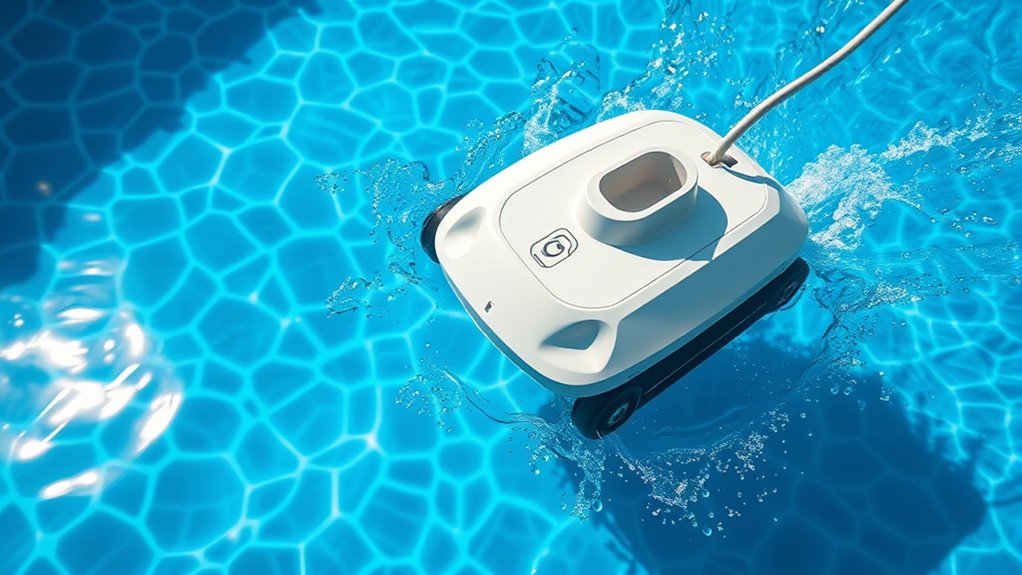

If you want a simple, cost-effective pool cleaner that’s easy to operate and maintain, a suction pool cleaner is your best choice. It connects directly to your pool’s skimmer or suction line, requiring minimal setup and no batteries. It’s reliable, durable, and works well for regular cleaning, especially if your pool has irregular shapes or hard-to-reach spots. To find out more about when to pick this type over others, keep exploring the details ahead.

Get the little things that make your day delivered free with Prime
- Fast, free delivery on millions of items
- Prime Video, Amazon Music and more included
- Member-only deals all year
Key Takeaways
- Opt for a suction cleaner when prioritizing operational simplicity, minimal setup, and ease of maintenance.
- Choose a suction model for cost-effective, eco-friendly cleaning that leverages existing pool pump power without additional energy sources.
- Select a suction cleaner for irregular-shaped pools or hard-to-reach spots, thanks to flexible hose maneuverability.
- Use a suction cleaner when reliability and durability are key, as they have fewer moving parts and are less prone to breakdowns.
- Prefer suction models for routine, consistent cleaning, especially in pools where straightforward, low-maintenance operation is desired.

Choosing the right pool cleaner can considerably impact maintenance and overall pool health. When evaluating options, a suction pool cleaner might be the ideal choice, especially if you’re seeking a device that’s straightforward, cost-effective, and reliable. Suction cleaners operate by connecting to your pool’s skimmer or dedicated suction line, using the existing filtration system to power their cleaning action. This simplicity makes them a popular choice among pool owners who prefer minimal fuss and maintenance, as they generally have fewer moving parts than robotic models. Additionally, these cleaners tend to be more durable and easier to repair, which can save you money over time.
One key advantage of suction pool cleaners is their energy efficiency. Unlike robotic models that rely on their own motors and onboard batteries, suction cleaners draw power directly from your pool’s filtration system. This means you don’t need to worry about charging batteries or expensive electrical components, reducing both operational costs and energy consumption. If you’re conscious about conserving energy and lowering utility bills, a suction cleaner offers a smart, eco-friendly cleaning solution. Its reliance on your existing system means it uses energy only when your pump is running, making it a more efficient choice compared to battery-powered robotic cleaners that might run independently or require frequent recharging.
Suction pool cleaners are energy-efficient, drawing power only when your pump runs, saving costs and reducing energy use.
Robotic technology has evolved rapidly over recent years, bringing advanced features like programmable cleaning cycles, sensors, and navigation systems to many models. However, suction cleaners have kept things simple, which can be an advantage if you prefer a no-fuss device. They’re less complex to operate—usually just requiring you to connect the hose, turn on the pump, and let the cleaner do its job. Because they don’t have onboard computers or sensors, they’re less prone to malfunctions and don’t need software updates or troubleshooting. This simplicity translates to less maintenance and fewer repairs, giving you peace of mind and saving you time.
Furthermore, suction pool cleaners work well in pools with irregular shapes or hard-to-reach spots, as their hoses and suction intake can be maneuvered easily. They’re also generally more affordable upfront compared to robotic cleaners, making them an attractive option for budget-conscious pool owners. While robotic cleaners tend to excel at thorough, automated cleaning, suction models are dependable workhorses that can handle routine maintenance without the added complexity or cost. If your primary goal is effective, energy-efficient cleaning with minimal fuss, choosing a suction pool cleaner could be the smart move to keep your pool sparkling year-round.
Frequently Asked Questions
Are Suction Pool Cleaners Suitable for All Pool Sizes?
Suction pool cleaners are generally suitable for most pool sizes, but their pool size compatibility depends on the cleaner’s suction power efficiency. For larger pools, a powerful suction cleaner works best to cover the area effectively without taking too long. If your pool is small to medium, a standard suction cleaner will do the job well. Always check the manufacturer’s recommendations to guarantee ideal performance for your specific pool size.
How Often Should I Replace Parts on a Suction Cleaner?
You should replace parts on your suction pool cleaner based on their replacement frequency and part durability. Typically, filters and brushes need replacing every year or so, while hoses and seals may last longer with proper maintenance. Regularly inspect your cleaner for wear and tear, and substitute worn parts promptly to keep it operating efficiently. Proper care ensures your cleaner stays effective and extends its lifespan.
Can Suction Cleaners Handle Debris Like Leaves Effectively?
Did you know suction pool cleaners can handle up to 80% of debris, including leaves? They’re great for leaf removal and debris collection, especially in smaller pools. While they work well, large or heavy leaves might clog the system, so regular checks are vital. For effective debris collection, verify your cleaner’s filter is clean and parts are in good shape. This way, you keep your pool spotless with minimal effort.
Are They Energy-Efficient Compared to Robotic Cleaners?
You might wonder if suction pool cleaners are energy-efficient compared to robotic ones. Typically, suction cleaners have lower energy consumption because they rely on your pool pump’s power, making them more power-efficient for regular use. Robotic cleaners, though more autonomous, often use more energy due to their onboard motors. If you want to save on energy bills, a suction cleaner can be a smart choice, especially for routine cleaning.
What Maintenance Is Required for Suction Pool Cleaners?
Think of maintaining your suction pool cleaner like tending a garden—you need to keep it healthy. Regularly check and clean the filter cartridge to prevent clogs, and inspect the hose for cracks or blockages. Rinse the filter cartridge with a hose every few weeks, and replace it if it wears out. Proper maintenance keeps your cleaner running smoothly and extends its lifespan, making your pool sparkle effortlessly.
Conclusion
Choosing a suction pool cleaner can be a smart move, especially since they’re responsible for cleaning up to 80% of debris in pools without needing a booster pump. If you want a cost-effective, energy-efficient option that’s easy to maintain, a suction cleaner might be your best bet. Remember, understanding your pool’s size and debris level will help you decide when a suction cleaner outperforms other types for a sparkling, hassle-free pool experience.
Halloween Picks
halloween
As an affiliate, we earn on qualifying purchases.