
To keep your coffee maker in top shape, descale every 1 to 3 months, depending on usage and water hardness. Use a descaling solution or vinegar-water mix, run a brew cycle, and then rinse with plain water several times. Some machines have built-in programs to help, and accessories like cleaning tablets can make the process easier. Staying on top of descaling guarantees your coffee tastes fresh and your machine lasts longer—discover more tips below.
Key Takeaways
- Descale your coffee maker every 1 to 3 months, depending on water hardness and usage.
- Use a descaling solution or vinegar-water mix, and run a brew cycle followed by multiple rinse cycles.
- Many machines have built-in descaling programs for easy maintenance; follow the manufacturer’s instructions.
- Incorporate descaling accessories like cleaning tablets or cartridges for more thorough cleaning.
- After descaling, run several plain water cycles to remove residue and maintain optimal machine performance.

Over time, mineral deposits from water can build up inside your coffee maker, affecting its performance and the quality of your brew. This buildup, known as scale, is especially common in fancy coffee machines that use more complex heating elements or water reservoirs. If you notice your coffee tasting off, or your machine taking longer to brew, it’s a clear sign that descaling is overdue. Regular descaling not only preserves the flavor but also extends the lifespan of your appliance. Fortunately, maintaining your coffee maker isn’t complicated, and you don’t need to be a barista to keep it running smoothly.
Mineral buildup in coffee makers impacts performance and flavor; regular descaling keeps your machine running smoothly.
First, it’s crucial to understand how often you should descale your machine. For most household coffee makers, a good rule of thumb is to do it every 1 to 3 months, depending on how frequently you brew and the hardness of your water. Hard water, rich in minerals like calcium and magnesium, causes scale buildup faster. If you use a fancy coffee machine, check the manufacturer’s instructions, as some models may recommend more frequent descaling or have specific procedures. Many of these machines are compatible with specialized descaling accessories, designed to make the process easier and more effective. These accessories often include descaling cartridges or cleaning tablets that ensure thorough removal of mineral deposits.
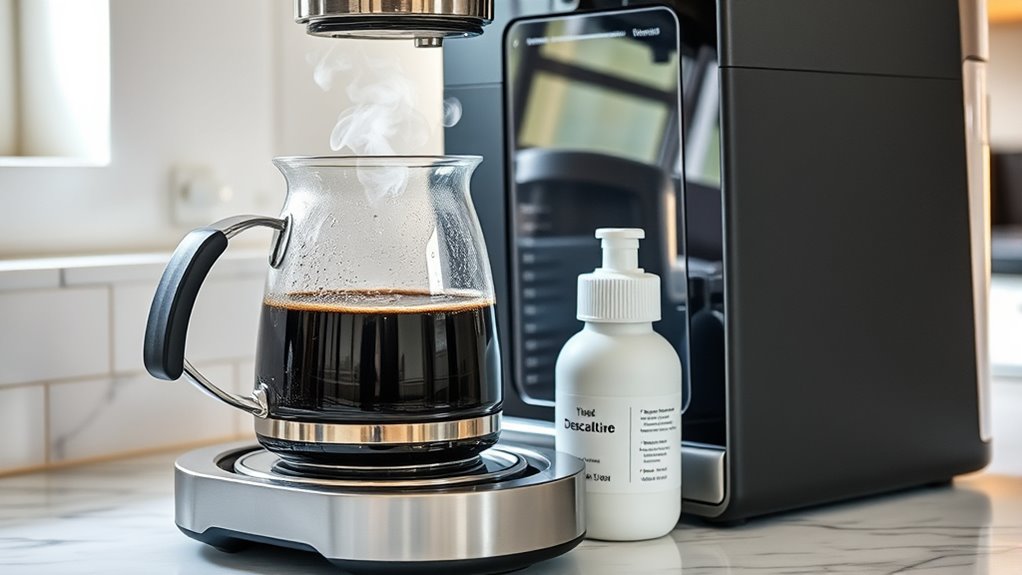
To start, you’ll want to fill the water reservoir with a descaling solution or a mix of equal parts white vinegar and water. Some fancy coffee machines have built-in descaling programs, which streamline the process — just follow the manufacturer’s instructions. If your machine doesn’t have this feature, manually run a brew cycle with the vinegar solution, then follow it with a couple of plain water cycles to rinse out any remaining vinegar. Using descaling accessories like cleaning tablets can simplify this step, especially for machines with complex water pathways. These accessories ensure that every part of the machine gets cleaned thoroughly, reducing the risk of mineral buildup. Understanding how AI-powered solutions can assist with maintenance routines can help optimize the descaling process and ensure consistent performance.
After completing the descaling process, it’s a good idea to run a few plain water cycles to flush out any residues. Regularly cleaning your machine with the right descaling accessories and adhering to recommended intervals keeps your coffee tasting fresh and your machine functioning efficiently. Remember, the more often you descale, the less likely you’ll face issues like slow brewing or burnt-tasting coffee. By making descaling a routine part of your maintenance, you’ll enjoy consistently great coffee and extend your machine’s life.
Frequently Asked Questions
Can Descaling Damage My Coffee Maker’s Internal Parts?
Descaling your coffee maker generally won’t cause internal corrosion or seal deterioration if you follow the proper procedures. Using the right descaling solution and not overdoing it helps prevent damage to internal parts. If you neglect descaling, mineral buildup can lead to corrosion and seal issues. Always follow manufacturer instructions, avoid harsh chemicals, and rinse thoroughly to keep your machine in good shape without risking internal damage.
Are Natural Descaling Methods as Effective as Commercial Products?
Natural descaling methods like home remedies can be just as effective as commercial solutions if used correctly. You should use vinegar or lemon juice to break down mineral buildup, but guarantee you rinse thoroughly afterward. While commercial products often contain specialized formulas, natural options are eco-friendly and cost-effective. With proper technique, both methods can keep your coffee maker clean without damaging internal parts.
How Do I Know if My Coffee Maker Needs Descaling?
You’ll know your coffee maker needs descaling if you notice calcium buildup or if your coffee tastes off. Poor water quality can cause mineral deposits, affecting the machine’s performance. Signs include slower brewing, strange noises, or weak coffee. Regularly check for visible deposits, and if you experience any of these issues, it’s time to descale. Keeping an eye on water quality and buildup helps maintain your coffee’s flavor and your machine’s longevity.
Is Descaling Necessary if I Use Filtered or Bottled Water?
Think of your coffee maker as a garden; even with filtered or bottled water, minerals can build up like weeds. Descaling is still necessary to keep it running smoothly. Filtered water reduces mineral deposits, but doesn’t eliminate them entirely. Bottled water may have fewer impurities, yet minerals can still accumulate over time. Regular descaling guarantees your machine brews the best coffee, regardless of water type.
Can I Descale My Coffee Maker More Frequently Than Recommended?
Yes, you can descale your coffee maker more frequently if you notice signs of buildup or experience excessive cleaning. However, avoid overdoing it, as too much descaling can damage your machine. If you prefer, try alternative descaling methods or use filtered water, which reduces mineral deposits. Regular maintenance helps keep your coffee tasting great without risking harm from excessive cleaning.
Conclusion
So, there you have it—descaling your coffee maker isn’t exactly rocket science, but neglecting it might just turn your morning brew into a mudslide. Sure, a quick vinegar rinse is a tiny hassle, but imagine facing a clogged, flavorless mess every day. Keep up with your descaling routine, or risk sacrificing that perfect cup for a science experiment gone wrong. Your taste buds—and your caffeine addiction—will thank you.