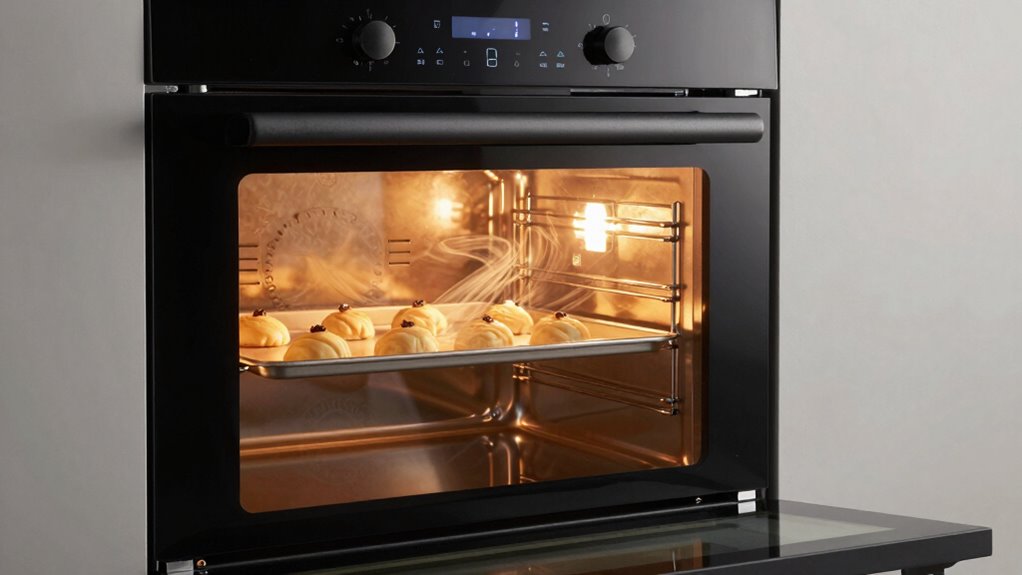

To effectively use convection mode, you should reduce your recipe’s temperature by about 25°F (15°C) to prevent over-browning, and make certain your oven racks are correctly positioned for proper airflow. Avoid overcrowding, and always preheat before switching to convection. Keep in mind it’s best for evenly baked cookies and roasted veggies but not delicate items like soufflés. If you want to master these techniques, there’s more to uncover about making convection work for you.
Key Takeaways
- Convection mode circulates hot air for even cooking and browning, ideal for baked goods and roasted vegetables.
- Reduce recipe temperatures by about 25°F (15°C) when using convection to prevent over-browning.
- Proper rack placement and avoiding overcrowding ensure optimal airflow and consistent results.
- Not suitable for delicate items like soufflés or custards; use traditional bake mode instead.
- Preheat the oven fully before activating convection and follow manufacturer guidelines for safe operation.
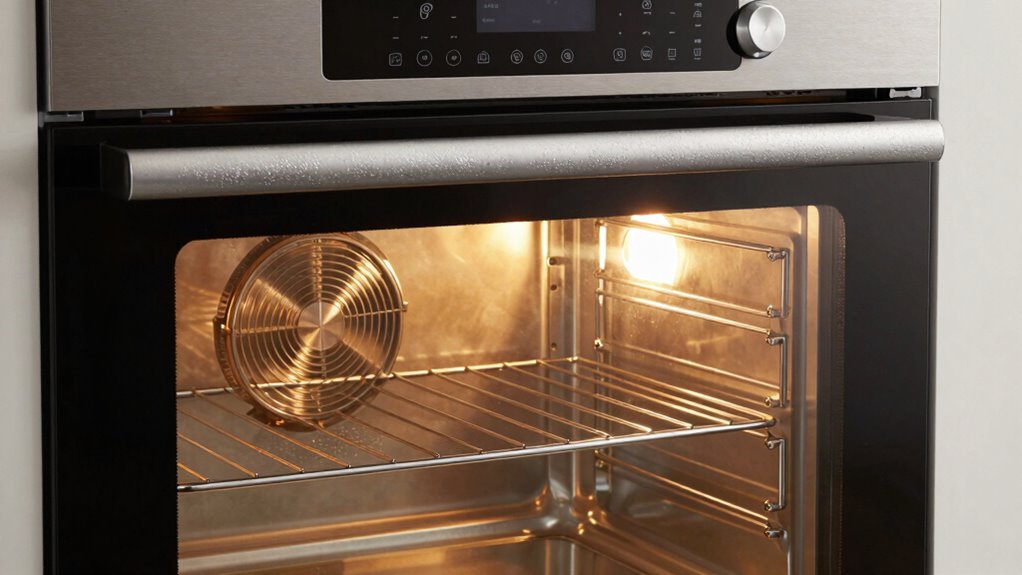
Convection baking is excellent for evenly cooking items like cookies, pastries, and roasted vegetables because the circulating air promotes uniform browning and crispiness. To use convection mode effectively, reduce the recipe’s suggested temperature by about 25°F (15°C). This adjustment prevents over-browning or burning since the fan accelerates heat transfer. Keep in mind that not all recipes are suited for convection; delicate baked goods like soufflés or custards may collapse under the moving air, so sticking to traditional bake mode is safer in those cases. When activating convection, ensure your oven’s racks are positioned correctly for proper airflow, and avoid overcrowding the oven, which can block air circulation and cause uneven baking. Additionally, understanding the heat distribution within your oven can help you optimize cooking times and results. Oven safety plays a vital role in making sure your cooking experience remains safe and successful. Always follow the manufacturer’s instructions for your oven’s settings, and never leave the appliance unattended when using high or specialized modes. If you’re switching between modes like convection and traditional baking, make sure the oven has fully preheated before placing your food inside. Use oven mitts when handling hot trays or racks, and keep a fire extinguisher nearby, especially if you’re experimenting with new techniques. Properly maintaining your oven, including regular cleaning, also helps prevent grease buildup that can be a fire hazard. Remember, the more familiar you become with your oven’s modes, the safer and more effective your cooking will be.
Frequently Asked Questions
Can I Use Convection for All Types of Baked Goods?
You can’t use convection for all baked goods, despite baking myths suggesting otherwise. Convection benefits include even browning and faster cooking, but it works best for roasting and cookies. For delicate items like cakes or soufflés, traditional baking is better to avoid drying out or collapsing. Always consider the recipe and desired texture—convection isn’t a one-size-fits-all solution, so choose the mode that best suits each baked good.
How Do I Convert Recipes for Convection Baking?
Oh, surely you just wave a magic wand and—poof—your recipe adjusts itself, right? Sadly, no. To convert recipes for convection baking, lower the temperature by about 25°F and reduce cooking time. This temperature adjustment guarantees even browning and prevents burning. Keep an eye on your baked goods, and remember, trial and error are your best friends—because, unlike magic, recipe conversion takes a little patience.
Is Convection Energy-Efficient Compared to Traditional Baking?
Yes, convection baking is more energy-efficient than traditional baking. It uses a fan and exhaust system to circulate hot air, which helps you cook faster and at lower temperatures, leading to energy savings. By reducing cooking time and temperature, you minimize energy consumption and lower your environmental impact. So, next time you bake, choose convection mode for quicker results and a greener approach to cooking.
What Are Common Mistakes When Using Convection Mode?
Think of convection baking like tuning a musical instrument—you need to get the temperature calibration just right. Common mistakes include skipping oven preheating, which throws off even cooking, and ignoring the need to adjust recipes for the convection’s faster heat. You might also forget to check the oven’s temperature accuracy, leading to uneven results. Always preheat thoroughly, calibrate your oven, and adapt recipes to avoid these pitfalls and achieve perfect baking.
How Do Oven Modes Affect Cooking Times and Temperatures?
Oven modes differences substantially impact cooking times and temperatures. When you switch from conventional to convection, you typically need to lower the temperature by 25°F and reduce cooking time because convection fans circulate hot air, cooking food faster and more evenly. Always adjust temperature settings accordingly and keep an eye on your dish, as each mode is designed for specific results, ensuring your food cooks perfectly without over or underdoing it.
Conclusion
Now that you understand your oven’s modes, cooking becomes less like magic and more like science. Think of convection as the turbocharged engine in your kitchen, speeding up baking, while traditional modes are the steady, reliable friends you turn to for gentle roasting. With this knowledge, you’re equipped to experiment confidently, blending precision with creativity. So, embrace each mode’s unique power—after all, mastering your oven transforms everyday cooking into an artful dance.