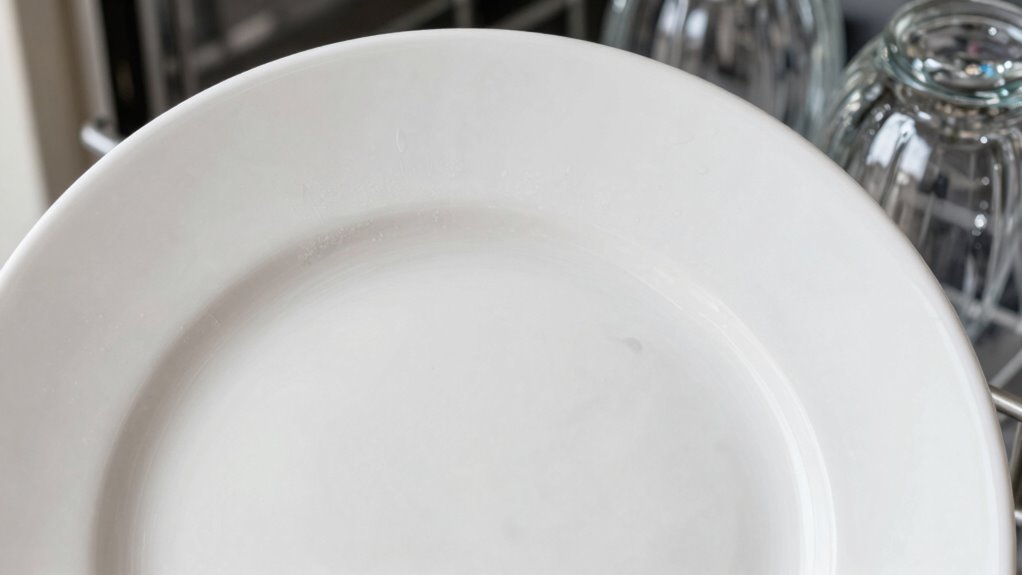

Your dishwasher leaves a film and spots because mineral deposits from hard water, detergent buildup, or incomplete rinsing can prevent dishes from coming out spotless. Using too much or the wrong detergent, or neglecting to clean filters and spray arms, worsens the problem. Installing a water softener or using rinse aid can considerably improve results. If you want to learn more about fixing these issues, keep exploring solutions to get your dishes shining.

Get the little things that make your day delivered free with Prime
- Fast, free delivery on millions of items
- Prime Video, Amazon Music and more included
- Member-only deals all year
Key Takeaways
- Mineral deposits from hard water can cause a cloudy film on dishes.
- Detergent buildup may prevent proper rinsing, leaving residue behind.
- Clogged spray arms and filters hinder effective cleaning and rinsing.
- Using too much or unsuitable detergent can contribute to film formation.
- Installing water softeners or using rinse aid helps reduce mineral spots and film.

If your dishwasher consistently leaves a film on your dishes, you’re probably wondering what’s going wrong. More often than not, the culprit is either detergent buildup or hard water stains. These issues aren’t complicated to fix, but they can be frustrating to diagnose. When you notice a cloudy film or spots on your glasses, it’s a sign that your dishwasher isn’t rinsing properly, and the root cause might be lingering residue or mineral deposits.
Detergent buildup happens when the soap you use doesn’t fully rinse away. Over time, this can accumulate in your dishwasher’s spray arms, filters, and other parts, creating a slick film that transfers onto your dishes. It’s especially common if you’re using too much detergent or a brand that’s not suited for your water type. Hard water stains are another frequent offender; these appear as white or grayish spots that cling stubbornly to glassware and dishes. Hard water contains minerals like calcium and magnesium, which leave deposits behind during the wash cycle. If you notice spots and film, it’s likely that hard water is playing a part.
Using too much or the wrong detergent can cause buildup and leave spots on your dishes.
The fix isn’t glamorous, but it’s straightforward. Start by cleaning your dishwasher thoroughly. Remove and scrub the filter, spray arms, and door seals to eliminate any accumulated detergent or mineral deposits. Running a cleaning cycle with a dishwasher descaler or a cup of vinegar can dissolve mineral buildup and remove film. Using a rinse aid designed for hard water can also help prevent future stains by improving rinsing action and reducing spots. If your water is particularly hard, installing a water softener or using a water conditioner might be necessary to prevent mineral deposits from forming in the first place. Additionally, water quality can significantly impact your cleaning results, so testing your water and adjusting your approach accordingly can be beneficial. Regular maintenance, like cleaning the filter and running vinegar through the dishwasher once a month, keeps everything working smoothly. To further combat mineral deposits, consider adding water softening systems or treatments to your home. Properly managing water hardness levels is essential for optimal cleaning performance and to avoid persistent film on your dishes. For best results, consider water testing to identify specific mineral levels and tailor your cleaning routine accordingly.
As an affiliate, we earn on qualifying purchases.
Frequently Asked Questions
Can Hard Water Cause Film Buildup in My Dishwasher?
Yes, hard water can cause film buildup in your dishwasher. The high mineral content leads to mineral deposits that stick to dishes and the dishwasher’s interior. Water softening methods, like installing a water softener or using a rinse aid, can help reduce this buildup. Regularly cleaning your dishwasher and using the right detergents also prevent mineral deposits, ensuring your dishes come out spotless and film-free.
How Often Should I Clean My Dishwasher’s Filter?
You should clean your dishwasher’s filter at least once a month—yes, even if you’d rather ignore it. During the rinse cycle, gunk gets trapped, and if your water temperature isn’t hot enough, debris doesn’t wash away. Regular cleaning keeps the filter clear, ensuring a thorough rinse cycle and preventing film buildup. Trust me, a little effort now saves you from stubborn spots and clogs later.
Does Using Too Much Detergent Lead to Film Residue?
Yes, using too much detergent can lead to film residue in your dishwasher. When you overuse detergent, it doesn’t rinse away completely, leaving a dull film on your dishes. Stick to the recommended amount, and consider running an extra rinse cycle if you notice residue. Proper detergent use helps prevent film buildup, ensuring your dishes come out clean and spotless every time.
Are Certain Types of Dishes More Prone to Film?
Certain dishes, like glassware, are more prone to streaks, while plastic items often get spotting. You might notice glassware looks cloudy or streaked after washing, and plastics develop persistent spots. To fix this, use the right rinse aid and guarantee your dishwasher’s water temperature is correct. Avoid overloading, which prevents water from reaching all surfaces, helping your dishes come out sparkling and film-free.
Can Dishwasher Rinse Aids Prevent Film Formation?
Sure, rinse aids can help prevent film, but don’t expect miracles if you’re using the wrong dishwasher detergent choices. They boost rinse efficiency, reducing spotting and film buildup, but their effectiveness depends on your water hardness and detergent combo. Think of rinse aids as the superhero sidekick—use them correctly, and they’ll save your dishes from that dull, filmy look. Just don’t rely on them alone; fix the root cause!
Conclusion
So, next time your dishes come out with that stubborn film, remember you’re not alone—about 85% of dishwasher users face this issue at some point. The fix might seem boring, but it’s often as simple as adjusting your rinse aid or cleaning the filter. Don’t let a little film ruin your meal prep. With a quick check and a bit of routine maintenance, you’ll have sparkling dishes again in no time.
Halloween Picks
halloween
As an affiliate, we earn on qualifying purchases.