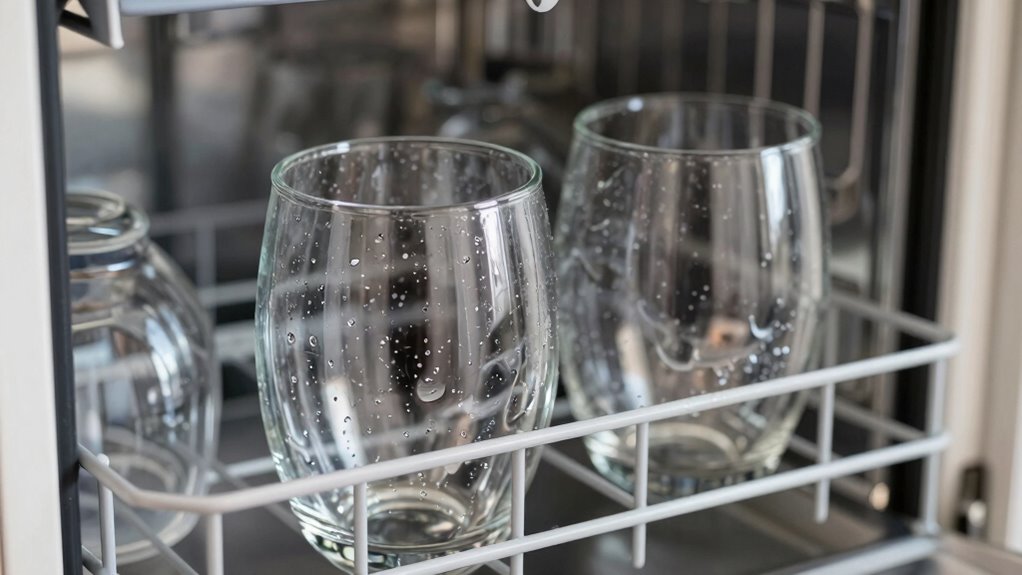

If your dishwasher leaves spots on dishes, it’s likely due to ineffective rinse aid or water issues. Make certain you’re using a high-quality rinse aid suited for your water type, and check that the dispenser is filled and working properly. Also, verify your water temperature is around 120°F, as cooler water can cause mineral deposits and spots. Regular maintenance of spray arms and filters helps prevent buildup. Keep exploring to discover more tips for spotless dishes.

Get the little things that make your day delivered free with Prime
- Fast, free delivery on millions of items
- Prime Video, Amazon Music and more included
- Member-only deals all year
Key Takeaways
- Rinse aids help water sheet off dishes, reducing spots caused by mineral deposits and hard water.
- Ensure the rinse aid dispenser is full and properly functioning for optimal spot prevention.
- Use a rinse aid with anti-spot properties, especially if water hardness is high.
- Regularly clean spray arms and filters to prevent mineral buildup that can cause spots.
- Adjust water temperature to around 120°F (49°C) for better detergent and rinse aid performance.
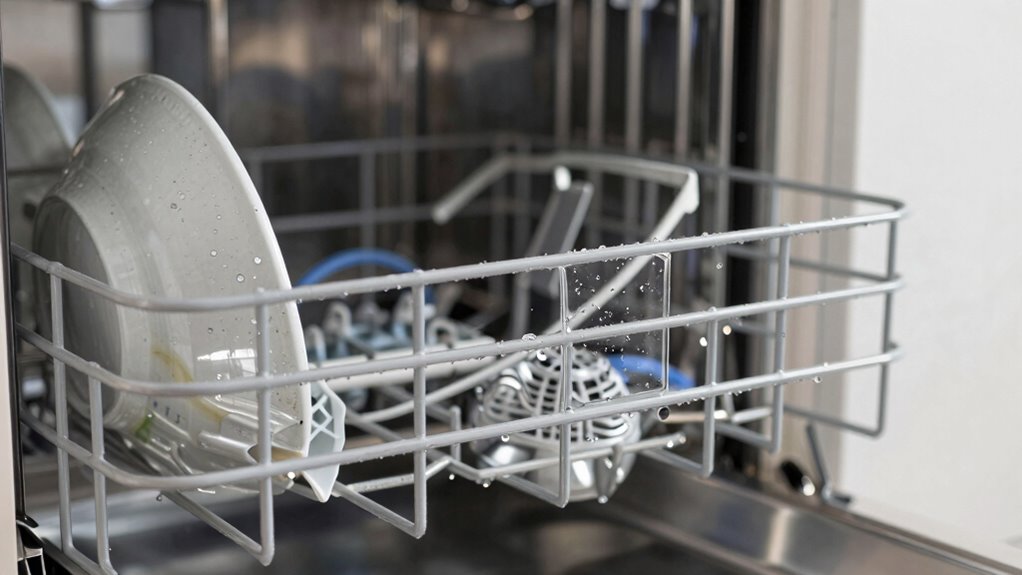
If your dishwasher is leaving spots on your glassware and dishes, it can be frustrating and confusing. You might wonder if the problem lies with your detergent or water temperature, or if something else is causing the issue. One common culprit is the effectiveness of your detergent, which can struggle to cut through grease and mineral deposits if it’s not suited for your water type or if it’s expired. Using a high-quality detergent designed for your water hardness can make a difference, but even the best detergent won’t work well if the water temperature isn’t hot enough.
Water temperature plays a vital role in cleaning performance. If your water isn’t hot enough—typically around 120°F (49°C)—it won’t fully dissolve the detergent or effectively loosen and rinse away food residues and mineral deposits. This can leave spots and film on your dishes. Check your water heater and dishwasher settings to guarantee they’re heating water to the ideal temperature. Sometimes, the water temperature drops during the cycle due to a faulty thermostat or a malfunctioning heating element. Increasing the temperature slightly can improve detergent effectiveness, leading to cleaner dishes with fewer spots. Additionally, water quality can significantly influence the formation of spots, especially if minerals are present in high levels. Being aware of your water chemistry and considering water softening options can help reduce mineral buildup and improve cleaning results.
Ensure your water reaches 120°F for optimal detergent performance and spotless dishes.
Another factor to ponder is the use of rinse aids, which are specifically formulated to combat spotting and filming. Rinse aids help water sheet off dishes more efficiently, reducing mineral deposits that cause spots. If you’re not already using one, adding a rinse aid can markedly improve results. If you are using one, make sure it’s fresh and properly dispensed. Sometimes, old or improperly set rinse aid dispensers won’t prevent spots effectively. Regular maintenance and cleaning of your dishwasher’s spray arms and filters, as recommended by manufacturers, can also prevent mineral buildup that contributes to spotting. Additionally, choosing a rinse aid with anti-spot properties can enhance its effectiveness further.
You should also examine your water hardness. Hard water contains minerals like calcium and magnesium that can leave deposits on your dishes, especially if your detergent isn’t formulated to handle hard water. In such cases, a water softening system or additional cleaning agents designed for hard water can help. Remember, understanding your water hardness levels can guide you in choosing the most effective solutions for your dishwasher. Regularly cleaning your dishwasher’s spray arms and filters guarantees that water flows freely and doesn’t leave behind mineral buildup.
As an affiliate, we earn on qualifying purchases.
Frequently Asked Questions
How Often Should I Refill My Rinse Aid?
You should refill your rinse aid every month or when you notice water spots on your dishes. Regular dishwasher maintenance helps guarantee peak performance, so keeping the rinse aid reservoir full is key. If you’re eco-conscious, consider using eco-friendly alternatives that work just as well. Check your dishwasher’s manual for specific guidelines, but staying consistent with refills helps prevent spots and keeps your machine running smoothly.
Can Using Too Much Rinse Aid Cause Spots?
Overusing rinse aid can sometimes lead to a gentle whisper of spot buildup on your dishes. When you add too much, it leaves behind rinse aid residue that can cause those annoying spots. To keep your dishes sparkling, use the recommended amount. If you notice spots, try reducing the rinse aid, and your dishes will shine without any unwanted film or residue. Balance is key for perfect results.
Do Water Hardness Levels Affect Rinse Aid Performance?
Water hardness levels directly impact rinse aid effectiveness. Hard water contains minerals that can hinder rinse aid from working properly, leading to spots. To improve results, you should consider water softening solutions, such as installing a water softener or using a rinse aid formulated for hard water. When water is softened, rinse aid works more efficiently, leaving your dishes sparkling and free of spots.
Is There a Difference Between Rinse Aid Brands?
Yes, there’s a difference between rinse aid brands. When comparing brands, look at rinse aid ingredients—some contain more effective surfactants or additives that prevent spots better. Brand comparisons show that premium options often have higher-quality ingredients, which can reduce spotting and improve drying. You should choose a rinse aid based on its ingredients and reviews, ensuring it’s compatible with your water hardness level for ideal results.
Can I Make My Own Rinse Aid at Home?
Yes, you can make your own rinse aid at home using natural alternatives. Combine equal parts white vinegar and water, adding a few drops of lemon essential oil for freshness. This homemade cleaning solution helps prevent spots and streaks by breaking down mineral deposits. You just need to pour it into your dishwasher’s rinse aid compartment, and it’ll work effectively, saving you money while using natural ingredients.
Conclusion
Think of your dishwasher as a trusty knight, and rinse aid as its shining armor. When the armor’s dull, spots appear on your dishes, tarnishing the victory. But with the right rinse aid, your knight gleams brighter, and your dishes shine like a legend. Don’t let spots be the dragon you can’t conquer—arm yourself with proper rinse aid, and every meal will end in a sparkling triumph.
Halloween Picks
halloween
As an affiliate, we earn on qualifying purchases.