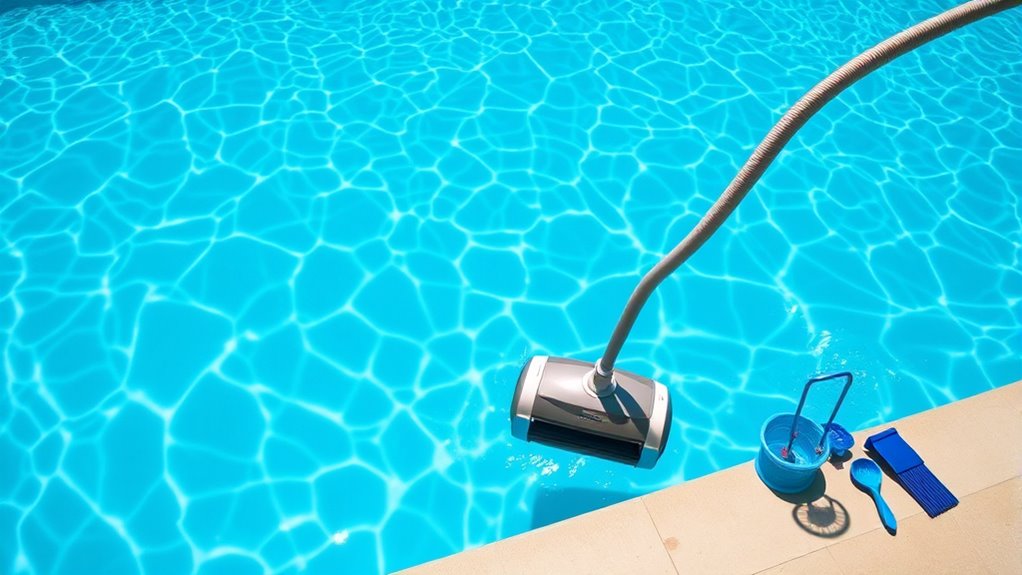
To maximize your suction pool cleaner’s efficiency, regularly inspect and clean hoses, brushes, and filters to prevent blockages and buildup. Make sure the filtration system works properly and water levels are adequate for strong suction. Check for kinks, leaks, or worn parts and adjust hose length for better coverage. Keep up with routine maintenance and troubleshooting to prevent issues before they start. Continue exploring these tips to ensure your pool stays sparkling clean with less effort.
Key Takeaways
- Regularly inspect and clean hoses, brushes, and filters to prevent blockages and maintain optimal suction.
- Ensure the pool’s water level is adequate and the filtration system is functioning properly.
- Adjust hose length and distribute weights evenly for better movement and coverage.
- Check for leaks, cracks, or worn parts and replace them promptly to sustain efficiency.
- Follow a routine maintenance schedule and keep detailed notes of issues for quick troubleshooting.
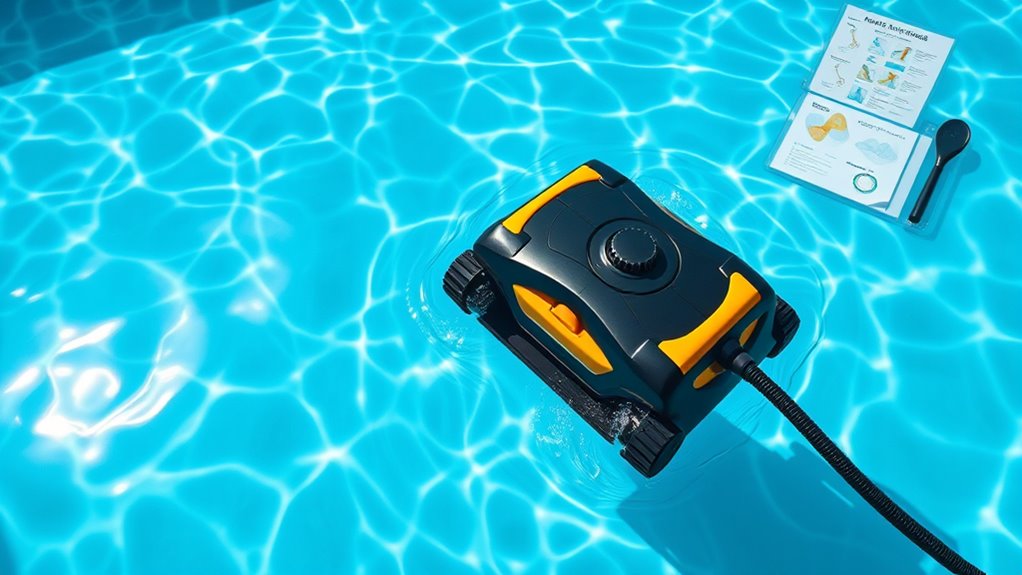
Keeping your suction pool cleaner in top shape guarantees a sparkling, debris-free pool all season long. To achieve this, regular manual maintenance is essential. Start by inspecting the cleaner’s hose and brushes frequently. Remove any tangled debris or obstructions that could hinder movement or suction. Check for cracks or leaks in the hose, as these can reduce efficiency and increase wear. Cleaning the filters and debris bags after each use ensures peak suction power and prevents clogs. Remember to rinse off the brushes and wheels to prevent buildup, which can cause uneven cleaning. Additionally, ensuring that your pool’s filtration system is working properly can significantly boost your cleaner’s performance.
Regularly inspect and clean your suction pool cleaner’s hoses and brushes for optimal performance.
Troubleshooting common issues is a vital part of maximizing your cleaner’s performance. If your suction pool cleaner isn’t moving properly, first verify that the hose is properly connected and that there are no kinks or leaks. Sometimes, a clogged filter can decrease suction, so ensure it’s clear and free of debris. If the cleaner is skipping areas or missing spots, check the brushes for wear. Worn brushes reduce the cleaner’s ability to scrub and pick up debris effectively. Adjust the hose length if necessary; too long or too short hoses can impair movement and coverage. Also, make sure the pool’s water level is adequate, as low water levels can cause the cleaner to lose suction.
Another common issue involves the cleaner not staying attached to the pool’s floor or walls. This often results from improper weight distribution or incorrect hose setup. Ensure the hose is fully submerged and that the weight is evenly distributed along its length. You might need to add or remove weights or adjust the hose configuration to improve pressure and adhesion. If your cleaner seems to be making strange noises or vibrating excessively, inspect the wheels and brushes for debris or damage, replacing parts as needed. Regularly checking the vacuum’s seals and connections helps prevent air leaks that diminish suction power.
Furthermore, using proper cleaning techniques can extend the lifespan of your suction cleaner and improve its effectiveness. Finally, maintaining a routine schedule for manual maintenance and troubleshooting will extend the life of your suction pool cleaner and keep it running smoothly. Keep detailed notes of any issues and solutions you discover; this makes troubleshooting quicker over time. Staying proactive with these simple steps ensures your cleaner performs at its best, saving you time and effort while keeping your pool pristine. Remember, a little regular upkeep goes a long way in preventing more significant problems and guaranteeing your pool stays inviting all season long.
Frequently Asked Questions
How Often Should I Replace the Filters on My Suction Pool Cleaner?
You should replace the filters on your suction pool cleaner based on its maintenance schedule and how often you notice reduced performance. Generally, check the filters weekly and replace them every 4 to 6 months, or sooner if they’re heavily clogged or damaged. Regular filter replacement guarantees peak cleaning, prevents motor strain, and maintains your pool’s clarity. Keeping up with filter maintenance helps your cleaner work efficiently and prolongs its lifespan.
Can I Use My Suction Pool Cleaner in a Saltwater Pool?
Ever wondered if your suction pool cleaner can handle saltwater? Yes, it can, but check for saltwater compatibility first. Saltwater pools can cause mineral buildup, so cleaner maintenance becomes essential. Regularly inspect and clean your device to prevent corrosion. Using a compatible cleaner ensures effective debris removal and prolongs its lifespan. Don’t let saltwater slip through your fingers—maintain your cleaner properly and enjoy a spotless pool all season.
What Is the Maximum Pool Size Recommended for My Cleaner?
Your suction pool cleaner’s recommended maximum pool size depends on its capacity and design. Typically, smaller cleaners work best for pools up to 20,000 gallons, while larger models can handle 30,000 gallons or more. Check your cleaner’s specifications to verify it matches your pool size. Using a cleaner beyond its capacity can reduce effectiveness and strain the motor, so always choose one suited to your pool’s size for ideal cleaning.
How Do I Troubleshoot if the Cleaner Is Not Moving Properly?
If your suction pool cleaner isn’t moving properly, start with a manual inspection to check for debris or obstructions. Confirm the hose is properly aligned and not tangled, as this can hinder movement. Tighten any loose connections and clear blockages. If it still struggles, verify the filter and pump are working correctly. Regularly inspecting these components helps keep your cleaner running smoothly and efficiently.
Does the Cleaner Work Effectively on All Pool Surface Types?
You might wonder if your suction pool cleaner works on all pool surfaces. It’s important to check surface compatibility; some cleaners are designed for specific surfaces like vinyl, concrete, or tile. Cleaner versatility varies, so make certain yours is suitable for your pool type. If unsure, consult the manufacturer or manual. Using a compatible cleaner ensures ideal performance and thorough cleaning across different surfaces, saving you time and effort.
Conclusion
To maximize your suction pool cleaner’s efficiency, stay consistent with regular maintenance, keep the filter clean, and adjust the settings as needed. Monitor its performance, troubleshoot issues promptly, and make sure it’s properly positioned. By doing these, you’ll extend its lifespan, improve cleaning results, and enjoy a sparkling, debris-free pool. Keep these tips in mind, stay attentive, and enjoy the benefits of a cleaner pool with less effort and more satisfaction.