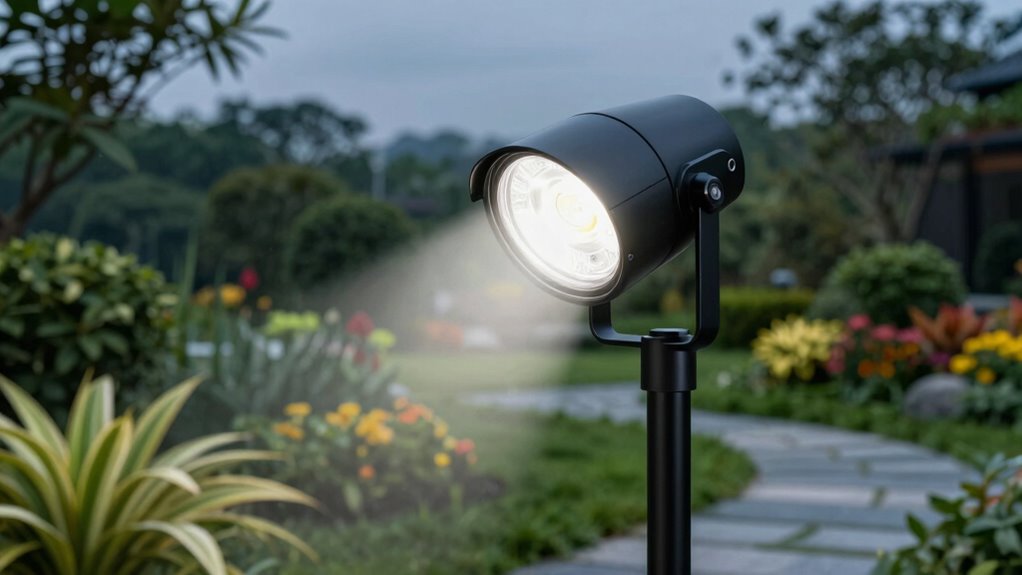

To avoid glare with your outdoor floodlight cameras, aim the floodlights away from direct sunlight and reflective surfaces like windows or water. Use adjustable mounts to fine-tune the direction for focused illumination on specific areas like doorways or driveways. Position your camera slightly away from direct sunlight during peak hours to keep footage clear. Regularly adjusting the angles can reduce glare and improve image quality. Keep following for more tips on perfecting your camera setup.

Get the little things that make your day delivered free with Prime
- Fast, free delivery on millions of items
- Prime Video, Amazon Music and more included
- Member-only deals all year
Key Takeaways
- Aim floodlights away from reflective surfaces like windows or water to prevent glare in camera footage.
- Use adjustable mounts to precisely direct floodlights on intended surveillance areas.
- Position cameras to avoid direct sunlight during peak hours for clearer images.
- Focus floodlights on specific areas, such as doorways or driveways, to prevent scene washout.
- Regularly fine-tune both floodlight angles and camera positions for optimal glare reduction and image clarity.
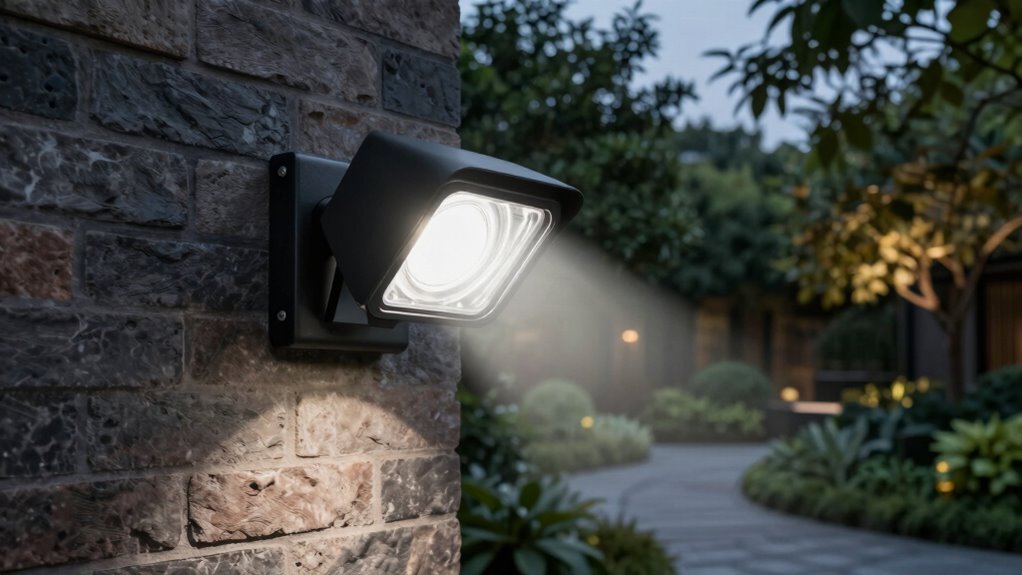
To prevent glare from dazzling your camera lens, start by carefully adjusting the angle of the floodlights. You want to aim the lights away from direct sunlight or reflective surfaces, such as windows or water features, that can cause unwanted glare. Instead, focus the floodlights on areas you want surveilled, like doorways, driveways, or backyard pathways. Proper aim ensures the lights illuminate the scene without washing out the camera’s view. Many outdoor floodlight cameras have adjustable mounts—use these to fine-tune the direction until you get a clear, glare-free image.
When positioning your camera, consider the natural light patterns around your property throughout the day. Avoid placing the camera directly facing the sun during peak daylight hours, as the intense light can create glare or lens flare. Instead, angle the camera slightly away from direct sunlight, which helps maintain clear footage even during bright days. This simple adjustment can significantly improve your video quality and make it easier to identify faces or license plates. Regularly adjusting the camera angle can help maintain optimal surveillance conditions and reduce the risk of glare over time. Additionally, choosing a camera with adjustable mounts can provide more precise control over the lighting and viewing angles. Ensuring proper installation also involves considering the camera placement to maximize coverage and reduce blind spots, which is crucial for effective surveillance. Being aware of the lighting environment around your property can further enhance the camera’s performance and image clarity.
outdoor floodlight camera adjustable mount
As an affiliate, we earn on qualifying purchases.
As an affiliate, we earn on qualifying purchases.
Frequently Asked Questions
How Long Do Outdoor Floodlight Cameras Typically Last?
Outdoor floodlight cameras typically last around 3 to 5 years, depending on their battery lifespan and overall camera durability. If your camera uses rechargeable batteries, expect periodic replacements or recharges. Durability factors, like weather resistance and build quality, also influence longevity. Proper maintenance, such as cleaning lenses and checking connections, can extend your camera’s lifespan, ensuring it continues to provide reliable security coverage for years to come.
Are Floodlight Cameras Weatherproof and Rain-Resistant?
The answer is a resounding yes—most floodlight cameras are weatherproof and rain-resistant. You can confidently place them outdoors because they’re built to withstand the elements. When considering camera placement, make certain the light brightness isn’t too harsh, which can cause glare or false alerts. Remember, a little preparation goes a long way in keeping your camera functioning smoothly through rain, snow, or shine.
Can Floodlight Cameras Be Integrated With Smart Home Systems?
Yes, floodlight cameras can be integrated with smart home systems. You can connect them for seamless smart home integration and use voice assistant compatibility to control your camera hands-free. With these features, you can easily monitor your property, receive alerts, and manage settings through popular platforms like Alexa or Google Assistant. This integration makes your security setup more convenient and efficient, giving you peace of mind with smart, connected technology.
What Is the Typical Installation Process for Outdoor Floodlight Cameras?
You typically start by choosing the right installation angles to maximize coverage and minimize glare. Next, you’ll connect the floodlight camera to your preferred power source, which could be wired or solar. Mount the bracket securely, connect the wiring if needed, and adjust the camera angle for ideal surveillance. Finally, test the system to guarantee proper lighting, camera view, and glare reduction.
Do Floodlight Cameras Record Continuously or Only When Motion Is Detected?
Floodlight cameras typically record only when motion is detected, helping conserve storage and battery life. However, some models offer continuous recording options. With night vision and high camera resolution, you get clear footage in low light, making it easier to identify intruders or events. You can customize motion sensitivity, ensuring you don’t miss important activity, especially during nighttime when night vision enhances visibility.
Conclusion
Now that you know how to aim your outdoor floodlight camera properly, you’re better prepared to keep your property secure without pesky glare ruining the view. Imagine a clear, well-lit scene at night, where every detail is visible and nothing escapes your watchful eye. Doesn’t that peaceful, illuminated view make you wonder how many intruders might be discouraged by such sharp, glare-free lighting? Take control today and enjoy the perfect balance of brightness and clarity.
Fall Picks
fall essentials
As an affiliate, we earn on qualifying purchases.