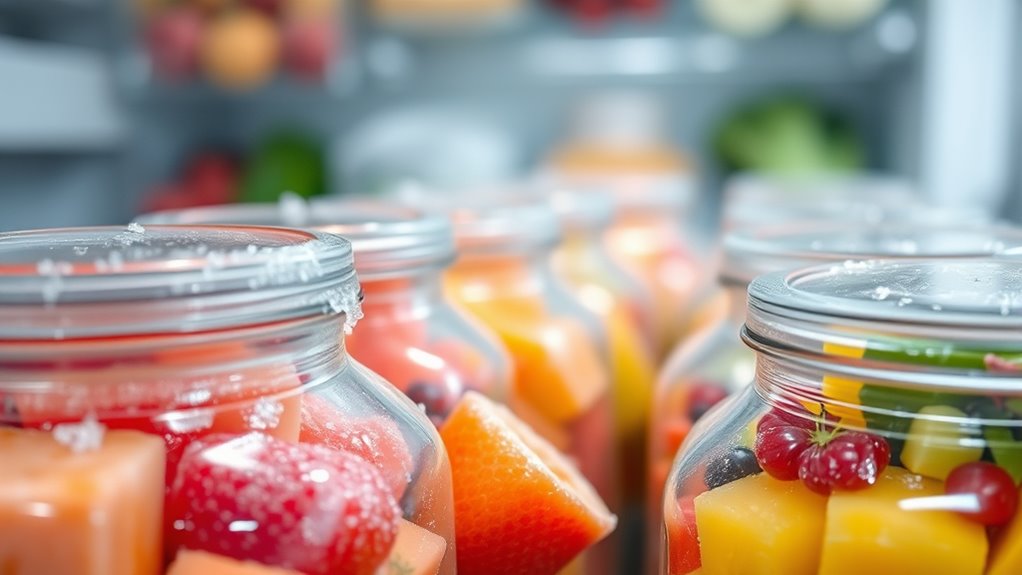

To prevent freezer burn, keep your freezer at or below 0°F and avoid overfilling it, which can restrict air circulation. Always seal food tightly in airtight containers or freezer bags, squeezing out excess air to reduce dehydration. Use proper packaging like double wrapping for meats and label everything with dates. Organize your freezer so older food gets used first. Want to know more tips that will help your food stay fresh longer? Keep going to discover more.

Get the little things that make your day delivered free — and shop member deals
- Fast, free delivery on millions of items
- Access to Prime Big Deal Days deals on October 6–7
- Prime Video, Amazon Music and more included
Key Takeaways
- Seal food tightly with airtight containers or freezer bags, removing excess air before sealing.
- Maintain a consistent freezer temperature at or below 0°F (-18°C) to prevent ice crystal formation.
- Use vacuum-sealing for maximum protection against dehydration and freezer burn.
- Avoid overfilling the freezer to ensure proper air circulation and even freezing.
- Label packages with freezing dates and consume within recommended storage times.

Have you ever noticed icy, discolored patches on your frozen food and wondered what caused them? That’s freezer burn, and it happens when food is exposed to air in your freezer over time. To prevent this from happening, you need to pay attention to storage tips and packaging methods. Proper storage tips involve keeping your freezer organized so that the food is not left exposed for long periods. Use airtight containers or sturdy freezer bags to seal your food tightly, which helps prevent air from reaching the surface. When packaging your food, squeeze out as much air as possible before sealing, as excess air is a primary culprit behind freezer burn. Vacuum-sealing is an excellent option if you want to maximize freshness and prevent dehydration.
Prevent freezer burn by sealing food tightly and removing excess air before freezing.
Another key to avoiding freezer burn is to maintain a consistent freezer temperature, ideally at or below 0°F (-18°C). Fluctuations in temperature cause moisture to migrate within the food, leading to ice crystals that damage the cellular structure. Make sure your freezer is not overcrowded, as this restricts air circulation and can cause uneven freezing. When storing items, place newer packages at the back and older ones in front so you use them first, reducing the chance that food sits in the freezer for too long. Using proper packaging methods is vital—wrapping food tightly in plastic wrap or aluminum foil before placing it in a bag or container adds an extra layer of protection. For items like meat or baked goods, double wrapping can make a significant difference in maintaining quality. Additionally, being aware of freezer environment and how it impacts food preservation can further help prevent freezer burn.
Labeling your packages with the date of freezing also helps you keep track of how long food has been stored. The longer food stays in the freezer, the higher the risk of freezer burn, even if it’s well-packaged. When you’re ready to use frozen items, avoid thawing and refreezing repeatedly, as this can compromise packaging integrity and increase freezer burn risk. Instead, thaw only what you plan to consume. Additionally, try to consume frozen foods within recommended time frames—generally, meats within 6-12 months and fruits or vegetables within 8-12 months—to guarantee top-notch quality.
In short, preventing freezer burn boils down to good storage tips and effective packaging methods. Keep your freezer organized, seal your foods tightly, maintain a steady temperature, and use quality packaging materials. These simple steps will help your food stay fresh longer, taste better, and preserve its texture without the telltale signs of freezer burn. Proper care today means less waste and more enjoyable, flavorful meals tomorrow.
Frequently Asked Questions
How Can I Tell if My Food Has Freezer Burn?
You can tell if your food has freezer burn by looking for visual cues like grayish-brown spots or ice crystals on the surface. Feel for texture changes, such as dryness or a leathery feel, which indicate dehydration caused by freezer burn. These signs usually appear on exposed areas or items stored too long. Recognizing these cues helps you decide whether your food is still good or needs to be discarded.
Does Freezer Burn Affect All Types of Food Equally?
Freezer burn impacts all types of food differently; some foods, like meats and vegetables, show signs more visibly, while baked goods may be less affected. It can cause texture changes and flavor loss, reducing food preservation quality. To minimize freezer burn impact, follow proper food preservation techniques like airtight packaging and maintaining consistent freezing temperatures. This guarantees your food stays fresh longer and retains its taste and texture.
Can I Reverse Freezer Burn on Frozen Items?
Sure, you can attempt reversal techniques, but don’t fall for freezer burn myths that say it’s totally fixable. Once freezer burn sets in, it’s like trying to erase a tattoo—almost impossible. You might salvage texture or flavor slightly by trimming affected areas or soaking in broth, but true reversal isn’t realistic. Remember, freezer burn is permanent damage, so prevention beats trying to undo it.
How Long Can Food Be Safely Stored Before Freezer Burn Occurs?
You can typically store food for 3 to 6 months before freezer burn becomes likely, depending on the item. To maximize food preservation, use proper storage hacks like airtight containers and vacuum sealing. Keep your freezer at 0°F, and avoid overloading it to ensure even cooling. Regularly check your frozen items and label everything to track storage times, helping you prevent freezer burn and enjoy your food longer.
Are There Specific Storage Containers That Prevent Freezer Burn Better?
Imagine you’re freezing leftovers in silicone bags; they stay fresh longer because they’re airtight and flexible. Airtight containers and silicone bags are your best options for preventing freezer burn, as they seal out moisture and air. Silicone bags are especially convenient—they’re reusable and mold to your food’s shape. By choosing these, you create a barrier that helps keep your food fresh and free from freezer burn.
Conclusion
Now that you know how to prevent freezer burn, think of it as your kitchen’s guardian, protecting your food like a loyal shield. Keep your freezer organized, seal your items tight, and don’t forget to label everything like a pro. With these simple habits, you’ll keep your frozen treasures fresh and flavorful, turning your freezer into a fortress of freshness. Say goodbye to wasted food and hello to delicious bites—your freezer’s best friend, ready to serve.
NFL season / tailgating Picks
team gear
As an affiliate, we earn on qualifying purchases.