To fix French door fridge ice issues, start by checking that your ice maker is turned on and properly connected, and clear any ice jams blocking the ejection or chute. Inspect the door seal for leaks and clean it regularly to maintain proper freezer temperature. Confirm the water supply line isn’t blocked or low on pressure. These simple steps help prevent common problems and keep your ice maker running smoothly—continue exploring to learn more tips.

Get the little things that make your day delivered free with Prime
- Fast, free delivery on millions of items
- Prime Video, Amazon Music and more included
- Member-only deals all year
Key Takeaways
- Ensure the ice maker is turned on, properly connected, and free of ice jams or debris blocking the ejection area.
- Check the door seal for cracks, gaps, or leaks to maintain optimal freezer temperatures for ice production.
- Verify the water supply line has steady pressure, is free of blockages, and connections are secure.
- Listen for the ice maker motor sounds and reset it if there are unusual noises or no ice production.
- Perform routine maintenance, including cleaning the ice maker and inspecting electrical and mechanical components.
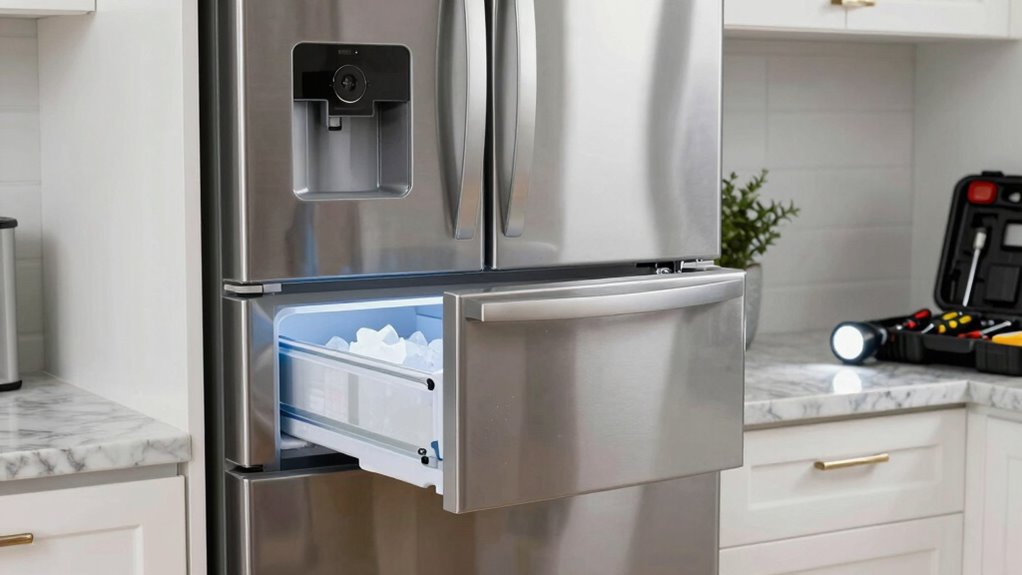
Are you noticing that your French door fridge isn’t producing enough ice or that the ice it makes isn’t dispensing properly? If so, you’re not alone, and there are straightforward steps you can take to fix the problem. First, start with ice maker troubleshooting. Often, the issue stems from simple blockages or mechanical glitches. Check the ice maker itself to see if it’s turned on and properly connected. Sometimes, ice buildup can obstruct the ice ejection arm or the dispenser chute, preventing ice from dispensing correctly. Clearing out any ice jams or debris can often restore proper function. Also, listen for the sound of the ice maker motor. If it’s silent or making unusual noises, it might indicate a need for repair or replacement of the motor module. Ensure the ice maker is receiving power; resetting it by turning it off and on again can sometimes solve minor glitches. Additionally, regular maintenance of the ice maker system can help prevent future issues and keep everything running smoothly. Maintaining the ice production cycle is essential for consistent results.
Next, don’t forget to inspect the door seal thoroughly. A compromised door seal can cause temperature fluctuations inside your fridge, affecting ice production. When inspecting the door seal, look for cracks, tears, or any areas where the seal isn’t sitting tightly against the door frame. If you notice gaps or leaks, air can enter and warm the freezer, leading to insufficient ice production or melting ice that causes clogs. To test the seal, close the door with a dollar bill or a piece of paper inside; if you can pull it out easily without resistance, it’s time to replace the seal. Keeping the seal clean also helps maintain an airtight environment, so wipe it down regularly with a mild detergent and water. A clean seal ensures your freezer maintains consistent temperatures, which is essential for ice maker efficiency. Additionally, understanding how the water supply line functions can help prevent common issues related to low water pressure or blockages. Properly maintaining these components can extend the lifespan of your ice maker and optimize its performance.
French door fridge ice maker repair kit
As an affiliate, we earn on qualifying purchases.
As an affiliate, we earn on qualifying purchases.
Frequently Asked Questions
How Often Should I Defrost My French Door Fridge?
You should defrost your French door fridge whenever you notice excessive frost buildup, usually every 6-12 months. Regular ice compartment cleaning helps prevent frost accumulation and keeps your fridge running efficiently. By defrosting on schedule, you avoid ice blockages that can impair cooling. Consistent maintenance also promotes frost buildup prevention, prolongs your fridge’s lifespan, and keeps your food fresh. Keep an eye on the ice compartment for peak performance.
Can External Temperature Affect Ice Production?
External temperature can considerably impact ice production, like a dam holding back a flood. When outdoor temperatures rise, your fridge works harder, and ice production may slow or stop. Conversely, colder outdoor conditions can boost ice-making, but too much cold may cause frost buildup. Weather is a key ice production factor, so keep your fridge in a stable environment for consistent ice supply. Adjust accordingly to prevent disruptions.
What Type of Water Filter Is Best for Ice Quality?
For the best ice quality, choose a water filter designed for your fridge’s specific model, ensuring superior water filtration. A high-quality filter improves water clarity and removes impurities, directly enhancing ice purity. Look for filters with certifications like NSF/ANSI standards, which guarantee effective contaminant removal. Regularly replacing your filter maintains water freshness and prevents ice from developing off-flavors or cloudiness, ensuring you always get clean, pure ice.
Is It Normal for Ice to Smell Strange?
It’s not normal for ice to smell strange. A strange ice smell often indicates contaminants in ice or a buildup of bacteria in the ice bin or water dispenser. To fix this, clean the ice bin and water dispenser regularly, replace the water filter if it’s old, and check for any mold or debris. Using a high-quality water filter can also help reduce contaminants and improve ice smell.
How Do I Reset My Fridge’s Ice Maker?
To reset your fridge’s ice maker, start by locating the reset button, usually near the ice maker itself. Press and hold it for 10-15 seconds until you hear a chime or see a light indicating reset. For effective ice maker troubleshooting, check your fridge temperature settings—ideally between 0°F and 5°F—and verify the water supply is turned on. Resetting and adjusting these settings help restore proper ice production.
Conclusion
Don’t despair if your French door fridge faces ice issues—deliberate, diligent maintenance makes a difference. By checking filters, defrosting, and inspecting components regularly, you’ll prevent problems before they start. Stay savvy, stay proactive, and keep your cooling system clean and clear. With consistent care, you’ll conquer cold conundrums and enjoy fresh, fabulous food days ahead. Remember, a well-watched fridge ward off woes, ensuring your appliance always acts aptly and efficiently.
Fall Picks
fall essentials
As an affiliate, we earn on qualifying purchases.