Organizing your fridge into dedicated zones helps keep foods fresher longer and reduces waste. Set aside specific areas for fruits, vegetables, dairy, and leftovers to prevent cross-contamination and spoilage. Use clear containers and label leftovers for easy access and tracking. Proper placement ensures ideal temperature and humidity, extending shelf life. By maintaining these zones, you’ll save time and reduce food loss. For simple tips on creating the perfect fridge zones, keep exploring these helpful ideas.
Key Takeaways
- Designate specific zones for fruits, vegetables, dairy, leftovers, and meats to optimize freshness and prevent cross-contamination.
- Use ventilated drawers and adjustable humidity crisper drawers to extend produce shelf life.
- Store leftovers in clear, labeled containers in accessible areas to reduce spoilage and waste.
- Keep dairy in dedicated compartments or doors at consistent cold temperatures to maintain quality.
- Organize the fridge to streamline meal prep, improve visibility, and promote timely consumption of perishable items.
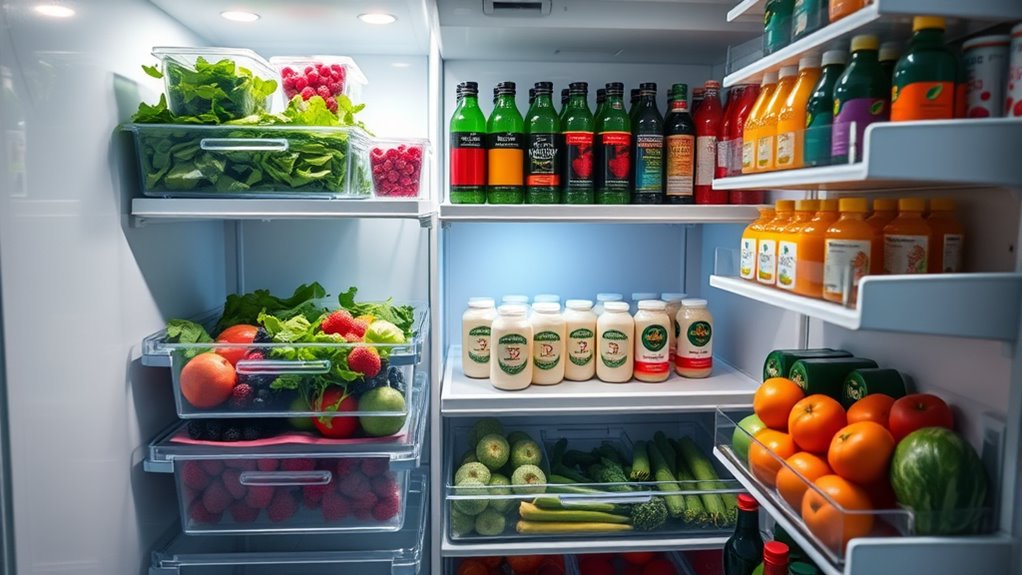
A well-organized fridge makes meal prep easier and helps prevent food waste, but without designated zones, it can quickly become a cluttered mess. One of the most effective ways to stay organized is to assign specific areas for different types of food. For example, dedicating a spot for fruit storage ensures your produce stays fresh longer and is easy to access when you’re preparing snacks or meals. Keep fruits like berries, grapes, and apples in a clear, ventilated drawer or a designated crisper. This not only maintains their moisture levels but also prevents them from spoiling quickly or contaminating other foods. When you have a specific zone for your fruit, you avoid rummaging through piles of leftovers, which can lead to forgotten produce going bad. Proper food storage techniques can further extend the freshness of your perishables and reduce waste.
Similarly, dairy compartments are essential for maintaining the quality of your milk, yogurt, cheese, and other dairy products. These compartments are typically located in the door or on a dedicated shelf, designed to keep dairy at a consistent, cold temperature. By storing dairy in these specific zones, you reduce the risk of cross-contamination and spoilage. Make sure to keep dairy products in their original containers or airtight containers to preserve freshness and prevent odors from spreading. When dairy is properly stored in designated compartments, you’ll know exactly where to find your favorite cheeses or that leftover milk, streamlining your grocery shopping and reducing waste caused by forgotten or expired items.
In addition to fruit storage and dairy compartments, creating zones for vegetables, meats, and leftovers helps keep your fridge tidy and efficient. Vegetables tend to need slightly different humidity levels, so using a crisper drawer with adjustable settings can prolong their freshness. Meats should be stored on the bottom shelf in airtight containers to prevent drips and cross-contamination. Leftovers should go into clear, labeled containers within easy reach, so you remember to eat them before they spoil. When each food type has its own designated space, you minimize the chances of items getting lost or forgotten, which can lead to unnecessary waste.

Infrared Sauna & Steam Sauna Box for Home, Portable Personal Sauna with Transparent Door, Powerful Steam Heating, Foldable Indoor Sauna for Relaxation, Detox & Muscle Recovery ( Red Light, Black)
TRANSPARENT DOOR FOR AN OPEN, COMFORTABLE FEEL The clear front door allows more light inside the sauna, helping...
As an affiliate, we earn on qualifying purchases.
Frequently Asked Questions
How Often Should I Reorganize My Fridge Zones?
You should reorganize your fridge zones every 2 to 4 weeks to maintain food safety and proper temperature control. Regularly check for spoiled or expired items, and adjust storage areas accordingly. Keeping your fridge well-organized helps prevent cross-contamination and ensures perishables stay fresh longer. By staying proactive, you reduce waste, protect your health, and keep your fridge functioning efficiently. Make it a habit to review and reorganize on a routine schedule.
What Are the Best Containers for Each Zone?
You should use airtight containers for storing leftovers and cut produce to keep them fresh longer. Stackable bins work great for grouping similar items, like dairy or snacks, making your fridge more organized. Opt for clear containers so you can easily see what’s inside, reducing waste. These choices help maintain freshness, maximize space, and simplify your grocery planning, all while keeping your fridge neat and accessible.
How Do I Prevent Cross-Contamination Between Zones?
Ever notice how a sudden breeze clears a room? That’s what good air circulation in your fridge can do, preventing cross-contamination. To keep zones safe, set a cleaning schedule and wipe spills immediately. Use separate containers and lids for each zone, and avoid placing raw meats near produce. Regularly check for leaks, and verify your fridge is well-ventilated. These steps help keep flavors fresh and bacteria at bay.
Can Zone Organization Help Extend Produce Shelf Life?
Yes, zone organization can help extend produce shelf life. By using zone labeling, you can create specific areas in your fridge tailored for produce preservation, such as a crisper drawer for leafy greens or berries. This targeted approach maintains ideal humidity and temperature, slowing spoilage. Properly organized zones reduce unnecessary handling and cross-contamination, ensuring your fruits and vegetables stay fresher longer and waste decreases.
Are There Specific Zones for Leftovers and Prepared Foods?
Leftover storage and prepared food placement benefit from designated zones in your fridge, making meal management manageable. You should create a specific space for leftovers, keeping them visible and accessible, and assign a separate spot for prepared foods to stay fresh longer. This organization reduces waste, minimizes confusion, and guarantees food stays safe to eat, so you can enjoy leftovers without the mess and stress.

KASUE Portable Infrared Sauna, Steam Sauna with XL Steamer, 5-Layer Waterproof & Heat Insulation for Relaxation, Detoxification, Muscle Pain Relief Indoor & Outdoor(Obsidian Black)
【Spa-Quality Detox & Relaxation at Home】This advanced infrared sauna combines infrared heat with steam to promote detoxification, ease...
As an affiliate, we earn on qualifying purchases.
Conclusion
By creating designated zones in your fridge, you’re like a skilled conductor guiding a symphony, ensuring everything stays fresh and waste is minimized. When you organize with purpose, you’ll find it easier to track expiration dates and keep your food at its best. This simple system transforms your fridge into a well-oiled machine, making meal prep less stressful and more enjoyable. In the end, a tidy fridge is like a gust of fresh air for your kitchen and your wallet.

noerishia Portable Infrared Sauna Box for Home with 3L 1200W Steamer, Big Folding Chair, 99 Mins Timer, 9 Levels, Steam Sauna Tent with 660nm + 850nm Red Light Therapy, for Home Spa Detoxification
【True Red Light Therapy Infrared Sauna】Experience advanced skin care with our professional-grade red light (660nm) and near-infrared (850nm)...
As an affiliate, we earn on qualifying purchases.

KASUE Upgraded 2 Person Sauna, Portable Infrared Sauna with 5-Layer Waterproof, 2 Steamers, 2 Folding Chair, 71”x 36”x 49” for Indoor, Outdoor, Gym, Spa, Carbon Black
Extra-Large Space: Unwind in the generous interior of this 2 person sauna (71" x 49" x 36"). The...
As an affiliate, we earn on qualifying purchases.