If your indoor air feels dry, with static electricity or cracked skin, a humidifier is your best choice to add moisture and improve comfort. If you notice condensation, mold, or damp smells, a dehumidifier can help remove excess moisture and prevent damage. Consider your home’s conditions and desired humidity levels to make the right call. Keep exploring to discover detailed tips on choosing the perfect device for your needs.
Key Takeaways
- Use a humidifier in dry environments to add moisture; choose a dehumidifier in damp spaces to remove excess humidity.
- Maintain indoor humidity between 30-50% for optimal comfort and air quality with either device.
- Humidifiers consume less energy and are suitable for winter or dry climates; dehumidifiers are better for mold prevention and damp conditions.
- Look for signs like static electricity or dry skin to decide on a humidifier; condensation and mold growth indicate a need for a dehumidifier.
- Proper device selection and use improve air quality, reduce health issues, and help manage energy costs effectively.

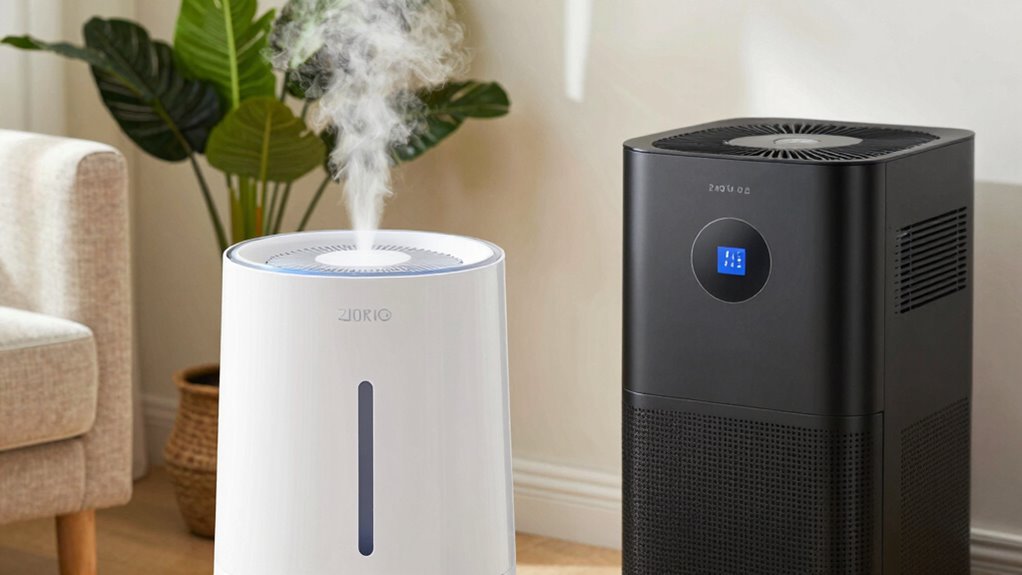
When it comes to maintaining ideal indoor air quality, understanding the difference between a humidifier and a dehumidifier is vital. These devices serve opposite purposes but are both essential in creating a comfortable, healthy environment in your home. A humidifier adds moisture to the air, which can be beneficial in dry climates or during winter when indoor air tends to become dry and irritating. On the other hand, a dehumidifier removes excess moisture, helping to prevent mold growth, musty odors, and dust mites that thrive in high humidity. Knowing when and how to use each device ensures you maximize your home’s air quality effectively.
Understanding when to use a humidifier or dehumidifier ensures optimal indoor air quality and comfort.
Choosing the right device also impacts your energy efficiency and cost savings. Humidifiers generally consume less energy because they operate by dispersing water vapor into the air, which requires minimal power. However, if you run a humidifier constantly, it can lead to higher energy use and increased utility bills. Dehumidifiers, especially larger models, tend to use more electricity because they work harder to extract moisture from the air through refrigeration or desiccant processes. Consequently, selecting an energy-efficient model is vital if you want to keep your energy bills manageable while maintaining the best air quality.
Knowing the specific conditions of your home helps determine whether you need a humidifier or a dehumidifier. For example, if you notice static electricity, cracked skin, or respiratory discomfort during winter, a humidifier can alleviate these issues by maintaining a healthy humidity level—ideally between 30% and 50%. Conversely, if you observe condensation on windows, mold growth, or a persistent damp smell, a dehumidifier can help reduce excess moisture, improving air quality and preventing structural damage. Both devices should be used thoughtfully, as over-humidifying or over-drying your indoor air can lead to health problems or damage to your home.
Furthermore, selecting a device with adjustable humidity settings allows you to fine-tune indoor moisture levels for optimal comfort and health. Ultimately, understanding your home’s specific air quality needs will guide your decision. Keep in mind that an ideal indoor environment balances humidity levels to promote comfort and health without wasting energy. When used correctly, both humidifiers and dehumidifiers can considerably improve your indoor air quality, making your living space more comfortable and healthier. Investing in energy-efficient models also ensures that you’re not only improving air quality but doing so sustainably and cost-effectively over time.
Frequently Asked Questions
Can a Humidifier or Dehumidifier Help With Allergies?
Yes, a humidifier or dehumidifier can help with allergies by improving indoor air quality. A humidifier adds moisture to combat airborne allergens like dust mites and mold spores, making breathing easier. Conversely, a dehumidifier reduces excess humidity that fosters mold and mildew growth. Using either device appropriately can markedly reduce allergy symptoms, creating a healthier environment and alleviating discomfort caused by airborne allergens.
Are Energy Costs Different Between Humidifiers and Dehumidifiers?
Yes, energy efficiency differs between humidifiers and dehumidifiers, affecting their operational costs. Generally, dehumidifiers tend to use more energy because they work harder to remove moisture from the air, especially in damp environments. Humidifiers usually consume less power since they add moisture. To save on energy costs, choose a model with a good energy efficiency rating, and use it only when necessary to keep your utility bills lower.
How Loud Are These Devices During Operation?
Think of these devices as silent guardians or noisy neighbors. Humidifiers tend to be quieter, producing soft hums with low noise levels, ideal for bedrooms. Dehumidifiers, however, often generate more sound, with some models reaching louder sound comparisons, especially during high capacity operation. Your choice depends on your tolerance for noise; if quiet is key, go for a humidifier, but if you need powerful moisture control, expect some noise.
Can Both Devices Be Used Simultaneously?
Yes, you can use a dual device setup for simultaneous operation. This setup allows you to control indoor humidity levels more precisely, especially if you experience varying conditions in different areas of your home. Just verify your devices are compatible and placed correctly to avoid interference. Using both humidifiers and dehumidifiers together can create a comfortable, balanced environment, but monitor their operation to prevent over-conditioning the air.
What Are the Maintenance Requirements for Each?
You need to regularly maintain both devices. For humidifiers, change the filter as recommended and clean the water tank weekly to prevent mold and bacteria buildup. For dehumidifiers, replace filters periodically and empty or clean the water collection tank to avoid odors. Consistent maintenance keeps them running efficiently and prolongs their lifespan, ensuring you get the best air quality and performance from each device.
Conclusion
Choosing between a humidifier and a dehumidifier can feel like deciding between night and day, but remember, it’s about balancing your home’s comfort. When you pick the right device, you’ll transform your space into a paradise so perfect, it could outshine the sun or rival the moon. Trust your needs, and you’ll create an environment so ideal, even the weather will envy your perfect climate. Make the right choice, and your home will thank you forever.