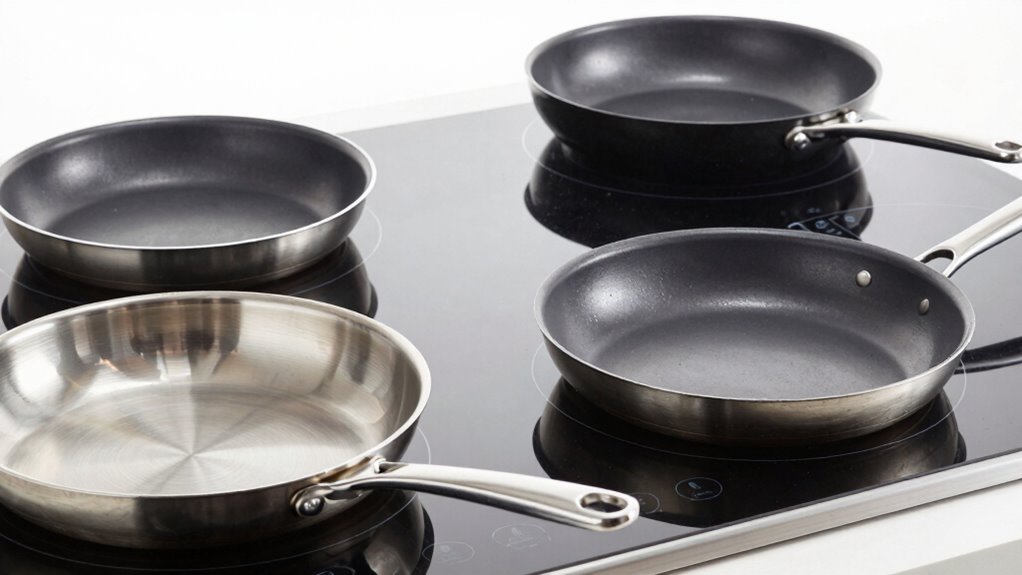

If your pans fail the induction test, it’s usually because they aren’t magnetic or don’t have a flat, even bottom. Materials like cast iron or certain stainless steels work best, but non-magnetic ones won’t heat properly. Warped or thin bases also cause uneven cooking and can damage your cooktop. Knowing why pans fail helps you choose the right cookware for efficient heating. Keep exploring to discover tips that will improve your induction cooking experience.

Get the little things that make your day delivered free — and shop member deals
- Fast, free delivery on millions of items
- Access to Prime Big Deal Days deals on October 6–7
- Prime Video, Amazon Music and more included
Key Takeaways
- Pans made of non-magnetic materials like glass or aluminum won’t heat on induction cooktops.
- Warped or uneven bases prevent proper contact, reducing heating efficiency.
- Thin or poorly constructed pans can cause hot spots and uneven cooking.
- Not all cookware labeled as “induction-ready” actually meets compatibility requirements.
- Regular damage or warping can impair heat transfer, causing pans to fail induction tests.
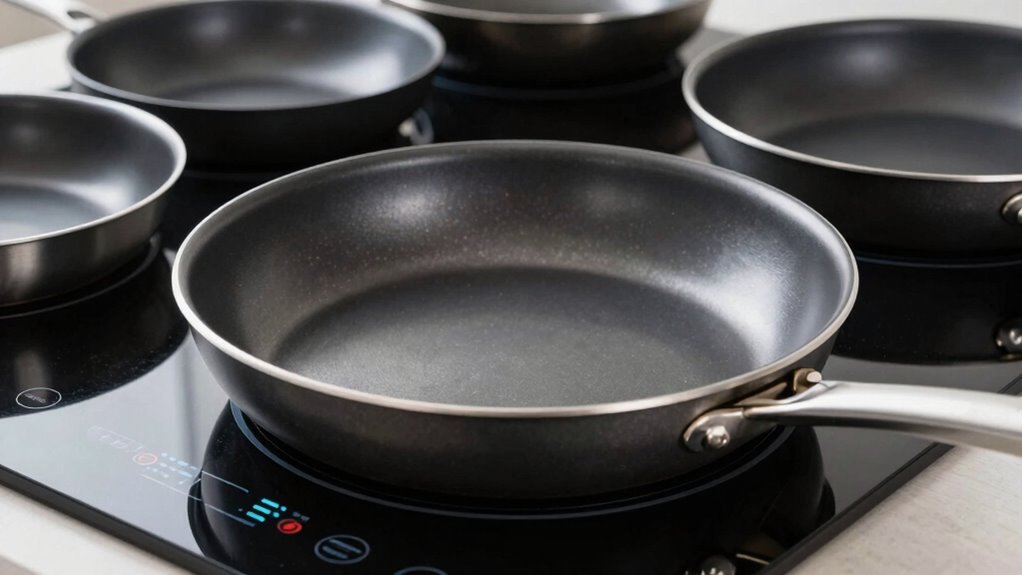
If you’re considering an upgrade to your kitchen appliances, induction cooking pans are a smart choice because they offer faster heat transfer and greater energy efficiency. However, not all pans work equally well on induction cooktops, and understanding why some fail the test can save you time and money. One of the main reasons a pan might not perform properly is cookware compatibility. Induction cooking relies on magnetic fields, so your pan needs a ferromagnetic base to heat up. If your pan isn’t made of or contains magnetic materials like cast iron or certain stainless steels, it simply won’t heat on an induction stove. Before purchasing, it’s essential to check whether your existing cookware is compatible; many manufacturers label their products as “induction-ready,” but a quick magnet test can also help. If a magnet sticks firmly to the bottom of your pan, it’s likely compatible.
Even if your cookware is compatible, heat distribution can still be problematic. Proper heat distribution is critical for even cooking and avoiding hot spots that can cause food to burn or cook unevenly. Some pans, especially those with thin or warped bottoms, don’t distribute heat well, which can make cooking on induction less efficient. When shopping for induction pans, look for thick, flat bases made from high-quality materials that promote uniform heat conduction. A good induction pan should sit flat on the cooktop surface, ensuring consistent contact with the magnetic field. This prevents uneven heating and ensures your food cooks evenly. Additionally, construction quality plays a vital role in the performance and durability of induction pans, as inferior construction can lead to inconsistent heat transfer and hot spots. Choosing well-made cookware with proper construction techniques can help improve cooking results and extend the lifespan of your pans. Ensuring your pans have the right magnetic properties is fundamental to achieving optimal performance on induction cooktops. Regularly inspecting your cookware for warping or damage can also help maintain consistent heating and prolong the life of your pans.
As an affiliate, we earn on qualifying purchases.
Frequently Asked Questions
Can I Use Cast Iron Pans on Induction Cooktops?
Yes, you can use cast iron pans on induction cooktops because they’re induction compatible. Cast iron benefits include excellent heat retention and durability, making them ideal for various cooking styles. Just make certain your pan has a flat bottom for proper contact with the surface, and you’ll enjoy even heating. Using cast iron on induction is efficient and effective, giving you reliable results every time.
Do All Stainless Steel Pans Work With Induction Cooking?
Not all stainless steel pans work with induction cooking because material compatibility varies. To guarantee your pan works, look for those with a magnetic base, which indicates good heat transfer efficiency on induction cooktops. You can test your stainless steel pan with a magnet—if it sticks firmly, it’s compatible. Choosing the right pan with the proper material ensures quick, efficient heating and better cooking performance on your induction stove.
How Do I Test if My Pan Is Induction-Compatible?
Imagine holding a magnet, feeling its pull—that’s how you test your pan’s induction compatibility. To perform a magnetic test, place the magnet on the bottom of your pan; if it sticks firmly, your pan’s material is compatible with induction cooking. This simple check confirms magnetic test success, ensuring your cookware’s material compatibility with induction stoves. If it doesn’t stick, it’s time to contemplate a different pan.
Are Non-Stick Pans Suitable for Induction Cooking?
Non-stick pans can work with induction cooktops if they have a magnetic base, but there are some limitations. The non-stick coating may struggle with high heat, affecting durability over time, especially if you use metal utensils or scrub aggressively. Keep in mind that the coating’s lifespan can be shorter with frequent use at high temperatures. To guarantee longevity, follow manufacturer instructions and avoid overheating your non-stick induction-compatible pans.
What Is the Best Way to Clean Induction-Compatible Pans?
To keep your induction-compatible pans in top shape, use gentle cleaning techniques like hand washing with warm, soapy water and a soft sponge. Avoid abrasive scrubbers that can damage the surface. Regular pan maintenance involves drying thoroughly after cleaning to prevent corrosion. For stubborn stains, make a paste of baking soda and water, then gently scrub. These steps guarantee your pans stay effective and last longer on your induction cooktop.
Conclusion
Now that you know what makes a pan induction-friendly, you’re better equipped to avoid the pitfalls. Think of your cookware as a loyal dance partner—if it’s not compatible, the dance won’t flow smoothly. Choosing the right pans guarantees your cooking experience is as seamless as a well-choreographed routine. So, don’t let your pans be the wallflower; pick the right ones, and watch your induction stove shine!
NFL season / tailgating Picks
team gear
As an affiliate, we earn on qualifying purchases.