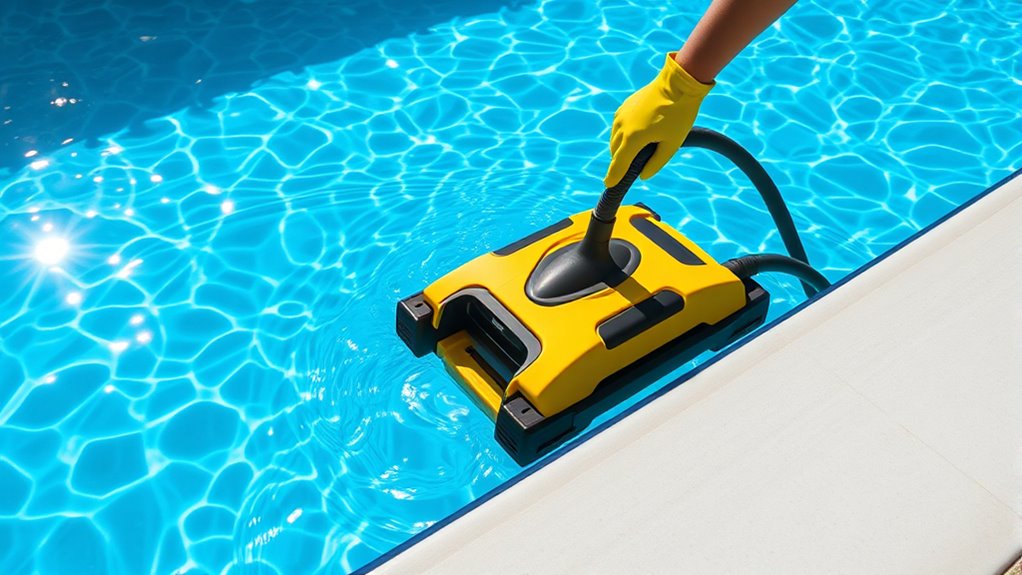

To install a suction pool cleaner, start by making certain your pool is clean and free of debris. Attach the hose tightly to the cleaner and connect it securely to the skimmer or dedicated suction port. Place the cleaner in the pool, making sure it floats freely without tangling. Turn on the pump and observe its movement, adjusting the hose or adding weights if needed. For detailed steps and troubleshooting tips, keep exploring to guarantee your cleaner works flawlessly.

Get the little things that make your day delivered free — and shop member deals
- Fast, free delivery on millions of items
- Access to Prime Big Deal Days deals on October 6–7
- Prime Video, Amazon Music and more included
Key Takeaways
- Confirm pool surface is clean, and the cleaner is compatible with your pool’s size and type.
- Attach the hose securely to the cleaner and connect it to the skimmer or dedicated suction port.
- Measure and cut or connect hose sections to fit the pool, ensuring all connections are tight.
- Place the cleaner in the pool and turn on the pump, observing its movement and adjusting as needed.
- Check for air leaks, blockages, and proper suction, then perform regular maintenance for optimal performance.
Installing a suction pool cleaner is a straightforward process that can keep your pool sparkling with minimal effort. Once you get it set up correctly, you’ll find that maintaining your pool becomes much easier, freeing you from hand-scrubbing and constant skimming. To begin, confirm your pool is clean and free of debris, as this will make the installation smoother and help the cleaner work more efficiently. Before diving into the setup, it’s a good idea to review your pool’s pump and filter system to verify compatibility and understand how the cleaner will integrate into your existing pool maintenance routine.
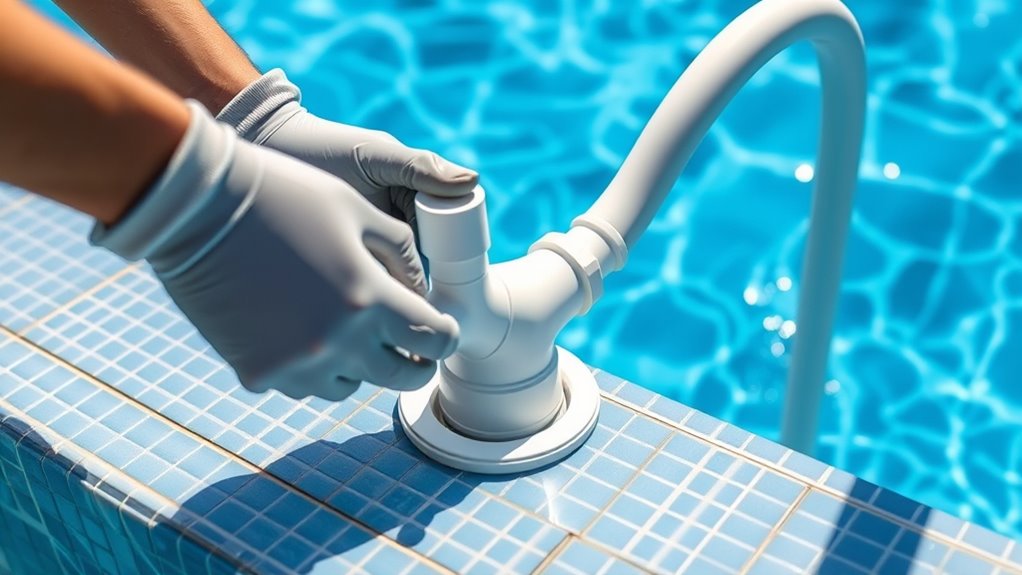
Start by attaching the hose to the cleaner body, making sure all connections are tight to prevent leaks. Most suction pool cleaners come with an adjustable hose length; measure and cut the hose to fit your pool size, or connect multiple sections if necessary. When connecting the hose to the skimmer or dedicated suction port, verify that the connection is secure. If you encounter difficulty, it’s usually due to equipment troubleshooting issues like a clogged skimmer, air leaks, or improper hose connections. Addressing these problems early on ensures the cleaner functions properly, saving you time and frustration down the line.
Secure all hose connections tightly and verify proper attachment to prevent leaks and ensure efficient cleaning.
Next, position the cleaner in the pool, ensuring it’s floating freely and not tangled in the hose. Turn on the pool pump and observe how the cleaner moves around the pool surface. If it stalls or doesn’t move at all, check for air leaks in the hose or loose fittings that could be disrupting suction. Sometimes, adjusting the hose weight or adding a weight connector helps the cleaner stay submerged and move efficiently. It’s also important to monitor the cleaner’s path and ensure nothing obstructs its movement, like loose leaves or debris that might clog the intake. Additionally, regularly inspecting the region-specific equipment can prevent many common troubleshooting issues and extend the lifespan of your cleaner. Properly maintaining the filter system can also improve the suction power and overall cleaning efficiency.
As you test the cleaner, keep an eye on its suction power and overall performance. If it’s not picking up debris effectively, inspect the intake and brushes for blockages or wear. Regularly cleaning the filter and checking the pump basket can prevent equipment troubleshooting issues that might hinder cleaning performance. Additionally, being aware of the compatibility of your cleaner with different pool types can help you select the right model for your needs. Once everything is working smoothly, you can leave the cleaner to do its job, but remember to periodically check hoses, fittings, and the cleaner itself to maintain peak operation.
With the cleaner in place, you’ll find pool maintenance becomes more manageable, and your pool stays cleaner with less effort. Proper installation is key to avoiding common equipment troubleshooting issues and ensuring your suction pool cleaner runs smoothly for seasons to come. By following these steps, you’ll maximize your investment and enjoy a beautifully maintained pool with minimal hassle.
Frequently Asked Questions
Can I Use a Suction Pool Cleaner on an Above-Ground Pool?
You can definitely use a suction pool cleaner on an above-ground pool. It works well for cleaning the pool surface and removing debris. Just make sure your cleaner is compatible with above-ground pools and that you connect it properly to your skimmer or dedicated suction line. Regular use keeps your pool spotless, making pool maintenance easier and more efficient, so you enjoy clean water all season long.
How Often Should I Clean or Replace the Cleaner’S Filter?
You should regularly check your suction pool cleaner’s filter to guarantee ideal performance. For filter maintenance, clean it weekly to remove debris and prevent clogs. Replace the filter according to the manufacturer’s replacement schedule, typically every 1-2 seasons or when it shows signs of wear. Proper filter maintenance keeps your cleaner working efficiently, extends its lifespan, and keeps your pool water clean and clear.
Will It Work With a Variable Speed Pool Pump?
Did you know that around 70% of pool owners report better cleaning with compatible equipment? If your pool pump is variable speed, it can work with a suction pool cleaner, but you need to verify pool pump compatibility first. Using the right pump settings helps maintain cleaner efficiency and reduces cleaner maintenance. Make certain your cleaner’s specifications match your pump’s flow rate to avoid clogging or inadequate cleaning.
Is It Safe to Leave the Cleaner in the Pool Overnight?
You might wonder if it’s safe to leave your suction pool cleaner in overnight. Generally, it’s okay if you follow chemical safety guidelines, ensuring proper chemical balance in your pool. Just consider electrical considerations—make sure the power supply is secure and waterproof. Regularly check for any damage to cords or connections. As long as these safety measures are in place, leaving the cleaner overnight shouldn’t pose any issues.
What Should I Do if the Cleaner Gets Stuck Underwater?
If your pool cleaner gets stuck underwater, you should immediately turn off the pump to prevent damage. Use a pool brush or skimmer to carefully free the cleaner from obstacles. Regular pool maintenance helps avoid these issues, so check for tangled hoses or debris. For troubleshooting tips, verify the cleaner moves freely and isn’t caught on any pool features. Staying vigilant keeps your cleaner functioning properly and extends its lifespan.
Conclusion
Now that you’ve set your suction pool cleaner in motion, watch it glide like a dancer across the water’s surface, sweeping away dirt and debris with graceful precision. With each pass, your pool transforms into a sparkling oasis, a mirror of clarity. Just like a gentle breeze clears the sky, your new cleaner keeps your pool pristine and inviting. Sit back, relax, and let it do the heavy lifting—your perfect pool awaits.
Fall Picks
fall essentials
As an affiliate, we earn on qualifying purchases.