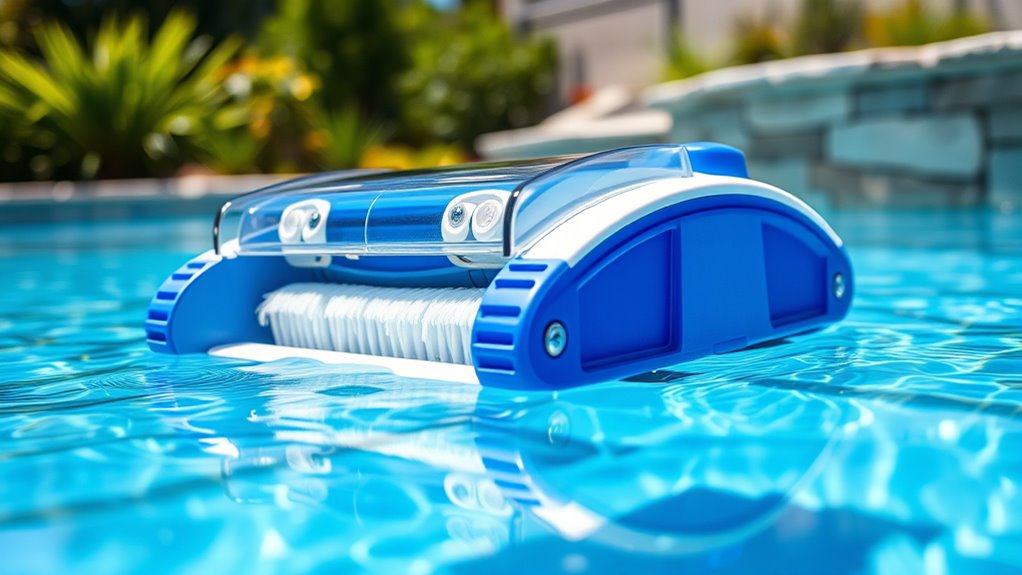

Automatic pool cleaners typically last between 3 and 7 years with proper maintenance and care. To maximize their lifespan, you should clean filters regularly, inspect brushes and wheels for wear, and follow manufacturer guidelines for part replacements. Maintaining balanced pool chemicals and keeping debris off the unit also helps prevent early breakdowns. If you want to find out more tips to extend your cleaner’s life, keep exploring these helpful insights.

Get the little things that make your day delivered free with Prime
- Fast, free delivery on millions of items
- Prime Video, Amazon Music and more included
- Member-only deals all year
Key Takeaways
- Most automatic pool cleaners last between 3 to 7 years with proper maintenance.
- Higher-quality models with durable materials tend to last longer than budget options.
- Regular cleaning, filter maintenance, and inspecting parts extend the lifespan.
- Neglecting routine upkeep accelerates wear and can lead to early failure.
- Environmental conditions and pool usage frequency also impact the longevity of the cleaner.

Ever wondered how long your pool cleaner will keep working effectively? The lifespan of your automatic pool cleaner largely depends on how well you take care of it. Regular robot maintenance is essential to guarantee it continues to perform at its best. This means cleaning out the filter regularly, inspecting brushes and wheels for wear, and making sure the robot’s components stay free of debris. When you stay on top of maintenance, you prevent unnecessary strain on the motor and mechanical parts, which can considerably extend its lifespan. Additionally, maintaining the correct pool chemical balance plays a crucial role. When your pool’s pH, alkalinity, and sanitizer levels are in check, you reduce the buildup of algae, calcium, and other deposits that can clog or damage your cleaner. A balanced pool environment minimizes wear and tear on the robot, helping it operate smoothly and last longer.
The quality of your pool cleaner also influences how long it lasts. Higher-end models tend to be more durable and made with better materials, meaning they can withstand regular use and exposure to chemicals better than cheaper alternatives. Still, even the most robust robot benefits from proper care. Neglecting routine maintenance—like ignoring filter cleaning or letting chemical imbalances go unchecked—can lead to premature breakdowns. The motor may burn out faster, and parts may deteriorate more quickly. Furthermore, following manufacturer guidelines for component replacement can significantly extend the life of your pool cleaner. Regularly inspecting and replacing worn parts helps prevent unexpected failures. Additionally, choosing a model with advanced features designed for durability can also help lengthen its operational life.
Weather conditions and usage frequency also matter. If you run your cleaner daily in a heavily contaminated pool, it will naturally wear out sooner. Conversely, using it less frequently and ensuring the pool is well-maintained can stretch its lifespan. Keep in mind that most automatic pool cleaners last around 3 to 7 years with proper care, but this varies. Some models, especially those with durable construction and advanced features, may last even longer if maintained diligently. Additionally, factors such as environmental exposure can influence the longevity of your pool cleaner over time.
Furthermore, understanding the importance of contrast ratio can help you choose a cleaner that performs well in different lighting and water conditions. Ultimately, your efforts in robot maintenance and maintaining a balanced pool chemical environment are your best tools for prolonging your pool cleaner’s life. Regular inspections, timely part replacements, and keeping the water chemistry in suitable range will save you money and frustration. When you treat your pool cleaner well, it rewards you with consistent cleaning performance, saving you time and effort in keeping your pool pristine. So, stay proactive with maintenance and pool care, and your investment in an automatic cleaner will serve you well for years to come.
Frequently Asked Questions
Can I Repair My Automatic Pool Cleaner Myself?
You can often repair your automatic pool cleaner yourself with some DIY fixes. Start by inspecting for obvious issues like tangled brushes or clogged filters. Many problems can be resolved using replacement parts available online or at your local store. With patience and basic tools, you might fix minor issues without professional help, saving money and extending your cleaner’s lifespan. Just make certain you follow safety guidelines and manufacturer instructions.
What Are Signs My Pool Cleaner Needs Replacing?
Your pool cleaner’s lifespan isn’t endless—think of it as a superhero with a limited power supply. When you notice it’s missing large debris, moves sluggishly, or makes strange noises, these are clear replacement indicators. These signs point to declining pool cleaner longevity. If repairs become frequent or performance drops considerably, it’s time to contemplate a replacement. Staying alert to these cues keeps your pool sparkling and ensures you don’t miss out on pool perfection.
Do Automatic Pool Cleaners Work in All Pool Types?
Automatic pool cleaners work well in most pool types, but their efficiency depends on maintaining proper pool chemical balance and managing debris accumulation. For inground pools, they typically perform better, especially if the water’s chemistry is balanced. Above-ground pools might need more frequent cleaning or specific models. Always check your cleaner’s compatibility with your pool type and keep the water clean to guarantee ideal performance and longevity.
How Often Should I Clean My Pool Cleaner’S Filters?
Think of your pool cleaner’s filters as the essential heartbeat of your system. You should clean them at least once a month to guarantee ideal filter maintenance. Regular cleaning prevents debris buildup, which can shorten your cleaner’s lifespan. By maintaining clean filters, you keep the cleaner running efficiently, extending its lifespan and ensuring your pool stays pristine. Consistent care transforms your cleaner from a fleeting tool into a lasting companion in pool maintenance.
Are There Maintenance Tips to Extend My Cleaner’s Lifespan?
To extend your pool cleaner’s lifespan, focus on regular pool filter maintenance to prevent clogs and guarantee efficient operation. Keep an eye on the battery life and replace the battery when it starts losing power, which helps avoid unnecessary strain on the motor. Additionally, clean the brushes and check for debris often. Proper maintenance keeps your cleaner running smoothly, saving you money and prolonging its effective lifespan.
Conclusion
Think of your automatic pool cleaner as a loyal friend, steadily working to keep your oasis pristine. With proper care and timely maintenance, it’s like nurturing a friendship that endures through seasons. When you treat it with respect, it continues to shine like a beacon of cleanliness, symbolizing your commitment to a sparkling, inviting pool. In return, your cleaner becomes a lasting partner, turning your backyard into a tranquil retreat that lasts for many seasons to come.
Halloween Picks
halloween
As an affiliate, we earn on qualifying purchases.