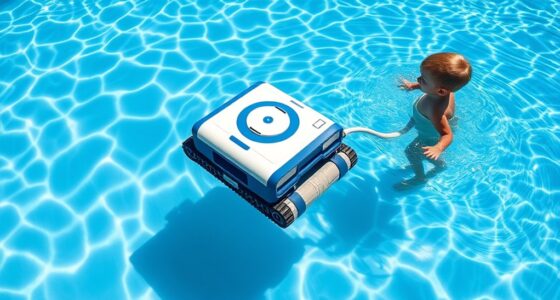
To keep your robotic pool cleaner running smoothly, perform routine maintenance like cleaning filters and removing debris weekly, inspecting brushes for wear, and checking the power supply for proper connections. Regularly rinse components, clear tangled cords, and make sure the charging station stays clean and aligned. Address small issues early to prevent costly repairs and extend the lifespan of your device. Keep these steps in mind, and you’ll discover more tips to maximize your cleaner’s performance.
Key Takeaways
- Regularly clean and inspect filters, brushes, and debris to ensure optimal device performance.
- Check and clean charging contacts and station to maintain proper power connection.
- Remove tangled cords and clear movement pathways to prevent operational issues.
- Examine physical parts for cracks, wear, or loose components and address issues promptly.
- Perform routine troubleshooting for common problems like stuck brushes or charging errors to prevent major repairs.
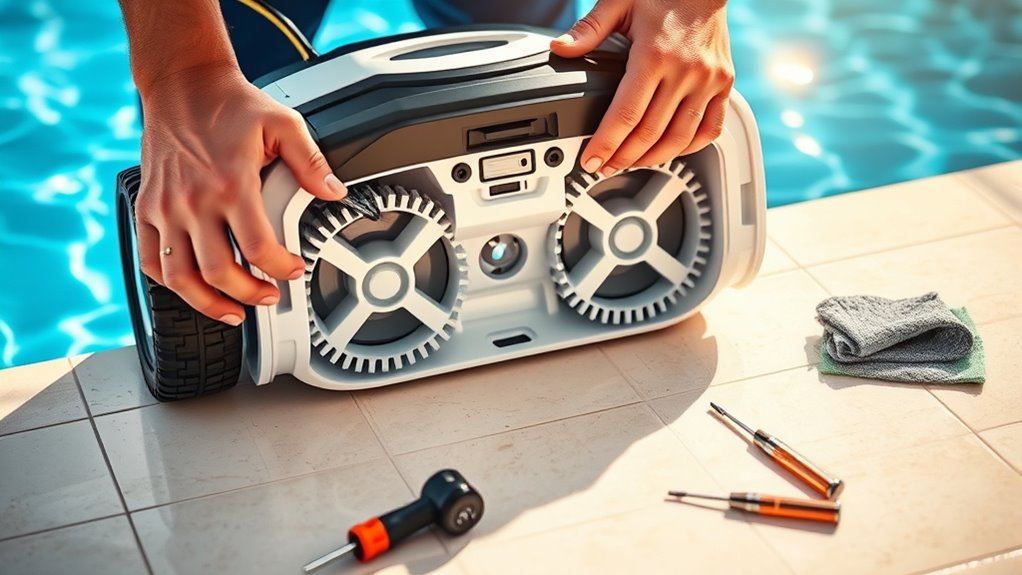
Regular maintenance is vital to keep your robotic pool cleaner operating at peak performance. When you stay on top of routine care, you not only extend the lifespan of your device but also guarantee it runs efficiently, saving you time and money. One of the most effective ways to do this is through DIY troubleshooting, which allows you to quickly identify and resolve common issues before they become major problems. For example, if your cleaner isn’t moving properly or missing spots, checking for tangled cords, debris buildup, or stuck brushes can often resolve the problem without needing professional help. By familiarizing yourself with basic troubleshooting steps, you can keep your device in top shape and avoid costly repairs.
In addition to troubleshooting, regular cleaning of the components plays a vital role in maintaining energy efficiency. A dirty filter or clogged brushes force the cleaner to work harder, consuming more energy and reducing its lifespan. Removing debris, rinsing filters, and inspecting brushes weekly ensures smooth operation and maximum power use. Clean filters also prevent dirt from recirculating back into your pool, maintaining water clarity and reducing the workload on your pool’s circulation system. When filters become excessively dirty or worn out, replacing them promptly helps maintain energy efficiency, as a well-maintained device uses less power to perform effectively. Additionally, understanding interior design principles can help you optimize the physical setup and placement of your pool equipment for better performance.
Another key aspect of routine maintenance is checking the power supply and charging station. Ensure the charging contacts are clean and free of debris, as dirty contacts can cause poor charging and inconsistent operation. Properly aligned and clean contacts allow your robotic cleaner to charge fully, reducing unnecessary energy consumption and preventing frequent recharging cycles. If you notice your device isn’t charging efficiently, troubleshooting the power connection can often resolve the issue without needing professional service. This proactive approach keeps your cleaner ready to operate when you need it most and helps conserve energy. Moreover, considering the technology used in your robotic cleaner can help you identify potential upgrades or maintenance needs for improved efficiency.
Finally, regular inspections of the robot’s body and movement pathways can prevent minor issues from escalating. Look for cracks, worn brushes, or loose parts that can hinder performance or cause energy drain. Addressing these small problems early on through simple DIY troubleshooting can considerably improve your cleaner’s energy efficiency and operational lifespan. It’s also beneficial to stay informed about latest advancements in robotic pool cleaning technology to optimize maintenance routines and upgrade when appropriate. Staying aware of sound vibrations and their effects can also help in diagnosing operational issues more effectively. Regularly updating your knowledge on dog breeds and their traits can also inspire maintenance routines tailored to your device’s specific needs. By dedicating a few minutes each week to these routine tasks, you ensure your robotic pool cleaner works effectively, consumes less power, and keeps your pool sparkling clean without interruptions. Consistent maintenance not only prolongs your device’s life but also guarantees it performs at its best whenever you need it.
Frequently Asked Questions
How Often Should I Replace the Robotic Pool Cleaner’S Brushes?
You should replace your robotic pool cleaner’s brushes as part of your maintenance schedule, typically every 6 to 12 months. Regular brush replacement ensures peak cleaning performance and prolongs the device’s lifespan. Keep an eye on wear and tear, such as fraying or missing bristles, which signal it’s time for a new brush. Staying consistent with brush replacement helps maintain your cleaner’s efficiency and prevents potential damage.
Can I Use Household Cleaning Products to Maintain the Robot?
Using household chemicals on your robotic pool cleaner is like pouring vinegar on a delicate flower—it’s risky. Household cleaning agents and chemicals aren’t designed for your robot’s delicate parts and can cause damage or corrosion. Instead, stick to manufacturer-recommended cleaning solutions and tools. This way, you’ll keep your robotic cleaner running smoothly, avoiding costly repairs and ensuring it works efficiently without risking harm from harsh household chemicals.
What Are the Signs Indicating the Robot Needs Professional Repair?
If your robotic pool cleaner isn’t working properly, watch for signs like sensor malfunctions, where it stops or misses spots, or battery degradation, causing it to run shorter than usual. You might also notice unusual noises or it struggles to move. These issues indicate you should seek professional repair to guarantee your robot functions correctly and lasts longer, saving you time and preventing further damage.
How Do I Troubleshoot Connectivity Issues With the Robot’S App?
If you’re having trouble connecting your robotic pool cleaner’s app, start by checking for wireless interference from other devices. Make sure your Wi-Fi signal is strong and clear. Also, verify your app is up to date, as outdated versions can cause connectivity issues. Restart your router and the robot, then try reconnecting. These steps often resolve app update issues and improve the connection, making control smoother.
Is It Safe to Leave the Robot in the Pool During Thunderstorms?
Ever wondered if it’s safe to leave your robotic pool cleaner in the water during a thunderstorm? For storm safety, it’s best to remove and store your robot properly to prevent electrical damage or safety hazards. Leaving it in the pool during thunderstorms isn’t recommended because lightning can cause malfunctions. Always follow your manufacturer’s guidelines for robot storage during storms, ensuring your device stays safe and ready for future cleaning sessions.
Conclusion
Keeping your robotic pool cleaner in top shape is like tending to a loyal garden—neglect it, and it’ll wither away. Regularly cleaning filters, checking brushes, and inspecting for debris guarantees your cleaner runs smoothly and prolongs its life. Think of routine maintenance as watering your pool’s heartbeat, guaranteeing sparkling waters and hassle-free swims. Stay proactive, and your robotic helper will continue to work tirelessly, turning pool care into a breeze rather than a chore.