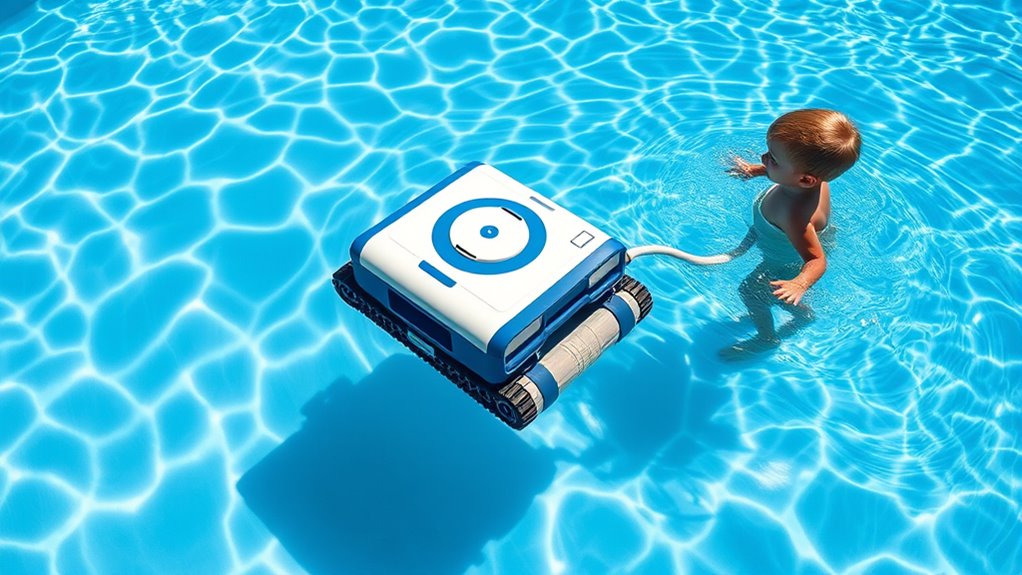

Many believe automatic pool cleaners are unreliable or only good for small pools, but modern robotic models have changed that perception. Today’s cleaners use smart sensors and advanced navigation to handle large, complex pools efficiently and thoroughly, cleaning floors, walls, and waterlines. They operate quietly, save energy, and require minimal maintenance. If you explore more, you’ll discover how the latest innovations make these devices smarter, greener, and more effective than ever before.
Key Takeaways
- Many believe automatic cleaners can’t handle large or complex pools, but modern models are designed for extensive and intricate pool shapes.
- Some think robotic pool cleaners are noisy, yet they operate quietly compared to traditional manual or pressure-side cleaners.
- There’s a misconception that automatic cleaners require frequent maintenance; advanced models feature self-diagnosing systems for minimal upkeep.
- People assume automatic cleaners are inefficient or unreliable, but recent technology ensures thorough cleaning and consistent performance.
- Some believe they are costly and not energy-efficient, though modern robotic cleaners are designed to save energy and reduce long-term costs.
Have you ever wondered if automatic pool cleaners are really as effective as people say? Many assume these devices are miracle workers that leave pools spotless without much effort, but that’s not entirely true. The truth is, modern automatic pool cleaners utilize advanced robotic technology, which makes them highly efficient and reliable. These cleaners are equipped with smart sensors and programmable features that allow them to navigate your pool more thoroughly than manual cleaning. They can detect obstacles, adjust their paths, and target dirty areas, providing a consistent clean without you lifting a finger. This robotic technology isn’t just about convenience; it also contributes to energy efficiency. Unlike older models or manual cleaning methods that might run longer or require more power, modern automatic pool cleaners are designed to use less energy while delivering better results. They operate on optimized cycles, meaning they don’t waste electricity running longer than necessary, which can considerably reduce your energy bills over time.
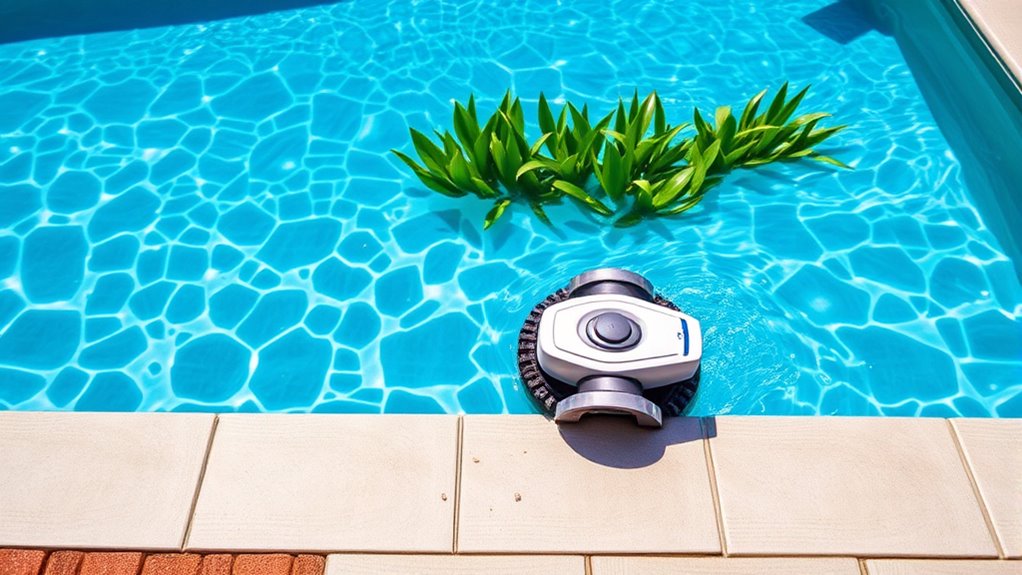
Many folks think that automatic pool cleaners are only suitable for small or simple pools, but that’s a misconception. Today’s models come in various sizes and capabilities, capable of handling large, complex, and deep pools with ease. They can clean floors, walls, and waterlines, saving you the hassle of manual scrubbing. Plus, because they’re powered by efficient robotic systems, they tend to be quieter and more environmentally friendly than traditional suction or pressure-side cleaners. This efficiency not only helps your wallet but also minimizes the environmental impact of maintaining your pool. Additionally, high-quality projectors often feature smart navigation, similar to robotic pool cleaners, which enhances their effectiveness in complex environments. Furthermore, the advancements in robotic technology have made these devices more affordable and accessible for a wider range of pool owners.
It’s also worth noting that energy-efficient designs in these cleaners help to further reduce operational costs and lessen environmental impact, making them a sustainable choice for eco-conscious homeowners. Many models now incorporate self-diagnosing features, which can alert you to potential issues before they become serious problems, reducing downtime and repair costs. Another common misconception is that automatic pool cleaners require constant supervision or frequent maintenance. While some upkeep is necessary, modern units are designed for ease of use. Many have self-diagnosing features that alert you to any issues, and their durable parts mean you won’t need to replace components as often. The robotic technology allows for longer intervals between cleanings and fewer repairs, making them a practical choice for busy households. Additionally, advanced navigation systems enable these cleaners to map your pool effectively, ensuring thorough coverage and avoiding missed spots.
Ultimately, automatic pool cleaners are more sophisticated than many think. They leverage robotic technology to provide effective, energy-efficient cleaning solutions that are easy to operate and maintain. Instead of viewing them as unreliable or inefficient, you should see them as valuable tools that can keep your pool sparkling with minimal effort on your part. As technology continues to improve, these cleaners will only get better, offering even smarter and greener ways to enjoy a clean pool year-round.
Frequently Asked Questions
Do Automatic Pool Cleaners Work on All Pool Surfaces?
Automatic pool cleaners are designed to work on many pool surface types, but their cleaning effectiveness can vary. For example, they typically perform well on concrete and vinyl surfaces, but may struggle with delicate materials like fiberglass or certain tiles. To guarantee ideal cleaning, check the cleaner’s specifications for compatibility with your pool’s surface type. Proper maintenance and selecting the right model help maximize its cleaning effectiveness across different pool surfaces.
How Often Should I Run My Automatic Pool Cleaner?
Did you know that running your pool cleaner 2-3 times a week keeps the water crystal clear? To keep it working efficiently, follow maintenance tips like cleaning the filter regularly and checking for obstructions. If you notice it’s not cleaning properly, troubleshooting techniques such as inspecting the brushes or checking the power source can aid. Consistent use and proper maintenance ensure your automatic pool cleaner operates smoothly and extends its lifespan.
Are Automatic Pool Cleaners Energy-Efficient?
Automatic pool cleaners are generally energy-efficient, helping you save on power usage. They’re designed to optimize energy consumption by running only as long as necessary to clean your pool thoroughly. Modern models often feature low power usage, which means less electricity bills. So, if you’re concerned about energy consumption, investing in an efficient automatic cleaner can be a smart choice, saving you money while keeping your pool pristine.
Can Automatic Cleaners Remove Algae and Bacteria?
Imagine a robot from the future—your automatic pool cleaner can’t fight off algae and bacteria on its own. It’s great for debris, but for algae removal and bacteria control, you need to use proper sanitizers and algaecides. Regular chemical treatments, paired with your cleaner, keep your pool crystal clear and safe. So, while your cleaner helps, it’s not a substitute for proper chemical maintenance to combat algae and bacteria effectively.
What Is the Typical Lifespan of an Automatic Pool Cleaner?
You’ll typically get about 3 to 8 years from your automatic pool cleaner. To maximize its lifespan, keep up with pool filter maintenance, which prevents debris from stressing the machine. If it’s battery-operated, remember that battery life expectancy varies, so replace batteries as needed. Regular cleaning and proper storage also help extend your cleaner’s efficiency, ensuring you enjoy a clean pool season after season.
Conclusion
Now that you know the truth about automatic pool cleaners, don’t let misconceptions hold you back. Remember, “A wise man learns more from his mistakes than from his successes,” so stay informed and choose wisely. With the right understanding, you can enjoy a sparkling clean pool without unnecessary worries. Embrace the knowledge, trust your choices, and make your pool maintenance easier and more efficient. Your perfect pool is just a decision away—trust in what you know.