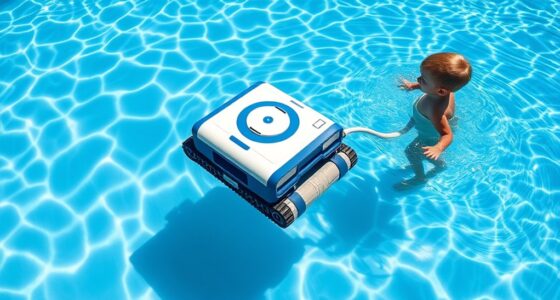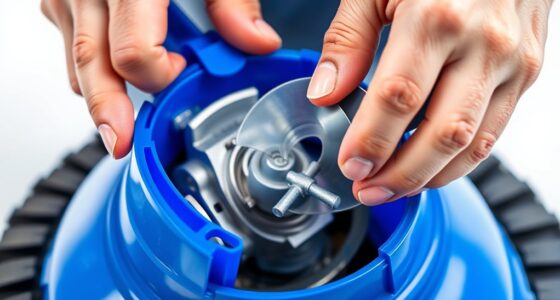
To properly care for your pressure pool cleaner during the off-season, start by thoroughly cleaning and inspecting all parts, including hoses and filters. Store it in a dry, cool place away from sunlight, and loosely coil hoses to prevent kinks. Make sure everything is dry and well-protected, then cover it with a breathable cover. Taking these steps now helps extend its lifespan and keeps it ready for next season—keep going to learn more tips to protect your equipment.

Get the little things that make your day delivered free with Prime
- Fast, free delivery on millions of items
- Prime Video, Amazon Music and more included
- Member-only deals all year
Key Takeaways
- Rinse and thoroughly clean the cleaner, hoses, and filters to remove dirt, debris, and chemicals before storage.
- Store in a dry, cool, shaded area, coiling hoses loosely and elevating the unit off the ground.
- Disassemble removable parts, dry completely, and label components for easy reassembly next season.
- Cover with a breathable material and verify all parts are dry to prevent mold, rust, and environmental damage.
- Regularly inspect motors, seals, and high-quality components for wear to ensure longevity and optimal performance.
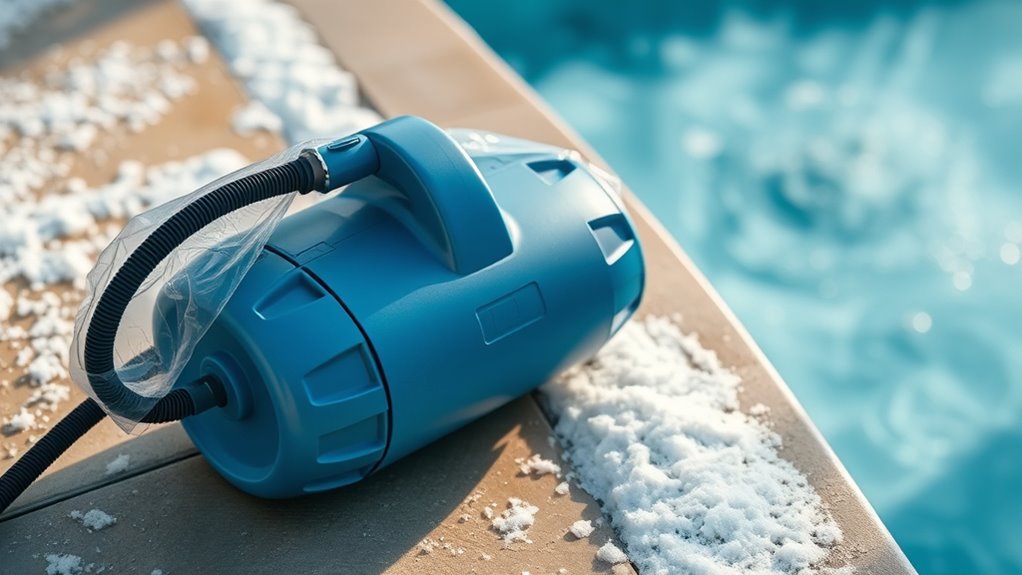
When the swimming season ends, properly caring for your pressure pool cleaner is essential to keep it in good condition for next year. Taking the time to prepare your cleaner now will save you headaches later and ensure it performs efficiently when you reopen the pool. Start by giving your cleaner a thorough rinse with clean water to remove any dirt, debris, or chemicals that may have accumulated during use. This simple step prevents buildup that could cause corrosion or damage over time.
Properly caring for your pressure pool cleaner ensures long-lasting performance and a sparkling pool next season.
Next, consult your maintenance checklist to confirm you’ve addressed all necessary tasks. Check the hoses for cracks, leaks, or blockages, and replace any damaged sections. Remove and clean the filter or strainer components, making sure there’s no debris lodged inside. Lubricate the O-rings and seals with a silicone-based lubricant to keep them flexible and prevent cracking during storage. This attention to detail helps maintain a proper seal and guarantees the cleaner will operate smoothly next season. Proper storage also protects your equipment from environmental damage. Additionally, inspecting high-quality components such as motors and seals for wear and tear can help identify parts that may need replacement, ultimately extending the lifespan of your equipment with proper maintenance.
When it comes to storage tips, choose a dry, cool place away from direct sunlight, extreme temperatures, and harsh chemicals. Storing your pressure pool cleaner in a shaded area or a dedicated storage bin helps protect it from environmental damage. Coil the hoses loosely to avoid kinks or tangles, and avoid hanging the cleaner by its hoses or parts that could strain or warp over time. If possible, elevate the cleaner off the ground to prevent moisture buildup and rust. Proper pressure pool cleaner storage can significantly prolong its service life and performance.
Before storing, double-check that all components are completely dry. Moisture left inside can promote mold or corrosion, which compromises the integrity of your pressure pool cleaner. If your model has removable parts, disassemble them carefully, and store each piece separately in a clean, dry container. Labeling the parts can help you reassemble everything quickly when next season begins. Additionally, inspecting well-maintained components such as filters and seals for wear and tear can help identify parts that may need replacement, ultimately extending the lifespan of your equipment with proper maintenance.
Finally, consider storing your pressure pool cleaner in a dedicated, accessible spot where you won’t forget about it or accidentally damage it. Cover it with a breathable cloth or plastic cover for added protection against dust and pests. Properly maintenance practices and a detailed checklist will ensure your pressure pool cleaner stays in top shape during the off-season. These steps not only preserve the functionality of your equipment but also save you money and time when you’re ready to enjoy a sparkling clean pool in spring.
pressure pool cleaner storage cover
As an affiliate, we earn on qualifying purchases.
As an affiliate, we earn on qualifying purchases.
Frequently Asked Questions
How Often Should I Inspect My Pressure Pool Cleaner During Off-Season?
You should inspect your pressure pool cleaner regularly to guarantee it stays in good condition. During the off-season, follow a maintenance schedule that includes checking for wear and tear at least once a month. This inspection frequency helps catch issues early, preventing damage and extending the cleaner’s lifespan. By staying proactive, you keep your equipment ready for use when swimming season resumes, saving time and repair costs later.
Can I Leave the Cleaner in the Pool During Winter?
You shouldn’t leave your pressure pool cleaner in the pool during winter. Instead, perform winter storage by removing it and thoroughly cleaning the parts. Store your cleaner in a dry, sheltered area away from harsh weather. Before covering your pool with a cover, make certain the cleaner is completely dry to prevent damage. Proper winter storage helps prolong your cleaner’s lifespan and keeps it ready for use when the season returns.
What Damage Can Occur if I Don’T Properly Store the Cleaner?
Neglecting proper storage for your pressure pool cleaner is like leaving a treasure chest to rot—damage awaits. If you don’t store it correctly, you risk storage damage and mold growth that can clog internal parts and reduce efficiency. Moisture and dirt trapped inside create a breeding ground for mold, which can ruin your cleaner and lead to costly repairs. Always clean, dry, and store your cleaner in a cool, dry place for longevity.
Should I Run the Cleaner Before Storing It for the Season?
You should run your pressure pool cleaner before storing it for the season. This guarantees proper storage preparation by flushing out debris and preventing buildup. Running the cleaner also helps with off-season maintenance, reducing the risk of clogged hoses or damage caused by residual dirt. By doing this, you keep your equipment in good condition, making it easier to start up again when pool season returns.
How Do I Troubleshoot if the Cleaner Isn’T Working After Storage?
If your pressure pool cleaner isn’t working after storage, start with troubleshooting steps like checking power connections, inspecting hoses for clogs, and ensuring the brushes aren’t jammed. Follow storage tips to prevent issues, such as cleaning and drying components thoroughly before storing. If problems persist, verify that the motor is functioning properly and that there’s no debris blocking movement. Regular maintenance helps keep your cleaner ready for next season.
Conclusion
Think of your pressure pool cleaner as a loyal garden tool resting in winter’s quiet. When you give it proper care—cleaning, drying, and storing—you’re planting seeds for a spring revival. Like a well-tended seedling, your cleaner emerges ready to sweep away summer’s debris, bright and enthusiastic. With gentle attention now, you guarantee it’s always prepared to dance back into action, turning the quiet off-season into a foundation for a sparkling, trouble-free pool season ahead.
NFL season / tailgating Picks
team gear
As an affiliate, we earn on qualifying purchases.