
To properly store your automatic pool cleaner during the off-season, clean and inspect it thoroughly, making certain all dirt, debris, and wear are addressed. Make sure it’s completely dry, then remove batteries or rechargeable parts and store them separately in a cool, dry place. Store the cleaner in a cool, dry location away from extreme temperatures, with hoses and cables positioned without strain. Keep removable parts organized and protected — learn more to guarantee your cleaner stays in top shape year after year.
Key Takeaways
- Clean and inspect the cleaner thoroughly, addressing any wear or damage before storage.
- Ensure the cleaner is completely dry to prevent mold and corrosion.
- Remove batteries or rechargeable components and store separately in a cool, dry place.
- Store in a cool, dry location away from extreme temperatures and humidity.
- Keep removable parts like brushes and filters in labeled containers and protected from dust.
As the swimming season ends, properly storing your automatic pool cleaner becomes essential to keep it in good condition for next year. Taking the time for off-season storage helps prevent damage, extends the lifespan of your equipment, and guarantees it performs smoothly when you need it again. The key to successful off-season storage is a thorough cleaning and proper preparation, which are vital parts of pool maintenance. Before storing, inspect your cleaner for any signs of wear or damage, and address issues like worn brushes or clogged filters. This proactive approach reduces the risk of repairs later and keeps your cleaner in top shape for next season.
Once you’ve completed the cleaning, it’s time to focus on the actual storage process. First, make sure your cleaner is completely dry to prevent mold or corrosion. You can do this by wiping down all parts with a dry cloth or allowing it to air dry thoroughly. After drying, consider removing any batteries or rechargeable components, if applicable, to avoid corrosion or battery leakage during storage. Store these separately in a cool, dry place away from direct sunlight, which can degrade battery life over time. Proper storage conditions are crucial for maintaining equipment longevity.
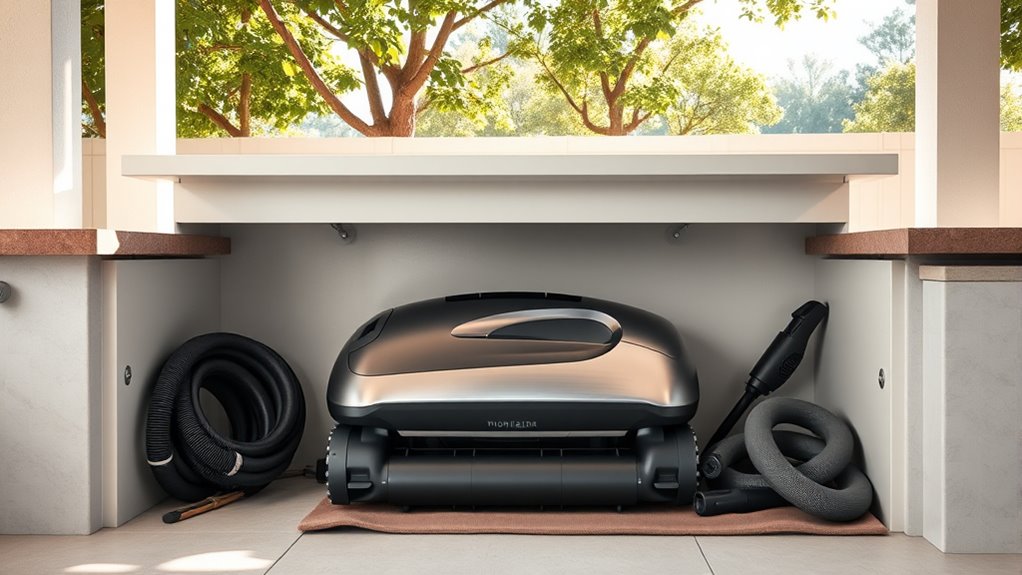
Next, you want to find a suitable storage location for your cleaner. Ideally, this should be a cool, dry area where the cleaner won’t be subjected to extreme temperatures or humidity. Avoid storing it in places like garages that can fluctuate in temperature or are prone to dampness. Instead, choose a closet or storage cabinet where it won’t be disturbed or knocked over. During storage, keep the cleaner in a position that doesn’t strain hoses or cables—lying flat or hanging in a way that prevents deformation is best. Proper storage practices can help prevent unnecessary wear and tear. Additionally, regular maintenance routines during the off-season can further extend your cleaner’s lifespan.
If your cleaner has removable parts, such as brushes or filters, store these separately in labeled containers or bags. This makes reassembly easier when spring comes around, and it helps prevent losing small components. When you’re ready to store the cleaner, consider placing it in a breathable cover or bag to keep dust and debris off, but avoid plastic bags that can trap moisture and cause mold growth. Properly storing pool equipment is essential to avoid corrosion and damage from environmental factors. Additionally, understanding automatic pool cleaner operation can help you troubleshoot and maintain your equipment more effectively during the off-season and beyond.
Lastly, remember that proper pool maintenance extends beyond just the cleaner itself. Regularly check and clean your pool’s filtration system and skimmers during the off-season. When you’re ready to reinstall your cleaner for the next season, guarantee that all cleaner installation steps are followed carefully to ensure peak performance. By taking these steps, you’ll preserve your automatic pool cleaner’s condition and be ready to dive right back into swimming when the new season begins.
Frequently Asked Questions
How Often Should I Inspect My Pool Cleaner During Storage?
You should inspect your pool cleaner at least once a month during storage. Maintain a regular inspection schedule to check for any signs of wear, mold, or damage. Cleaning frequency depends on your storage conditions, but a quick rinse and thorough dry are essential before storing. Regular inspections ensure your cleaner stays in good shape, ready to use when the season starts again.
Can I Store My Pool Cleaner Outdoors During Winter?
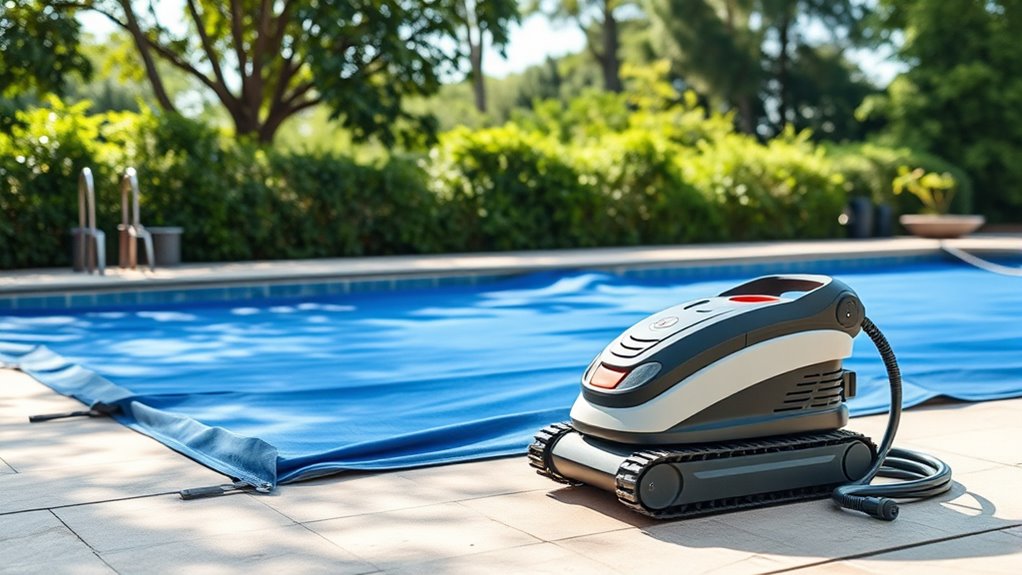
Storing your pool cleaner outdoors during winter is like leaving a delicate sculpture exposed to harsh weather. You can do it, but it’s risky. If you choose outdoor storage, make certain it’s protected with a waterproof cover and placed in a sheltered spot to shield against winter elements. Proper winter protection minimizes damage, prolongs your cleaner’s lifespan, and keeps it ready for a smooth start when swimming season returns.
What Are Common Mistakes to Avoid When Storing the Cleaner?
When storing your pool cleaner, avoid common mistakes like neglecting proper cleaner maintenance and ignoring storage safety. Make sure you clean and dry the unit thoroughly to prevent mold and damage. Store it in a cool, dry place away from direct sunlight and harsh weather. Don’t leave it outdoors for long periods, as exposure can harm internal components. Proper storage guarantees your cleaner stays in good shape and works efficiently next season.
Is It Necessary to Replace Parts Before Storage?
Think replacing parts before storage is optional? Think again! Proper storage preparation means you shouldn’t skip on part replacement if needed. You wouldn’t leave your fancy car with worn-out tires, right? Same applies here. Replacing worn or damaged parts ensures your cleaner stays in top shape, ready to roll when summer returns. Don’t gamble—save yourself time and hassle by handling part replacement before storing it away.
How Do I Troubleshoot Storage-Related Issues Later?
When troubleshooting storage-related issues later, start by inspecting your storage container for debris or damage, as this can cause problems. Check if cleaning solutions or any residues are affecting the cleaner’s components. Make sure everything is dry before storage to prevent mold or corrosion. If issues arise, clean the parts thoroughly, ensure the storage container is sealed properly, and replace any damaged components to keep your automatic pool cleaner working smoothly.
Conclusion
Storing your automatic pool cleaner properly is like preparing a trusty steed for its winter rest—care today guarantees it’s ready to serve you again. Think of your cleaner as a loyal companion, deserving gentle treatment when not in use. By following these simple steps, you’re safeguarding your investment and making sure it’s always ready to dive back into action. When spring arrives, your cleaner will be waiting, refreshed and keen to keep your pool pristine.