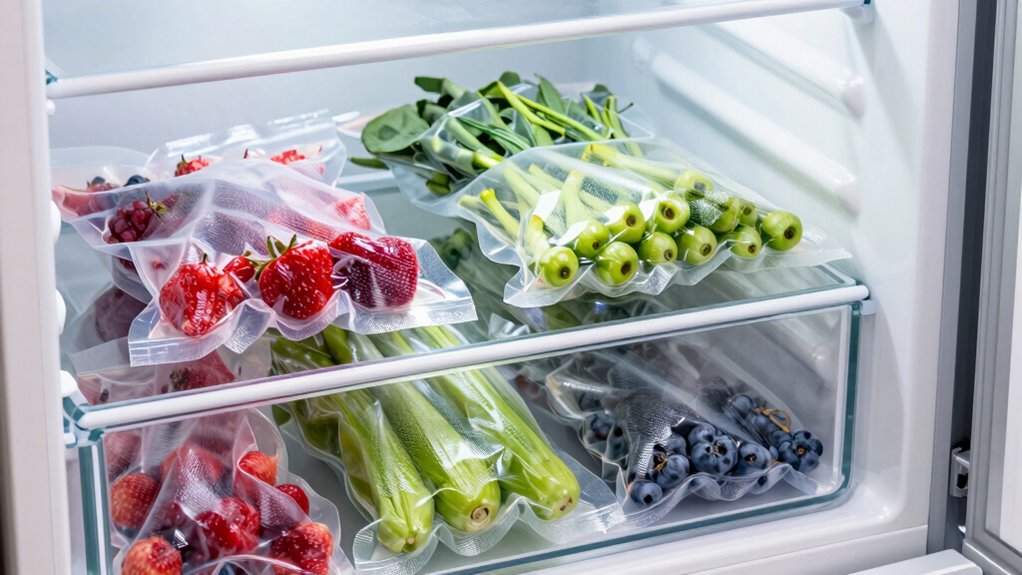

To prevent freezer burn, focus on proper storage methods that eliminate air contact. Use vacuum sealing or tight, moisture-resistant wraps like freezer paper or aluminum foil, pressing out excess air before sealing. Label everything with dates to track freshness and double-wrap delicate items for extra protection. These steps create a barrier against dehydration and oxidation, keeping your food fresh longer. Stay with us to learn more tips that will keep your frozen goods perfect and flavorful.

Get the little things that make your day delivered free with Prime
- Fast, free delivery on millions of items
- Prime Video, Amazon Music and more included
- Member-only deals all year
Key Takeaways
- Use vacuum sealing to remove air and create an airtight environment around food.
- Wrap items with moisture-resistant, freezer-specific materials to prevent air contact.
- Double-wrap delicate or long-term storage items for added protection against freezer burn.
- Label packages with storage dates to monitor freshness and prevent prolonged freezer time.
- Properly seal all packages, avoiding tears or gaps, to ensure an airtight barrier against dehydration and oxidation.
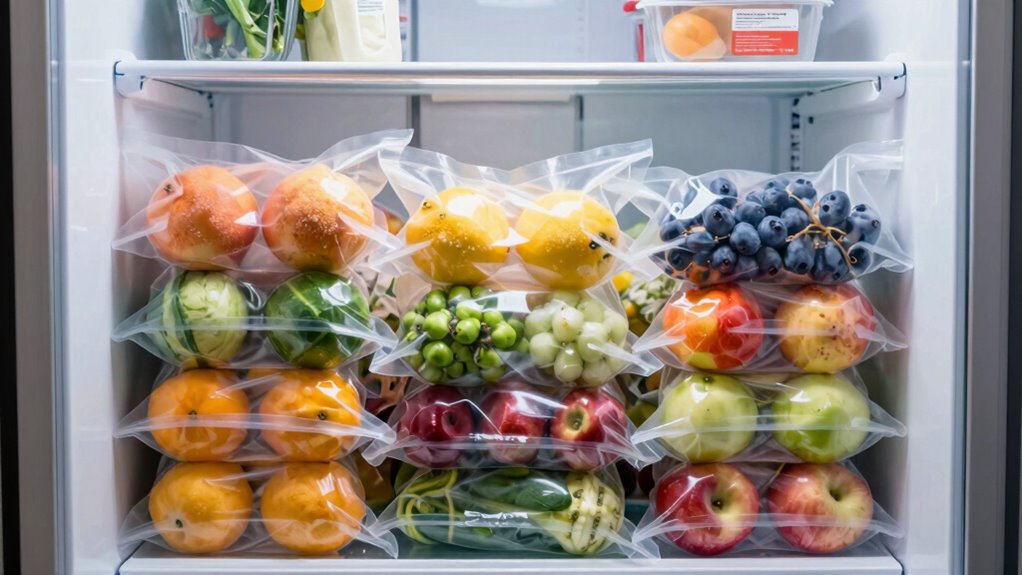
Freezer burn occurs when food is exposed to air, causing dehydration and oxidation that damage its texture and flavor. If you want to keep your frozen foods fresh and tasty, you need to take steps to prevent this process from happening. One of the most effective ways is to focus on how you store your food, specifically through vacuum sealing and proper wrapping techniques. These methods help eliminate air exposure, which is the main culprit behind freezer burn.
Vacuum sealing is a game-changer when it comes to preserving food quality. By removing the air entirely from around your food, you create a tight barrier that prevents dehydration and oxidation. When you vacuum seal, you’re essentially locking the food in an airtight environment, which considerably slows down freezer burn. This method is especially useful for bulk storage, as it allows you to portion out foods and keep them fresh for longer periods. Plus, vacuum-sealed packages take up less space in your freezer, making organization easier. To get the best results, guarantee your vacuum sealer is working properly and that you seal the bags tightly, removing as much air as possible.
Vacuum sealing preserves food quality by creating an airtight barrier against dehydration and oxidation.
Proper wrapping is equally important if vacuum sealing isn’t an option. Use high-quality, moisture-resistant wraps like heavy-duty aluminum foil or freezer paper, which form a good barrier against air. When wrapping food, make sure to press out any excess air before sealing it tightly. For added protection, consider double-wrapping especially delicate or long-term storage items. Be mindful to use wraps that are designed for freezing, as cheaper options may allow air to seep in over time. The goal is to create a seal that prevents air from reaching the food’s surface, which is what causes dehydration and oxidation.
Both vacuum sealing and proper wrapping require attention to detail. It’s not just about wrapping or sealing; it’s about doing it correctly. For vacuum sealing, ensure the entire bag is airtight and free of leaks. When wrapping, make sure there are no gaps or tears. Label your packages with dates so you can keep track of how long the food has been stored. Properly stored, your food will retain its texture, flavor, and nutritional value much longer, saving you money and reducing waste.
vacuum sealer for food preservation
As an affiliate, we earn on qualifying purchases.
As an affiliate, we earn on qualifying purchases.
Frequently Asked Questions
Can Certain Foods Be Stored Without Any Packaging?
Certain foods can be stored without packaging if you use uncovered storage in the freezer, but it’s not ideal for long-term preservation. Vacuum sealing is a better method, as it removes air and prevents freezer burn. For short-term storage, uncovered containers work, but for longer periods, vacuum sealing keeps your food fresher and avoids dehydration or spoilage. Always consider the type of food and storage duration.
How Often Should I Check My Freezer’s Temperature?
Oh, you’re practically a freezer wizard if you check its temperature regularly! Experts recommend monitoring your freezer’s temperature at least once a month to prevent surprises. Proper freezer maintenance includes keeping that thermometer in tip-top shape and ensuring it stays at 0°F (-18°C). So, set a reminder, stay vigilant, and avoid the icy chaos—your frozen foods will thank you with their perfect texture and flavor.
Does Freezing Vegetables Differently Prevent Freezer Burn?
Yes, freezing vegetables differently can help prevent freezer burn. You should vacuum seal your vegetables to remove air, which is a major cause of freezer burn. Additionally, proper labeling guarantees you use older items first and avoid neglecting stored produce. This method maintains freshness longer, keeps your vegetables in top shape, and reduces waste. By sealing tightly and labeling correctly, you’ll preserve flavor and texture much better.
Are There Specific Storage Containers Better for Long-Term Use?
Did you know that using airtight containers can extend your frozen foods’ freshness by up to 50%? For long-term storage, vacuum sealing is your best bet, removing air completely and preventing freezer burn. Airtight containers are great too, especially if they’re made of durable, moisture-proof materials. Both options keep foods fresh, flavorful, and free from ice crystals, ensuring you get the most out of your frozen goods.
How Does Moisture Content Affect Freezer Burn Risk?
Moisture content greatly influences freezer burn risk because lower moisture levels decrease moisture migration, which causes dehydration effects on your food. When food has too little moisture, it’s more susceptible to dehydration, leading to freezer burn. To prevent this, guarantee your food is properly wrapped and sealed, maintaining ideal moisture levels. This minimizes moisture migration, keeps your food fresh longer, and helps avoid those unwanted dehydration effects.
Conclusion
So, next time you’re about to toss that frosty bag of leftovers, remember—you hold the power! With just a little extra care, you can turn your freezer into a fortress against the icy villain known as freezer burn. Think of your food as royalty: keep it snug, protected, and frost-free, or watch it turn into a sad, shivering ghost of its former self. Stay vigilant, and your frozen treasures will thank you!
NFL season / tailgating Picks
team gear
As an affiliate, we earn on qualifying purchases.