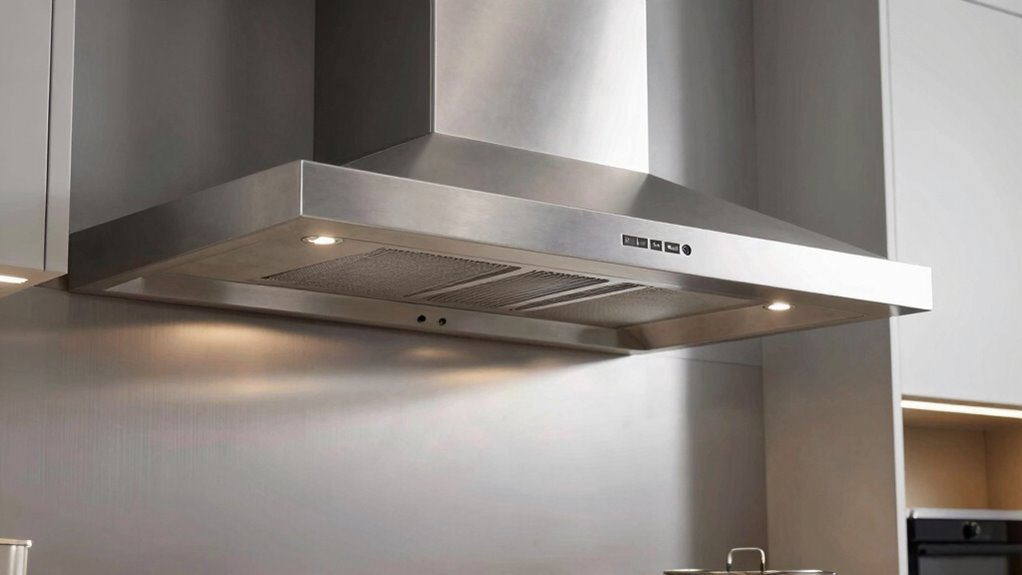

If you don’t vent your range hood properly, it just becomes a noisy fan that struggles to clear smoke, steam, and odors. Proper installation of the duct system is essential for effective ventilation, ensuring pollutants are safely removed from your kitchen. Regular filter cleaning and system maintenance also play critical roles in keeping your range hood working efficiently. Keep these tips in mind, and you’ll learn how proper venting can make all the difference in your kitchen’s air quality.
Open a free Amazon Business account
Business pricing, bulk buying and tax-exempt orders.
As an affiliate, we earn on qualifying purchases.
Key Takeaways
- Proper venting ensures the range hood effectively removes smoke, steam, and odors, preventing it from just being a noisy fan.
- Correct installation of ductwork and vents is crucial for optimal airflow and ventilation efficiency.
- Regular filter cleaning and maintenance keep the system working quietly and prevent buildup that causes noise.
- Ensuring the vent system meets ventilation standards maximizes pollutant removal and reduces excess noise.
- Neglecting proper venting and maintenance transforms a functional range hood into an ineffective, loud fan with little cleaning benefit.

Ever wondered why a range hood is an essential part of your kitchen? It’s not just about having a fancy appliance above your stove; it’s about guaranteeing your kitchen remains a safe, comfortable space. Proper ventilation is crucial to remove smoke, steam, odors, and airborne grease that cooking generates. When you install a range hood, you’re committing to meeting ventilation standards that help keep indoor air quality high. These standards aren’t arbitrary—they’re designed to make sure your appliance effectively clears out pollutants, preventing them from lingering and causing health issues or unpleasant smells. If you ignore these standards, your range hood might just be a noisy fan, not the efficient air cleaner it’s supposed to be.
A range hood ensures your kitchen stays safe and comfortable by effectively removing smoke, odors, and airborne grease.
One key to keeping your range hood functioning at its best is regular filter maintenance. Filters trap grease, smoke particles, and other airborne contaminants, preventing them from recirculating into your kitchen. Over time, these filters become clogged, which hampers airflow and forces the fan to work harder. This not only reduces the hood’s efficiency but also increases noise levels and energy consumption. To prevent this, you need to check and clean or replace your filters according to the manufacturer’s instructions. Neglecting filter maintenance can lead to buildup that diminishes ventilation effectiveness and can even pose a fire hazard if grease accumulates excessively.
Understanding how to maintain your range hood’s filters and guaranteeing it meets ventilation standards isn’t complex, but it’s vital. Start by inspecting the filters regularly—usually once a month if you cook frequently. If your filters are washable, clean them with warm, soapy water, and let them dry completely before reinstalling. If they’re disposable, replace them as recommended, often every three to six months. Doing so guarantees your range hood continues to operate at peak performance, effectively removing smoke and odors without making a racket. Additionally, choosing a model with proper ventilation standards ensures your kitchen remains both safe and efficient.
Finally, ensuring your entire duct system is properly installed and maintained—free of obstructions and leaks—further helps your range hood meet ventilation standards. When your system is well-maintained and correctly vented, it won’t just be a loud, annoying fan; it becomes a vital tool for a healthier, cleaner kitchen environment. So, take the time to keep those filters clean and guarantee your range hood is up to standard—your lungs and your peace of mind will thank you.
As an affiliate, we earn on qualifying purchases.
Frequently Asked Questions
How Often Should I Clean My Range Hood Filters?
You should clean your range hood filters at least once every one to three months, depending on how often you cook. Regular filter maintenance keeps your vent system functioning efficiently and prevents grease buildup. Follow a consistent cleaning schedule, especially if you cook frequently or fry foods often. Use warm, soapy water or a degreasing solution to guarantee your filters stay clean and your range hood performs at its best.
Can I Install a Range Hood Myself?
Think of installing a range hood as opening a secret level in your home improvement game. Yes, you can install it yourself if you follow proper installation tips and safety precautions. Start by reading the manual thoroughly, turn off power, and gather the right tools. Be cautious with electrical connections and make certain the venting is correctly aligned. With patience and care, you’ll master this project and enjoy a safer, more effective kitchen ventilation system.
What Size Range Hood Do I Need?
You need a range hood that’s at least as wide as your cooktop, ideally one or two inches larger on each side for effective venting. Consider venting requirements and hood sizing considerations to make certain of proper airflow and safety. Measure your cooktop’s width accurately, then select a hood that matches or exceeds those dimensions. Proper sizing prevents noise, maximizes efficiency, and keeps your kitchen air clean.
How Loud Should My Range Hood Be?
You should aim for a range hood with noise levels around 60 decibels or lower for comfortable cooking. Higher decibel ratings, like 70 or above, can be quite loud and disruptive. Look for models that specify their noise levels in decibel ratings, so you know what to expect. Keep in mind, quieter hoods often have better fan designs or soundproofing, making your cooking environment much more pleasant.
Are Ductless Range Hoods Effective?
Ductless range hoods act like a sponge, trapping odors and smoke but not removing them from your home. While they’re effective at improving air quality temporarily, they can’t match the performance of vented hoods for long-term odor control. You might notice less smoke and smell, but the air quality impact stays confined. If you want true ventilation, opting for a ducted system ensures cleaner, healthier air and better overall effectiveness.
Conclusion
If you neglect proper venting, your range hood becomes nothing more than a deafening, pointless fan—turning your kitchen into a chaotic symphony of noise and fumes. Don’t underestimate the power of a well-vented hood; it’s the silent guardian that keeps your cooking clean and your sanity intact. Fail to do so, and you’ll be battling a relentless roar while fumes sneak past, turning your culinary haven into a battlefield of chaos and discomfort.
NFL season / tailgating Picks
team gear
As an affiliate, we earn on qualifying purchases.