
Your range hood’s venting is more critical than you might think for keeping your indoor air healthy. Proper venting captures smoke, grease, and fumes right at the source, preventing buildup on surfaces and lingering odors. Without effective venting, fumes can irritate your eyes, throat, and lungs, and dirt can accumulate. Long-term, good venting safeguards your space from mold, grease, and moisture issues. If you want to understand how to make your kitchen safer and cleaner, keep going.
Key Takeaways
- Proper venting removes grease, smoke, and fumes, preventing buildup and maintaining healthier indoor air quality.
- Effective range hood venting captures fumes at the source, reducing lingering odors and airborne pollutants.
- Inadequate venting can cause haze, moisture buildup, and mold, compromising kitchen cleanliness and safety.
- Focusing solely on size or noise ignores the importance of powerful extraction for health and comfort.
- Long-term benefits include cleaner surfaces, reduced health risks, and a safer, more inviting kitchen environment.

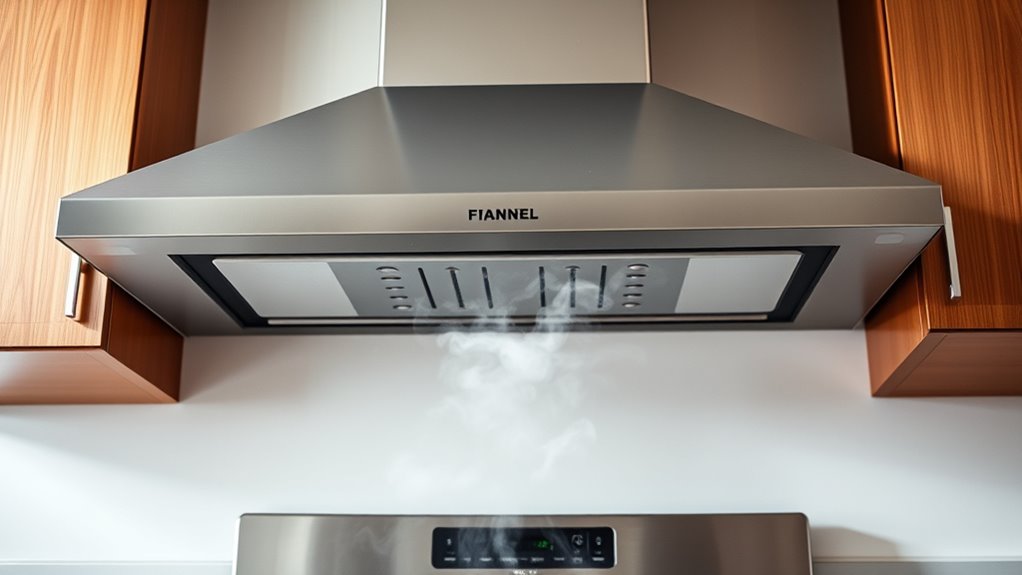
A properly vented range hood is essential for maintaining a clean and healthy kitchen environment. When you cook, your stove releases cooking fumes that contain grease, smoke, and various airborne particles. Without effective venting, these fumes tend to linger, settling on surfaces or dispersing into the air, which can compromise your air quality. Poor air quality not only leaves your kitchen smelling less than fresh but can also pose health risks over time, especially if you or your family members have allergies or respiratory issues. A well-vented range hood actively pulls these fumes away from your cooking area, ensuring that you breathe cleaner, healthier air.
You might underestimate how much fumes build up during even simple meals. Every time you fry, sauté, or boil, tiny particles and gases are released into the air. Without proper venting, those fumes can accumulate, creating a haze of pollutants that diminishes air quality. This buildup can lead to lingering odors that are almost impossible to eliminate, making your kitchen less inviting. More critically, prolonged exposure to cooking fumes can irritate your eyes, throat, and lungs, especially if ventilation is inadequate. That’s why a range hood with strong, efficient venting capabilities becomes vital. It captures fumes at the source, preventing them from spreading throughout your home and improving overall air quality.
Many people overlook the importance of venting when choosing a range hood. They focus on size or noise levels but forget that venting efficiency directly impacts your health and comfort. When you opt for a hood with proper ducting and powerful extraction, you’re actively reducing airborne grease, smoke, and odors. This not only keeps your kitchen cleaner but also helps maintain a more balanced indoor air quality. Proper venting also prevents the buildup of grease and moisture, which can lead to mold and other issues over time. It’s a small investment that pays off by making your cooking space safer and more pleasant.
In essence, the importance of venting can’t be overstated. It’s about more than just removing odors; it’s about controlling what you breathe in while you cook. When your range hood efficiently vents cooking fumes, it safeguards your air quality, promotes a healthier environment, and keeps your kitchen fresh. Skipping or skimping on proper venting might seem convenient at first, but the long-term benefits of good airflow and effective fume removal are undeniable. You deserve a kitchen that’s both clean and safe, and a well-vented range hood makes that possible every time you cook. Effective venting systems are a crucial component in achieving optimal indoor air quality.
Frequently Asked Questions
How Often Should I Clean My Range Hood Filters?
You should clean your range hood filters every one to three months, depending on your cooking habits. Regular filter maintenance ensures your venting system works efficiently and prevents grease buildup. If you cook frequently or notice grease accumulating quickly, increase your cleaning frequency. Use warm, soapy water or a degreasing cleaner for best results. Keeping up with filter maintenance not only prolongs your hood’s lifespan but also improves your kitchen’s air quality.
Can I Vent My Range Hood Outdoors Through a Wall?
Venting your range hood outdoors through a wall is totally doable, like opening a window to let fresh air flow in. You can install an outdoor venting system with wall installation to direct fumes outside, improving air quality. Just make certain you choose the right ducting and follow local building codes. This setup keeps your kitchen cleaner and healthier, with the fumes escaping directly outside instead of lingering indoors.
What Are the Signs of Poor Ventilation in My Kitchen?
If you notice persistent kitchen odors or smoke buildup, your ventilation might be poor. You’ll also see greasy surfaces accumulating faster and humidity levels rising, which can cause mold. These signs indicate your range hood isn’t effectively removing airborne contaminants. Make sure your venting system is clear, properly installed, and functioning well to keep your kitchen fresh, safe, and free of lingering smells.
Does the Size of the Range Hood Affect Its Effectiveness?
Yes, the size of your range hood does affect its effectiveness. Larger hoods with appropriate size considerations provide better airflow capacity, efficiently removing smoke, grease, and odors. Don’t assume a bigger hood is always better; it needs to match your cooktop size for ideal performance. If your hood is too small, it won’t ventilate properly, leading to lingering smells and poor air quality. Choose a hood that fits your cooking area for maximum effectiveness.
Are There Eco-Friendly Venting Options Available?
Yes, eco-friendly venting options are available. You can choose energy-efficient options like range hoods with LED lighting and high-efficiency motors that consume less power. Look for models made from sustainable materials such as recycled steel or bamboo. These choices help reduce your environmental impact while maintaining effective ventilation. Switching to eco-conscious venting not only benefits the planet but can also save you money on energy bills over time.
Conclusion
So, don’t underestimate the importance of proper range hood venting. It’s not just about removing cooking odors—it’s about protecting your home’s air quality and your health. Some might argue that venting isn’t a big deal if you open a window, but indoor pollutants can linger and cause issues over time. Investing in a well-vented range hood guarantees cleaner air and a safer kitchen, proving that venting truly matters more than you might think.