
To clear wildfire smoke from your home quickly, start by sealing gaps around windows and doors with weather stripping or towels to block smoke entry. Next, set up high-efficiency HEPA air purifiers in main living areas and bedrooms, running them continuously. Keep windows and additional openings closed to prevent more smoke intrusion. Regularly monitor indoor air quality and adjust filtration as needed. Keep going, and you’ll discover more tips to protect your indoor air fast.
Key Takeaways
- Use high-CADR HEPA air purifiers in main living areas and bedrooms for rapid smoke removal.
- Seal gaps around windows and doors with weather stripping or damp towels to prevent additional smoke ingress.
- Keep doors and windows closed at all times to limit outdoor smoke infiltration.
- Monitor indoor air quality with portable sensors to track improvements and adjust purification efforts.
- Continuously run purifiers and seal leaks for the fastest reduction of indoor smoke and harmful particles.
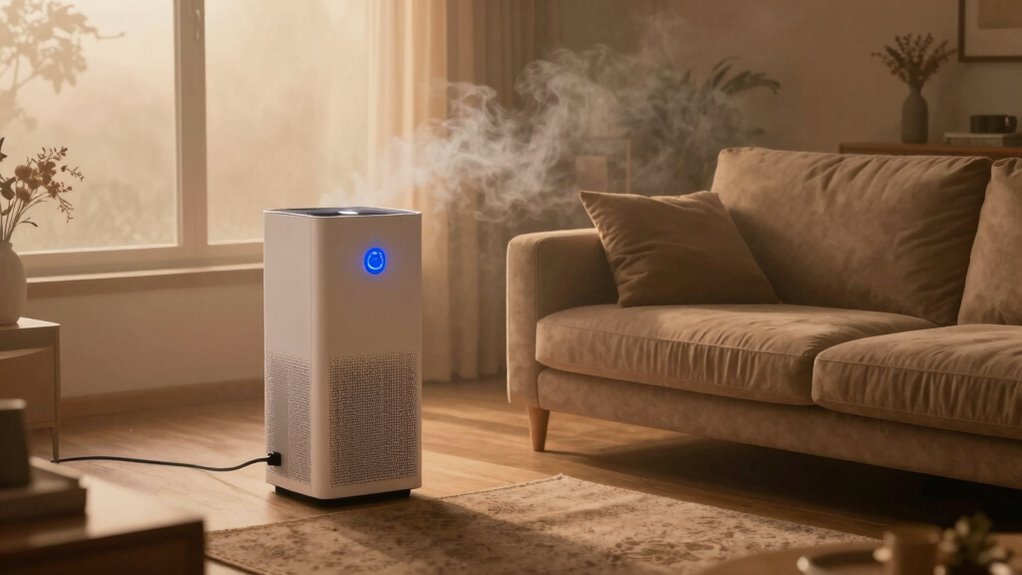
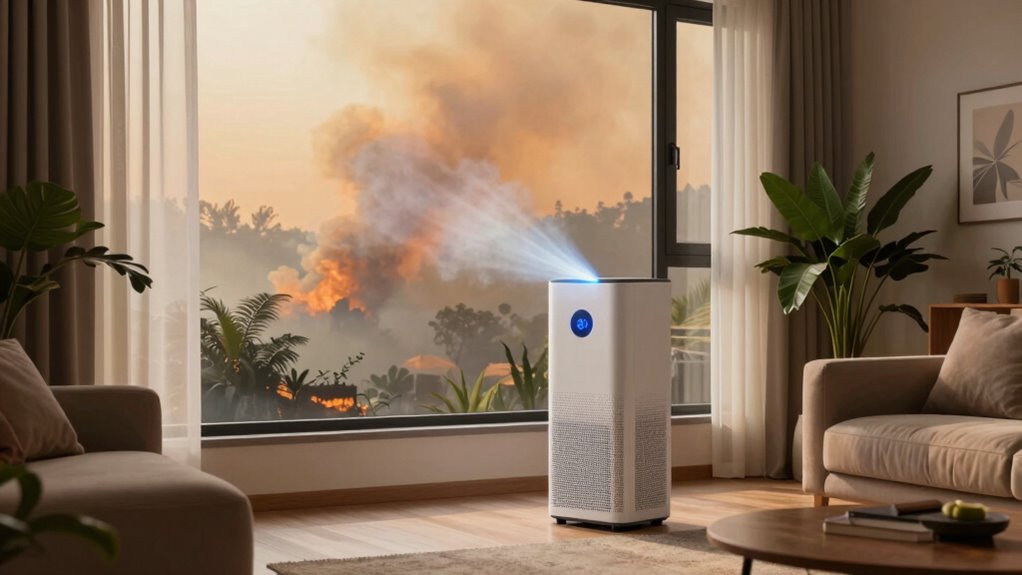
When wildfire smoke drifts into your area, it can quickly turn your home into a source of harmful air pollution. The smoky air contains fine particles and toxic chemicals that can seriously impact your respiratory health. To protect yourself and your loved ones, it’s essential to act swiftly and effectively. One of the first steps is setting up reliable air quality monitoring inside your home. Portable air quality monitors give you real-time data on particulate levels, helping you determine how much smoke is infiltrating your space. This information guides your decisions on when to increase filtration efforts or evacuate if conditions worsen. Monitoring air quality isn’t just about knowing when the air is unsafe; it empowers you to take targeted actions that can minimize exposure and safeguard your respiratory health. Additionally, understanding the specific types of air purifiers most effective for wildfire smoke can significantly enhance your response. To clear the air faster, consider investing in a high-efficiency particulate air (HEPA) filter purifier. These devices are designed to trap tiny particles, including those found in wildfire smoke, considerably improving indoor air quality. Place the purifier in the main living area or bedrooms, where you spend most of your time, and keep the doors and windows closed to prevent additional smoke from entering. Running the purifier continuously during smoky conditions maximizes its effectiveness, helping to reduce airborne pollutants quickly. Keep in mind that not all purifiers are equally effective, so choose a model with a good CADR (Clean Air Delivery Rate) rating for smoke removal. Combining this with air quality monitoring ensures you can see the impact of your efforts and know when the air has cleared to safer levels. Sealing gaps around windows and doors is another quick and affordable way to improve indoor air quality. Use weather stripping, draft stoppers, or even damp towels to block leaks that allow smoke to seep in. This simple step can make a noticeable difference in reducing indoor pollution, especially when paired with air purifiers. Maintaining a clean indoor environment also helps; vacuum regularly with a HEPA filter vacuum cleaner and dust surfaces to remove settled particles. Staying indoors as much as possible during heavy smoke events is vital, but these measures make your home a much safer refuge. Prioritizing respiratory health during wildfire smoke events isn’t just about immediate relief—it’s about long-term well-being. Proper air quality monitoring combined with effective filtration and sealing techniques creates a fast, efficient response to smoky conditions. With these quick setups, you can considerably reduce indoor pollution and breathe easier until the smoke clears. Acting promptly ensures your home remains a safe space, protecting your lungs from the harmful effects of wildfire smoke.
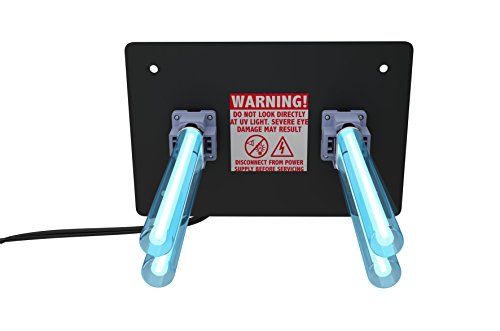
REKO Lighting R2000 Air Purifier Whole House Uv uvc Light in Duct for HVAC Ac (Air Conditioning) Duct
UV-C light system - Bulbs are made in Europe!
As an affiliate, we earn on qualifying purchases.
Frequently Asked Questions
Can I Use My Existing HVAC System to Filter Wildfire Smoke?
You can use your existing HVAC system to filter wildfire smoke by upgrading your air filter and performing regular HVAC maintenance. Switch to high-efficiency filters, like MERV 13 or higher, to trap smaller particles. Schedule HVAC maintenance to guarantee your system runs efficiently and effectively. These steps improve indoor air quality, helping clear wildfire smoke faster and keeping your home safer during smoky conditions.
How Often Should I Replace Air Filters During Wildfire Events?
During wildfire season preparedness, you should replace your air filters every 1-2 weeks if smoke is heavy. Filters can become clogged quickly, reducing effectiveness and risking your health. Regular air filter maintenance is vital to keep indoor air safe and clean. Don’t wait for visible dirt; stay ahead of the smoke by changing filters often, especially during intense wildfire events, to guarantee your home remains a safe haven from harmful particles.
Are DIY Air Purifiers Effective Against Wildfire Smoke?
DIY air purifiers can help, but their effectiveness against wildfire smoke varies. They often rely on basic filters that may not trap tiny smoke particles efficiently, so don’t assume they’re a complete solution. Air purifier myths suggest all DIY setups work well, but in reality, commercial HEPA purifiers are more reliable for filtering out hazardous wildfire smoke. For best results, combine proper filters and proper setup to improve indoor air quality.
What Household Plants Help Improve Indoor Air Quality During Wildfires?
Perfectly positioned plants like pothos, snake plants, and spider plants promote powerful indoor air purification. These household greenery guardians help filter harmful particles and toxins during wildfires, making your space safer and healthier. You’ll find these fabulous foliage friends are easy to care for, effective air purifiers, and excellent additions to your indoor environment. Incorporate them into your home for a natural, nourishing, and noticeable improvement in air quality.
How Can I Prevent Smoke Infiltration Through Windows and Doors?
You can prevent smoke infiltration by sealing gaps around your windows and doors with weatherstripping or caulk. Use heavy curtains to add an extra barrier against outside air. Keep windows and doors closed as much as possible, and consider installing door sweeps to block any lingering gaps. These measures work together to minimize smoke entering your home, improving indoor air quality during wildfire events.

APCO Carbon Cell Matrix HVAC UV Air Purifier with Power Cord, Includes 1-Year UVC Lamp (18-32 VAC Series) # TUV-APCO-ER
FOR FURNACE AND AIR HANDLERS: Helps you neturalize airborne allergens, bacteria, VOCs all without chemicals. Whole-house air purification...
As an affiliate, we earn on qualifying purchases.
Conclusion
When wildfire smoke pours in, you want clean air now. Quick setup methods clear the danger faster than waiting for outdoor conditions to improve. Think of your home as a fortress—arming it with the right tools makes all the difference. While the outside world is smoky and uncertain, your prepared space becomes a safe haven. Don’t wait for clear skies—act swiftly, breathe easier, and protect what matters most inside your home.

TURBRO 72W UV Sanitizer Lamp with Energy Saving Airflow Sensor, Ozone Free Ultraviolet Light, Air Purifier for HVAC Units and Ducted Systems, Direct Plug-in 120V, UV72PA
Zero-Ozone UV Light: Rated at 72 W for stronger UV disinfection than standard 6-25W lamps; operates at instant...
As an affiliate, we earn on qualifying purchases.

VEVOR HVAC Air Purifier Whole House, 18W 9inch, Light in Duct for Ac (Air Conditioning) Duct, Air Scrubber with 2 Bulb, PCO Technology HVAC Lights with Power Cord for Ac Systems
Efficient Air Purification: The 18W 9inch HVAC Duct Purifier combines three powerful purification technologies: photocatalysis, and activated carbon,...
As an affiliate, we earn on qualifying purchases.