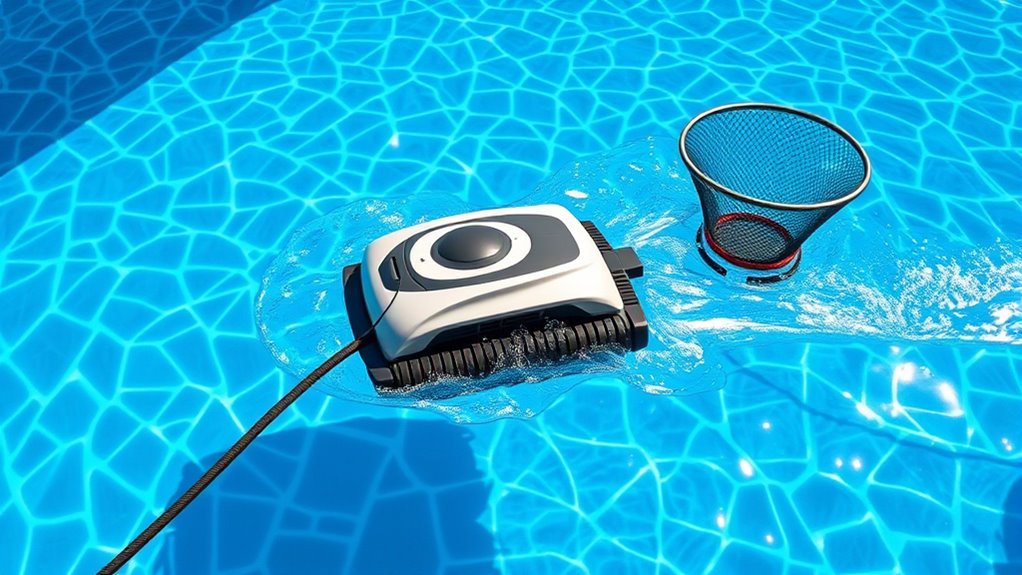

When using automatic pool cleaners, always turn off the power supply before installation or maintenance to prevent electrical hazards. Keep children and pets away during operation to avoid entanglement or injuries. Regularly check and replace worn hoses, brushes, and filters to guarantee safe and efficient cleaning. Handle equipment carefully using designated grips, and never pull on hoses or cables. Following these safety tips helps protect you and your pool, and there’s more to uncover for a safer experience.
Key Takeaways
- Always turn off the power supply before installing, removing, or cleaning the pool cleaner.
- Keep children and pets away during operation to prevent entanglement or accidents.
- Regularly inspect and maintain hoses, filters, and parts to ensure safe and proper function.
- Use designated handles or grips when moving the cleaner to avoid damage or injury.
- Follow manufacturer instructions carefully and conduct routine safety checks for optimal safety.
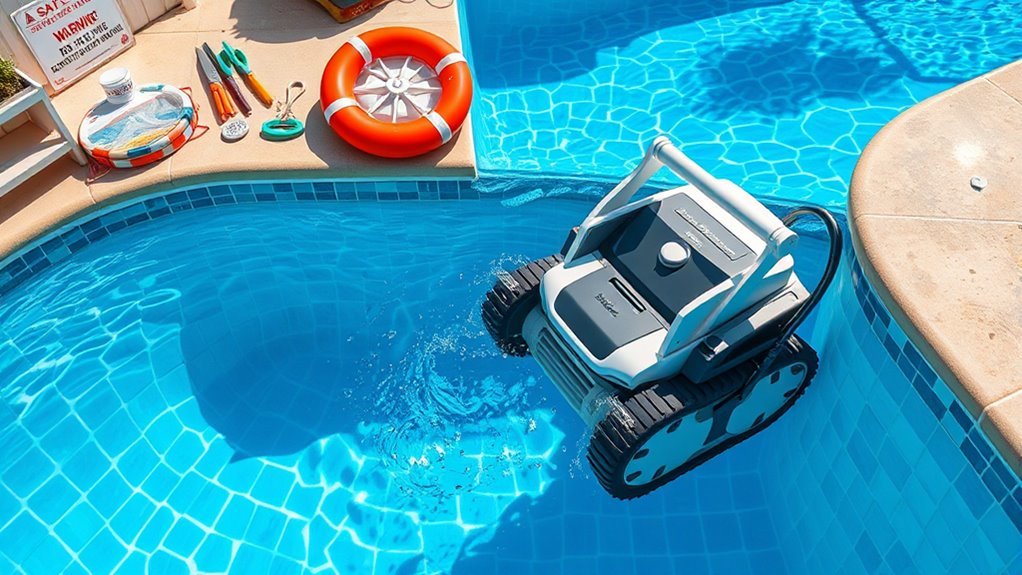
Automatic pool cleaners can make maintaining your pool much easier, but safety should always come first. When you’re using these devices, it’s vital to follow proper procedures to prevent accidents and guarantee your equipment functions correctly. Automatic pool cleaners are great for keeping your pool clean, but mishandling or neglecting safety protocols can lead to injuries or damage. Before diving into pool maintenance with your automatic cleaner, take a moment to review safety tips and understand the necessary precautions.
First, always read the manufacturer’s instructions carefully. Each automatic pool cleaner comes with specific guidelines on setup, operation, and maintenance. This knowledge helps you avoid improper use that could cause harm or reduce the device’s lifespan. When setting up your cleaner, ensure that your pool accessories, such as skimmers, filters, and hoses, are compatible and in good condition. Faulty or incompatible accessories can cause leaks, malfunctions, or even electrical issues. Regularly inspecting your pool accessories and replacing worn or damaged parts will keep your pool cleaner running safely and efficiently.
Always read instructions and check accessories to ensure safe, effective pool cleaner operation.
It’s vital to turn off the pool’s power supply before installing or removing the automatic cleaner. This simple step prevents accidental activation that could lead to injury, especially when working around moving parts or electrical components. Never leave the cleaner running unattended, particularly when people are in or around the pool. If you have children or pets, make sure they are kept away from the equipment during operation to prevent accidental entanglement or tripping hazards.
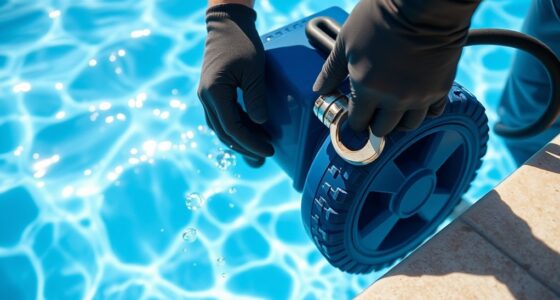
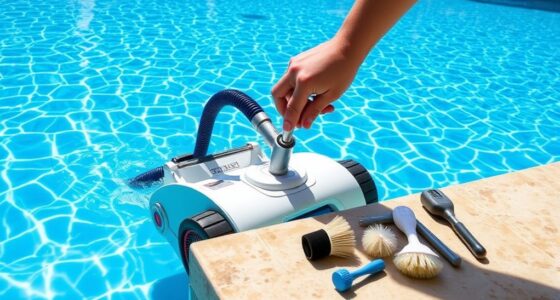
When handling the automatic pool cleaner, avoid pulling on hoses or cables with excessive force. Damaged cords or hoses pose electrical or water hazards. Use the designated handles or grips provided by the manufacturer for lifting or moving the device. Also, be cautious when cleaning or inspecting your pool cleaner—avoid contact with moving parts, and disconnect power before doing any maintenance. Regularly removing debris from the cleaner’s filters and brushes not only keeps your pool cleaner functioning effectively but also reduces the risk of clogs, which could cause overheating or mechanical failure. Implementing proper equipment maintenance can significantly extend the lifespan of your pool cleaner and ensure it operates safely. Properly maintaining your pool accessories and following safety guidelines will give you peace of mind and prolong the life of your equipment.
Additionally, understanding the importance of proper environmental considerations can help you maintain a safe and eco-friendly pool area. Regularly checking the pool’s power requirements and ensuring compatible electrical connections is essential for safe operation. Remember that safety isn’t just about the device itself but also about general pool safety. Keep emergency equipment, like a first aid kit and phone, nearby in case of accidents. Ensure your pool area is well-lit and free of obstacles to prevent trips or falls. Incorporating regular safety checks into your routine can further reduce potential hazards around your pool. By combining proper use of your automatic pool cleaner with regular pool safety practices, you’ll enjoy a cleaner, safer pool environment for everyone. Properly maintaining your pool accessories and adhering to safety guidelines will give you peace of mind and prolong the life of your equipment.
Frequently Asked Questions
Can Automatic Pool Cleaners Be Used in Saltwater Pools?
You can definitely use automatic pool cleaners in saltwater pools. Just check for saltwater compatibility, as many models are designed to withstand the salt and resist corrosion. However, be mindful of corrosion concerns, especially with parts made from metal. Regularly inspect your cleaner, rinse it with fresh water after use, and choose a model specifically rated for saltwater to guarantee longevity and peak performance in your saltwater pool.
How Often Should I Replace the Filter in My Cleaner?
You should replace your filter based on your cleaner’s cleaning schedule and how often you use it. Generally, check the filter monthly and replace it every 3 to 6 months for peak performance. If you notice reduced suction or debris escaping, it’s time for a filter replacement. Regular filter maintenance helps keep your automatic pool cleaner working efficiently and prolongs its lifespan.
Are There Specific Safety Precautions for Robotic vs. Suction-Side Cleaners?
You should know that robotic safety involves unplugging the device before maintenance and ensuring it’s out of the pool when not in use. For suction precautions, you need to keep the skimmer and suction line clear to prevent blockages and injuries. Robotic cleaners are generally safer since they operate independently, but always follow manufacturer instructions. For suction-side cleaners, be cautious with the hose and skimmer to avoid accidents or damage.
What Maintenance Is Required to Ensure Safety and Efficiency?
Did you know that improper maintenance can reduce a pool cleaner’s efficiency by up to 30%? To keep your automatic pool cleaner safe and effective, you should perform regular inspections for wear and tear, cleaning filters, and checking for blockages. Proper storage is essential—store it in a dry, shaded area when not in use to prevent damage. Routine maintenance guarantees safe operation and prolongs your cleaner’s lifespan.
Can Children Operate Automatic Pool Cleaners Safely?
Children should not operate automatic pool cleaners without proper supervision. You need to guarantee they understand the risks and are adequately trained as operators. Always supervise your kids closely when the cleaner is in use, and provide them with clear operator training to prevent accidents. Remember, adult supervision and proper training are essential to keep children safe and ensure the cleaner works efficiently.
Conclusion
By following these safety tips, you can enjoy clean, sparkling water without risking accidents. Think of your pool cleaner as a helpful robot—like a trusty companion that needs proper care. Just as you wouldn’t leave a device running unsupervised, always keep an eye on your cleaner and remove it when not in use. This way, you guarantee a safe, worry-free swimming environment for everyone, proving that good safety habits keep your pool fun and hazard-free.