To guarantee your sous vide cooking is safe, focus on proper time and temperature guidelines to prevent bacteria growth. Always vacuum seal ingredients to limit oxygen and contamination. Use the correct temperature for the right duration to effectively pasteurize, targeting pathogens like Salmonella. Avoid shortcuts by verifying your times and temperatures with trusted sources. Proper handling, storage, and equipment maintenance also matter. Keep these basics in mind, and you’ll be well on your way to safe, delicious results—there’s more to discover if you continue fully exploring.
Key Takeaways
- Always vacuum seal ingredients properly to prevent contamination and ensure even heat transfer during cooking.
- Follow validated time and temperature guidelines to effectively pasteurize and kill harmful bacteria.
- Maintain proper sealing and avoid overloading bags to prevent bacteria entry and ensure safety.
- Cool cooked food promptly and store at safe temperatures to inhibit bacterial growth.
- Use reputable sources or tested charts for time and temperature to ensure accurate, safe sous vide cooking.
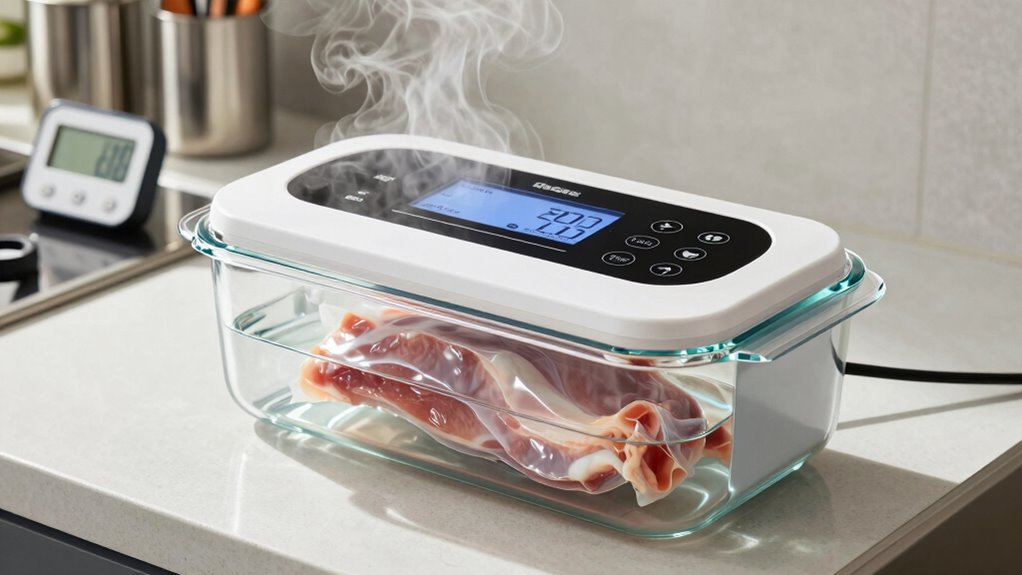
Sous vide cooking offers precise temperature control and convenience, but it also requires careful attention to safety. One of the key safety practices is vacuum sealing your food before cooking. When you vacuum seal, you remove excess air, which minimizes the growth of bacteria and prevents spoilage during the long, low-temperature cooking process. Proper vacuum sealing also ensures that food stays in close contact with the water bath, allowing for even heat transfer and consistent results. This step is essential because it reduces the risk of contamination and helps maintain the quality of your ingredients.
Another critical safety aspect involves pasteurization. When cooking sous vide, you need to understand how time and temperature work together to eliminate harmful bacteria. Pasteurization isn’t just about cooking food to a certain temperature; it’s about holding it there long enough to kill pathogens like Salmonella or Listeria. For example, cooking chicken at 140°F (60°C) for a specific period will effectively pasteurize it, but if you’re unsure about the timing, you risk undercooking and leaving bacteria alive. That’s why adhering to proven time-and-temperature guidelines is essential for safety. It’s not enough to just reach the right temperature; you must also maintain it for the recommended duration to guarantee thorough pasteurization.
Many home cooks overlook these safety measures, but neglecting vacuum sealing or underestimating the importance of pasteurization can lead to foodborne illness. You should always use fresh ingredients and ensure your vacuum sealer is functioning correctly to achieve a tight seal. If the seal is compromised, bacteria can enter, making the food unsafe despite the precise temperature control of your sous vide setup. Additionally, it’s wise to double-check your cooking times and temperatures, especially when cooking proteins that are more susceptible to bacteria. Use reliable sources or tested charts to confirm that your process will effectively pasteurize your food.
Furthermore, understanding the field‑of‑view and imaging‑scale in sous vide setup comparisons can help you better visualize the effects of different parameters on your cooking process. Finally, after cooking, it’s important to handle your food properly. Once the sous vide process is complete, promptly cool the food in an ice bath if you’re not consuming it immediately. Proper storage and reheating are essential to prevent bacteria from growing. Remember, sous vide offers a safe and efficient way to prepare food when you follow these safety principles: vacuum sealing to prevent contamination, understanding pasteurization times, and maintaining proper handling practices. By doing so, you can enjoy the benefits of sous vide without risking your health.
Frequently Asked Questions
Can Sous Vide Be Used for Canning or Preserving Foods?
You shouldn’t use sous vide for canning or preserving foods because it doesn’t meet canning safety standards. Proper preservation techniques require specific high-temperature processes to kill bacteria and spores, which sous vide isn’t designed for. Relying on sous vide for preservation can lead to foodborne illnesses. For safe canning, stick to traditional methods like pressure canning or boiling water baths, ensuring your preserved foods stay safe and fresh.
Is It Safe to Cook Seafood Sous Vide for Extended Periods?
Cooking seafood sous vide for extended periods is generally safe if you maintain proper temperature and time guidelines. It helps extend seafood shelf life and prevents bacterial growth effectively. You should guarantee the seafood stays at a consistent, safe temperature for the required duration to minimize risks. Always follow recommended sous vide times and temperatures to ensure your seafood remains safe, delicious, and free from harmful bacteria.
How Does Altitude Affect Sous Vide Cooking Times and Temperatures?
At higher altitudes, you need to make altitude adjustments because the boiling point decreases, affecting your sous vide cooking times and temperatures. Since water boils at a lower temperature, you might need to cook your food slightly longer or increase the temperature slightly to ensure proper doneness and safety. Keep an eye on your thermometer and modify accordingly, so your seafood or other dishes stay safe and perfectly cooked.
Can Sous Vide Eliminate All Bacteria and Pathogens?
You might think sous vide can eliminate all bacteria and pathogens, but that’s not entirely true. Bacterial elimination depends on precise temperature control and cooking time; bacteria can survive if the temperature isn’t high enough or held long enough. While sous vide considerably reduces harmful microbes, it’s essential to follow safe practices, including proper handling and post-cooking methods, to ensure your food is safe and free of pathogens.
Are There Specific Safety Concerns for Sous Vide Cooking at Home?
Yes, there are safety concerns for home sous vide cooking, mainly related to food safety and temperature control. You need to make certain your water bath maintains the correct temperature for the right amount of time to eliminate harmful bacteria. Always follow recommended guidelines, use a reliable immersion circulator, and avoid leaving cooked food at unsafe temperatures for too long. Proper temperature control is key to safe, delicious results.
Conclusion
Remember, cooking sous vide at the right temperature for just the right time can eliminate 99.9% of harmful bacteria. Did you know that the CDC reports over 48 million cases of foodborne illness annually? By mastering simple time-and-temp principles, you can enjoy perfectly cooked, safe meals without the confusion of complicated charts. So, trust your thermometer, follow safe guidelines, and savor your sous vide creations with confidence and peace of mind.