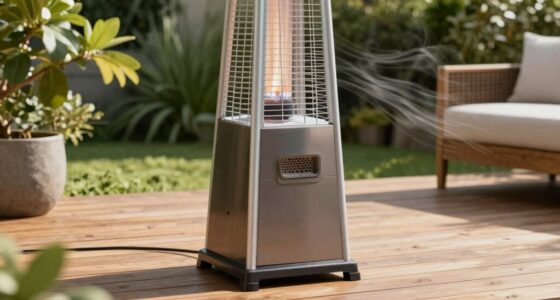
A tip-over switch on your space heater helps prevent fires if it falls, but it doesn’t guarantee safety. A fall can still damage cords, cause sparks, or ignite nearby flammable materials before the safety feature activates. It also doesn’t protect against internal damage or electrical issues from faulty wiring. Proper placement, regular inspection, and mindful use are essential. To learn more about keeping safe around heaters, keep exploring these important safety tips.
Key Takeaways
- Tip-over protection only activates after a fall, not preventing initial damage or sparks during the fall.
- Falling onto flammable surfaces still poses a significant fire risk despite the safety feature.
- Damage to cords or internal wiring can occur before the tip-over shut-off engages.
- Tip-over safety doesn’t address hazards from faulty wiring or improper placement.
- Relying solely on tip-over protection is insufficient; proper placement and regular maintenance are essential.

Space heaters can be an effective way to warm up small areas, but they also pose safety risks if not used properly. One of the most common concerns is fire safety, especially when it comes to “tip-over” hazards. While many heaters have automatic shut-off features that activate when the unit falls over, relying solely on this safety measure isn’t enough. You need to understand that a tip-over doesn’t guarantee complete safety. The heater could land in a way that damages the cord or causes sparks before the safety shut-off kicks in. Plus, if it tips onto a flammable surface or material, the risk of fire remains high. It’s also important to be aware of electric hazards associated with faulty wiring or damaged cords, which can lead to shocks or fires. Faulty wiring, damaged cords, or improper use can lead to electric shocks or fires. Always check the cord and plug for any signs of wear or damage before plugging in your heater. Never use extension cords or power strips, as they can overload and cause overheating, increasing the risk of electric hazards. Instead, plug the heater directly into a grounded outlet. Also, ensure your outlet is in good condition and capable of handling the power load of the heater. An overloaded outlet can cause sparks or short circuits, so avoiding daisy-chaining multiple devices is essential. Placement tips are crucial for safe operation. You should position your space heater on a flat, stable surface, away from high-traffic areas where it could be bumped or knocked over. Keep it at least three feet from furniture, curtains, bedding, or any other flammable materials. Never place a heater where it could come into contact with water or moisture, as that significantly increases the risk of electric hazards. It’s also wise to avoid placing it near windows or doors where drafts could cause it to tip or fall over. When choosing a spot, consider the heater’s reach and make sure it covers the intended space without creating a tripping hazard. Additionally, regularly inspecting your heater and its components can help prevent potential fire risks before they become serious issues. Proper maintenance and understanding of the heater’s features are essential for safety. Being aware of proper placement and maintenance can significantly reduce the chances of accidents. Furthermore, using manufacturer-recommended accessories and replacement parts can help maintain the heater’s safety features over time.

Gas Patio Heater Anti Tilt Tip Over Switch Fits for Patio and Room Heater Garden Outdoor (Anti Tilt FD4 Dump Switch)
- Anti-Tilt Safety Switch: Prevents heater tip-overs
- Automatic Shut-Off: Turns off heater if tipped
- Compatible with Patio Heaters: Fits garden and outdoor heaters
As an affiliate, we earn on qualifying purchases.
As an affiliate, we earn on qualifying purchases.
Frequently Asked Questions
Can a Space Heater Still Cause Fires if It Doesn’t Tip Over?
Yes, a space heater can still cause fires even if it doesn’t tip over. Overheating hazards and electrical malfunctions are common risks that can lead to fires regardless of the heater’s position. You should always monitor your heater when in use, keep flammable objects away, and make sure it’s properly maintained. These precautions help prevent electrical malfunctions and overheating hazards that could otherwise ignite a fire.
Are There Specific Safety Certifications for Space Heaters?
Yes, there are specific safety certifications for space heaters. You should look for models with certification standards like UL (Underwriters Laboratories) or ETL (Intertek) to guarantee electrical safety. These certifications indicate the heater meets rigorous safety requirements, reducing fire risks. Always check for these labels before purchasing or using a space heater, and follow safety instructions to keep your home safe.
How Often Should I Inspect My Space Heater for Safety Issues?
Don’t wait until it’s too late—inspect your space heater monthly. You should include it in your maintenance routines and follow a safety checklist to catch issues early. Look for frayed cords, dust buildup, or any signs of wear. Regular inspections keep your heater running safely and efficiently, giving you peace of mind. Staying proactive is the best way to prevent accidents and guarantee your space stays warm and safe.
What Are the Best Placement Tips to Prevent Accidents?
To prevent accidents, place your space heater on a stable, flat surface away from high traffic areas. Keep the thermostat accurate by positioning the heater where it won’t be obstructed, ensuring consistent temperature control. Always check that the cord is in good condition and away from walkways to avoid tripping hazards. Never place the heater near water or flammable materials, and follow manufacturer instructions for safe placement.
Do Space Heaters Automatically Shut off if Unsafe Conditions Are Detected?
Most space heaters do have automatic shut-off features if unsafe conditions like electrical faults or overheating risks are detected. These safety mechanisms activate to prevent fires or damage, giving you peace of mind. However, not all models include this feature, so you should always check your heater’s safety certifications. Regularly inspecting your heater and following safety guidelines can also help prevent accidents caused by electrical faults or overheating.
Conclusion
Remember, while a tip-over switch can prevent some accidents, it doesn’t eliminate all risks of space heater fires. Nearly 70% of home heating fires involve space heaters, so always stay vigilant. Make sure your heater is placed on a flat surface, keep it away from combustible materials, and never leave it unattended. Staying informed and cautious can help you enjoy the warmth safely, reducing the risk of accidents and guaranteeing your home stays cozy and secure.