When using a steam mop, guarantee you only clean sealed hard floors like tile, laminate, or sealed hardwood, as steam can damage unsealed wood, porous tiles, or delicate surfaces. Never use on unsealed wood or unglazed tiles, which can warp or discolor. Always follow manufacturer guidelines, avoid excessive water, and keep kids and pets away during and after cleaning. Want to know which floors are safe and which aren’t? Keep going to learn more.
Key Takeaways
- Use steam mops only on sealed, hard floors like tile, laminate, or sealed hardwood; avoid unsealed or porous surfaces.
- Never use on unglazed tiles, unsealed wood, or delicate surfaces to prevent damage or discoloration.
- Confirm floor compatibility and follow manufacturer instructions before steam cleaning to avoid surface harm.
- Avoid excessive water and hot steam on surfaces not designed for steam cleaning.
- Always cool down and inspect the device after use to ensure safety and prevent accidental damage.
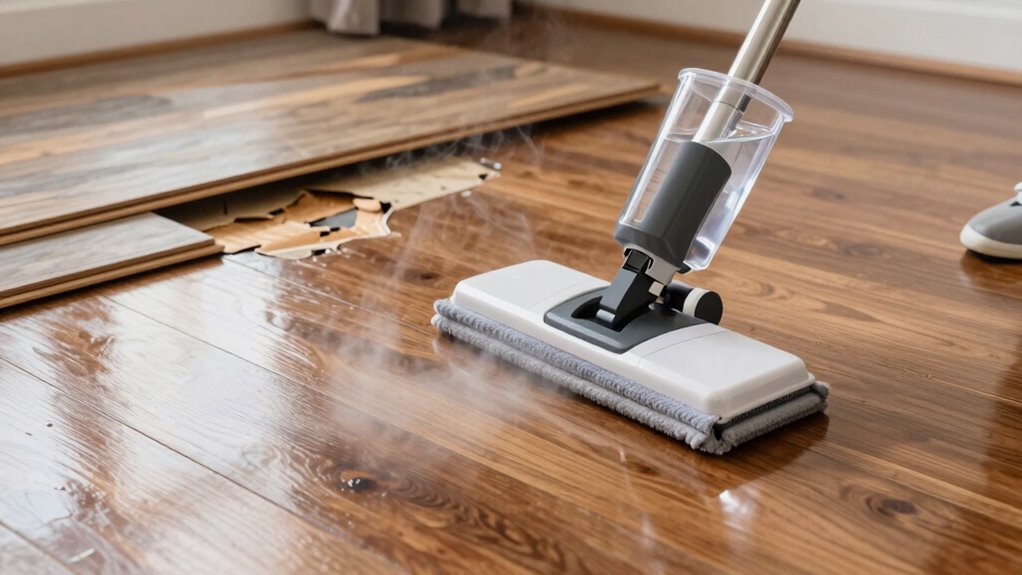
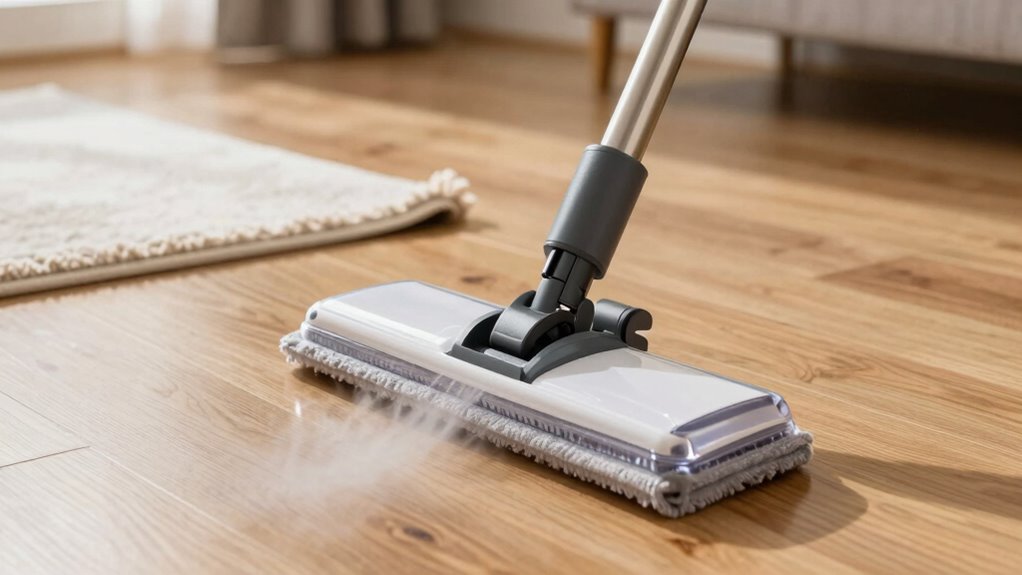
Using a steam mop can make cleaning your floors easier and more effective, but safety should always come first. It’s essential to understand steam mop safety tips to prevent accidents and damage. Steam mops generate high-temperature steam that can effectively sanitize surfaces, but if used improperly, they pose risks. Knowing common steam mop hazards helps you avoid injuries like burns or property damage. Always read the manufacturer’s instructions carefully before using your steam mop. This ensures you understand how to operate it correctly and avoid mishaps. Keep the cord out of walkways to prevent tripping, and never pull the cord to unplug it—grab the plug instead. During use, be cautious around furniture and fixtures; the hot steam and water can cause damage or discoloration if you’re not attentive. Proper heat distribution knowledge helps you avoid uneven cleaning or floor damage. When handling the water tank, always turn off the steam mop and unplug it before refilling. Do not overfill the water reservoir, as excess water can spill and create slippery surfaces, increasing fall risks. Use only the recommended water type—distilled or filtered water often works best—to prevent mineral buildup and maintain peak performance. Be mindful of the surfaces you’re cleaning. Steam mops work well on sealed hard floors like tile, laminate, and sealed hardwood. However, using a steam mop on unsealed wood, unglazed porous tiles, or delicate surfaces can ruin your floors. In these cases, it’s safer to opt for traditional cleaning methods. Another common hazard is not allowing the steam mop to cool down properly after use. Hot surfaces and residual steam can cause burns if touched immediately after turning off the device. Always let it cool before storing or handling. When moving the steam mop, do so gently to avoid spills of hot water or steam. Keep children and pets away from the area during and after cleaning until everything has cooled and dried. Regularly inspect your steam mop for signs of wear, such as frayed cords or cracks, to prevent electrical hazards.
Frequently Asked Questions
What Are the Best Floor Types for Steam Mops?
You should use a steam mop on sealed hardwood floors and tile surfaces. For hardwood cleaning, guarantee the finish is intact to prevent damage, and avoid using excessive water. Tile maintenance with a steam mop is easy and effective, especially for grout lines. However, steer clear of unsealed wood or laminate floors, as the moisture can cause warping or damage. Always check your floor’s manufacturer guidelines before steaming.
Can Steam Mops Sanitize All Floor Surfaces Effectively?
Steam mops can effectively sanitize some surfaces, but their effectiveness depends on the floor type and the temperature used. You’ll find that steam mop effectiveness varies, and they don’t eliminate all germs or bacteria on every floor surface. Keep in mind sanitization limitations; for example, laminate and sealed hardwood floors respond well, but unsealed surfaces or porous materials may not benefit as much from steam cleaning.
Are There Any Floors That Can Be Damaged by Steam Cleaning?
Some floors can be damaged by steam cleaning, especially delicate surfaces like marble and hardwood. While steam helps preserve marble, too much heat can cause etching or discoloration. Hardwood floors require caution, as excessive moisture can cause warping or swelling. You need to be cautious with these surfaces to avoid costly damage; always check manufacturer guidelines or test a small area first before steam cleaning.
How Often Should I Use a Steam Mop Safely?
You should use your steam mop weekly or as needed, ensuring proper steam mop maintenance to prevent buildup and malfunction. Always let it cool before steam mop storage to avoid damage. Regularly refill water and check for wear to keep it effective. By following these guidelines, you’ll minimize risks and keep your floors safe, clean, and well-maintained, without risking damage to delicate surfaces.
What Precautions Should I Take When Using a Steam Mop?
You might think a steam mop is foolproof, but don’t forget your steam mop maintenance and user safety tips. Always read the instructions, avoid overfilling the water tank, and keep the cord away from foot traffic. Use it on suitable surfaces only, and let it cool before storing. Ironically, neglecting these precautions could turn your sparkling floors into costly repairs, so stay vigilant and safe with every swipe.
Conclusion
Think of your floor as a delicate garden, each surface a unique plant needing just the right care. Your steam mop is like a gentle gardener’s hand—powerful yet precise. When used properly, it nurtures and refreshes, but a careless move can trample what you cherish. So, handle your steam mop with care, respecting its strength and your floors’ needs. Together, you’ll keep your home vibrant, safe, and beautifully preserved—like a well-tended garden in full bloom.