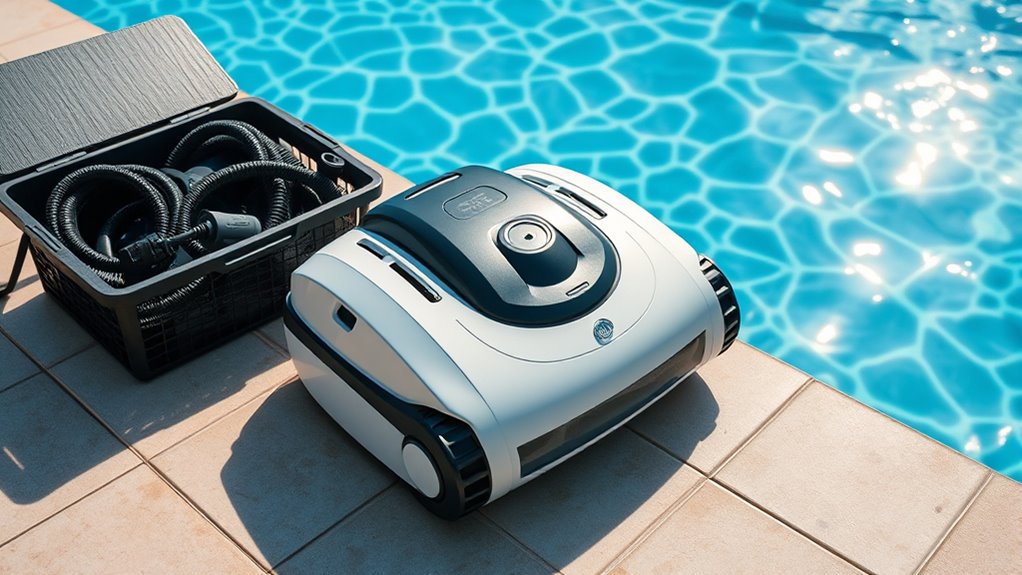

To keep your automatic pool cleaner working well, clean it after each use by inspecting for tangled cords, debris, and wear, then rinse it thoroughly. Regularly clean the filter and maintain the battery and electrical parts to prevent corrosion. Store it in a cool, dry place, preferably on a wall-mounted rack or in a dedicated container, ensuring everything is dry before packing away. For tips on extending its lifespan and proper storage, keep exploring further guidance.
Key Takeaways
- Rinse the cleaner thoroughly after each use to remove dirt, algae, and chemicals, ensuring optimal performance.
- Regularly inspect and clean filters, brushes, and wheels to prevent debris buildup and maintain efficiency.
- Store the cleaner in a cool, dry, shaded area away from direct sunlight and extreme temperatures.
- Keep the charging station and battery components clean, dry, and stored separately if not in use long-term.
- Use proper storage solutions like wall-mounted racks or dedicated containers to protect parts and extend the cleaner’s lifespan.
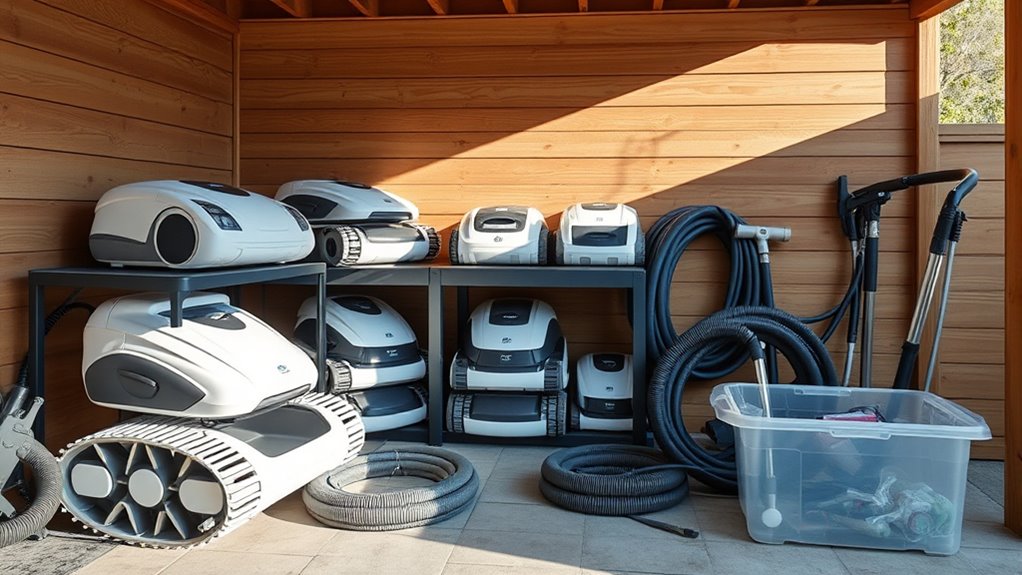
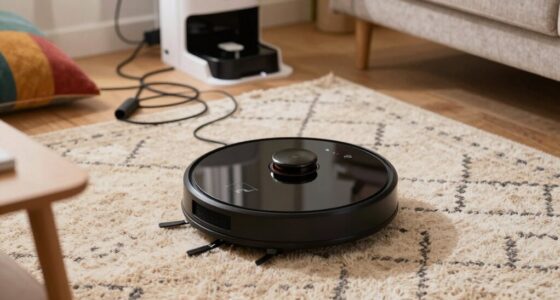
Keeping your automatic pool cleaner in top condition is vital for its longevity and performance. Proper robotic maintenance guarantees that it works efficiently every time you need it, saving you time and money in the long run. One of the key aspects of maintenance is regular cleaning, which prevents debris buildup that can impair the cleaner’s functionality. After each use, inspect the device for any tangled cords, stuck debris, or signs of wear. Rinse the cleaner thoroughly with fresh water to remove dirt, algae, or chemicals that might have accumulated during operation. This simple step helps maintain the integrity of the brushes, wheels, and other moving parts. Additionally, check the filter or skimmer basket for clogs and clean it as needed, since a clean filter guarantees ideal suction and cleaning performance. Regularly inspecting the motor and electrical components also helps prevent unexpected breakdowns and ensures safe operation. Proper cleaning extends to the device’s battery and electrical systems, which are crucial for reliable performance. Regular maintenance of these components can also prevent corrosion and prolong the overall lifespan of the cleaner. Incorporating proper cleaning techniques and using the right cleaning supplies can further optimize its efficiency and ensure all parts function smoothly.
When it comes to storage solutions, how you store your robotic cleaner can considerably impact its lifespan. Avoid leaving it in direct sunlight or in areas prone to extreme temperatures, as these can damage the device’s components over time. Instead, opt for a cool, dry, and shaded location. Many pool owners find that investing in a dedicated storage container or a wall-mounted rack helps keep the cleaner safe from accidental damage and dust. Make sure the cleaner is completely dry before storing it to prevent mold or corrosion, especially if you live in a humid climate. Some robotic maintenance routines include removing and cleaning the battery or charging station regularly, which can prolong the life of the electronics. Proper storage solutions also involve keeping the power cords loosely coiled, so they don’t develop knots or damage. Additionally, storing the charger and power cord in a dry, protected area helps prevent electrical issues and corrosion.
If your automatic pool cleaner has a charging dock or station, ensure it’s kept clean and free of debris as well. Store the charger in a safe, dry place to avoid electrical issues later on. When not in use for an extended period, consider removing the battery (if possible) and storing it separately in a cool, dry environment. This prevents battery degradation and helps maintain its capacity. Remember, a well-maintained robotic cleaner that’s stored properly will perform better and last longer. Regularly inspecting and cleaning it, combined with smart storage solutions, makes all the difference in ensuring your pool stays pristine with minimal hassle. Taking these steps shows you care for your equipment, which translates to cleaner pools and more enjoyable swimming experiences.

InnoGear Aromatherapy Diffuser & 10 Essential Oils Set, 400ml Diffuser Ultrasonic Diffuser Cool Mist Humidifier with 4 Timers 7 Colors Light Waterless Auto Off for Valentine's Gift, Dark Wood Grain
Reminder: To ensure proper mist function, please do not refill under tap (use measuring cup only to prevent...
As an affiliate, we earn on qualifying purchases.
Frequently Asked Questions
How Often Should I Replace the Filters on My Automatic Pool Cleaner?
You’re wondering how often to replace the filters on your automatic pool cleaner. For ideal filter maintenance, check the manufacturer’s replacement schedule, which usually suggests every 6 to 12 months depending on usage and debris levels. Regularly inspect the filters for wear or clogs, and replace them when they show signs of damage or reduced performance. Staying on top of this helps your cleaner work efficiently and prolongs its lifespan.
Can Automatic Pool Cleaners Be Used in Saltwater Pools?
You might imagine your automatic pool cleaner gliding through saltwater, but not all models are designed for saltwater compatibility. Check your cleaner’s specifications for saltwater use, as some parts can corrode without proper corrosion prevention. Using a saltwater-compatible cleaner guarantees it withstands the salty environment, reducing damage and extending its lifespan. Always verify that your device is suitable for saltwater pools to keep it functioning smoothly and efficiently.
What Is the Average Lifespan of an Automatic Pool Cleaner?
You might wonder about the lifespan of your automatic pool cleaner. Typically, it lasts around 5 to 8 years with proper battery maintenance and regular debris removal. To extend its life, guarantee you clean the filters often and store it properly during off-season. Regular maintenance prevents wear and tear, helping your cleaner perform efficiently. So, take good care of it, and you’ll enjoy many years of hassle-free pool cleaning.
Are There Specific Storage Conditions to Prevent Motor Damage?
To prevent motor damage, you should store your pool cleaner in a cool, dry place with good humidity control. Keep it away from extreme temperatures and moisture, which can cause corrosion or motor failure. Make sure the motor is completely dry before storing, and consider using a protective cover for added motor protection. Proper storage ensures your cleaner stays in ideal condition and lasts longer.
How Do I Troubleshoot if My Cleaner Gets Stuck Frequently?
If your cleaner gets stuck frequently, start troubleshooting by checking for debris blockage that might obstruct its movement. Confirm the sensors are properly calibrated, as misaligned sensors can cause it to get stuck. Clear any debris from wheels, brushes, and pathways. Recalibrate sensors if needed, and test the cleaner again. Regular maintenance helps keep your cleaner running smoothly and prevents it from getting stuck often.

Cocorrína Reed Diffuser Set, Clean Linen 6.7 fl oz Scented Diffuser with Sticks Home Fragrance Reed Diffuser for Bathroom Shelf Decor
Fresh scent Clean Linen : Keep it clean with air. Crafted with notes of Crisp Air, Fresh Laundry...
As an affiliate, we earn on qualifying purchases.
Conclusion
Think of your automatic pool cleaner as a trusted friend—regular cleaning and proper storage keep it ready for adventures. I once neglected mine after a busy season, and it sat unused for months. When I finally cleaned and stored it correctly, it worked like new, saving me time and money. Just like tending to a garden, consistent care guarantees your cleaner stays in top shape, ready to keep your pool sparkling whenever you need it.

Bidet Toilet Seat-Electric Heated Bidet Attachment for Toilet with Instant Warm Water & Dryer, Feminine & Front Rear Wash, Self-Clean Nozzle, Upgraded Silent ECO Child Mode
𝙉𝙤 𝙈𝙤𝙧𝙚 𝘾𝙤𝙡𝙙 𝙈𝙤𝙧𝙣𝙞𝙣𝙜𝙨 · 𝘾𝙤𝙢𝙛𝙤𝙧𝙩 𝙎𝙩𝙖𝙧𝙩𝙨 𝙩𝙝𝙚 𝙈𝙤𝙢𝙚𝙣𝙩 𝙔𝙤𝙪 𝙎𝙞𝙩 Tired of icy toilet seats on cold...
As an affiliate, we earn on qualifying purchases.

XCQQ Electric Heated Bidet Toilet Seat with Warm Water Wash, Warm Air Dryer, Soft Closed Lid, Night Light, LED Display, Toilet Seat with Bidet Requires Outlet - Elongated
Electronic Bidet Toilet Seat: This heated toilet seat features a soft-close lid, warm air dryer, adjustable water temperature...
As an affiliate, we earn on qualifying purchases.