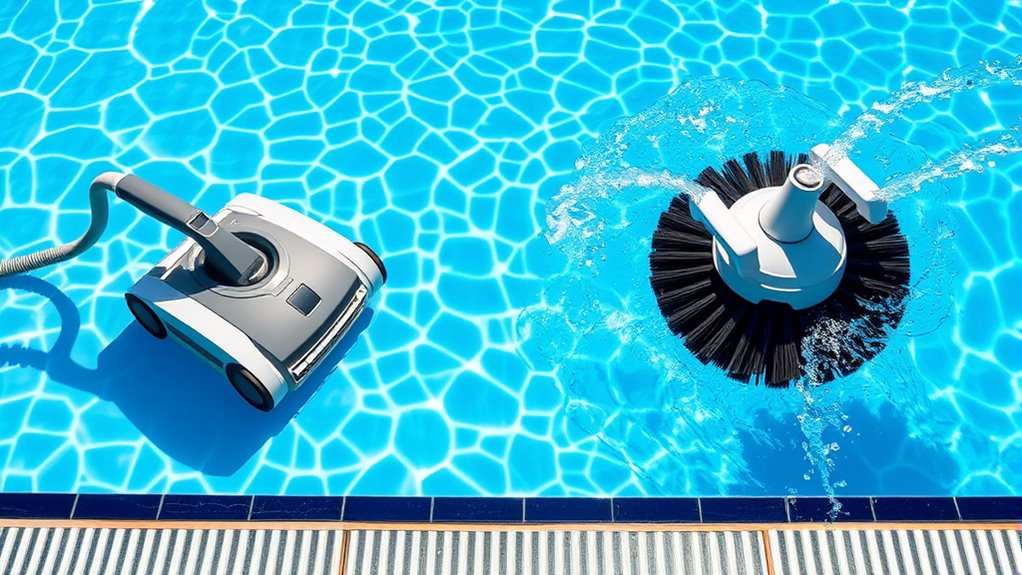
Suction pool cleaners connect to your skimmer or dedicated line and use your pool’s pump to navigate and clean surfaces, making them energy-efficient and ideal for simple pools. Pressure cleaners, on the other hand, require extra water pressure and are better suited for larger debris or rougher surfaces, often covering more area but consuming more energy. To discover the key differences and find out which is best for your pool, keep going.
Key Takeaways
- Suction cleaners use the pool’s existing pump and are energy-efficient, ideal for simple, smooth pools with minimal debris.
- Pressure cleaners require additional water pressure and are better suited for larger debris and rougher, more complex pool surfaces.
- Suction cleaners are easier to install and maintain, with fewer parts, while pressure cleaners often need a dedicated pressure line and more upkeep.
- Pressure cleaners can cover more surface area and navigate obstacles more effectively, making them suitable for intricate pool shapes.
- The choice depends on pool size, debris load, surface type, and energy efficiency priorities.

Are you unsure whether a suction or pressure pool cleaner is the right choice for your pool? Understanding the differences can help you make an informed decision that saves you time, energy, and money. Suction pool cleaners work by connecting directly to your pool’s skimmer or dedicated suction line, using the pool’s existing pump to power their cleaning action. They rely heavily on robotic automation to navigate the pool’s surface and floor, moving methodically to remove dirt and debris. Because they utilize the pool’s standard filtration system, they tend to be energy efficient, consuming less power compared to other types. This makes them a popular choice for pool owners aiming to reduce energy costs while maintaining a clean pool. Additionally, suction cleaners are often simpler to operate and require less maintenance, making them ideal for those seeking a straightforward cleaning solution. These cleaners are particularly effective for pools with smooth surfaces and minimal obstructions, ensuring effective cleaning with less hassle. Moreover, their compatibility with various pool shapes makes them versatile for different setups.
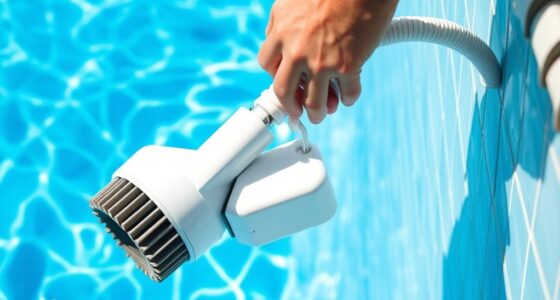
Suction pool cleaners connect to your skimmer, using the pool’s pump for energy-efficient cleaning.
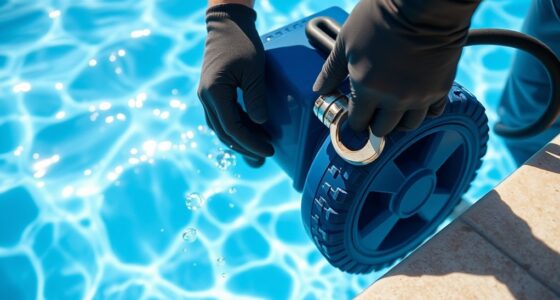
Pressure pool cleaners, on the other hand, operate differently. They connect to a dedicated pressure line or return jet and use the pressurized water to drive a turbine or gears that propel the cleaner around the pool. These cleaners often feature more advanced robotic automation features, allowing them to maneuver around obstacles and cover the pool’s surface more thoroughly. While they tend to be more powerful and better suited for larger debris or rougher surfaces, they typically consume more energy due to the additional water pressure required to operate them. If energy efficiency is a priority for you, this might be a consideration, especially if you have a larger or heavily soiled pool needing frequent cleaning. Energy efficiency is an important aspect to consider when choosing a pool cleaning system.
Both types of cleaners have their advantages, depending on your pool’s size, shape, and your cleaning needs. Suction cleaners are generally simpler to install and maintain, making them ideal for smaller pools or those with straightforward shapes. They often require less setup and fewer parts, which can translate into lower long-term costs. Pressure cleaners, with their enhanced robotic automation, can handle more complex pool shapes and larger debris, providing a more thorough clean in some cases. However, they may require a more robust filtration system and consume more energy, factors to keep in mind if you’re looking to maximize energy efficiency and reduce operating costs. Proper maintenance practices can help optimize their performance and extend their lifespan. When considering pool cleaning systems, understanding these differences can help you select the most suitable option for your needs. Incorporating appropriate maintenance practices, such as regular filter cleaning, can further improve the efficiency of your chosen cleaner and prolong its lifespan.
Ultimately, choosing between a suction and pressure pool cleaner depends on your specific needs and priorities. If you’re seeking a low-cost, energy-efficient solution with reliable performance, a suction cleaner might be the best fit. If you need a more robust cleaning method capable of handling larger debris and complex shapes, a pressure cleaner with advanced robotic automation features could be the better choice, even if it’s a bit more demanding in terms of energy use. Consider your pool’s size, debris load, and your budget to make the right decision that keeps your pool sparkling clean with minimal hassle.
Frequently Asked Questions
Which Type Is More Energy-Efficient for Regular Pool Cleaning?
You’re wondering which pool cleaner uses less energy for regular cleaning. Generally, suction pool cleaners tend to have lower energy consumption since they rely on your pool’s pump, making them more energy-efficient. This reduces environmental impact because they consume less power. Pressure cleaners often require additional power sources, increasing energy use. So, if you’re aiming for efficiency, a suction cleaner might be the better choice for environmentally friendly pool maintenance.
Can Suction and Pressure Cleaners Handle Large Debris Effectively?
Imagine expecting a tiny vacuum to swallow a watermelon—your pool cleaner faces a similar challenge with large debris. Suction cleaners often struggle with debris capacity and may clog, reducing filtration efficiency. Pressure cleaners, though better at handling bigger debris, might splash water around. So, if you want efficient debris removal without constant babysitting, consider which cleaner’s capacity and filtration efficiency match your pool’s mess.
Are There Hybrid Models Combining Suction and Pressure Cleaning Features?
You’ll find hybrid cleaning models that combine suction and pressure features, offering versatile cleaning. These combined systems adapt to different debris types and pool conditions, making them a practical choice. With hybrid cleaners, you get enhanced effectiveness, especially for large debris and stubborn dirt. They simplify maintenance and reduce the need for multiple devices, giving you an all-encompassing cleaning solution in one unit.
How Do Maintenance Requirements Differ Between Suction and Pressure Cleaners?
You’ll find that maintenance needs differ between suction and pressure cleaners. Suction models often require regular filter maintenance to keep debris out of the pump and improve efficiency, while pressure cleaners may need hose inspections to ensure durability and prevent leaks. With suction cleaners, changing filters periodically is key, whereas pressure models benefit from checking hose connections and replacing worn sections. Proper maintenance maintains both types running smoothly and prolongs their lifespan.
Which Cleaner Is Better for Pools With Intricate or Hard-To-Reach Areas?
Imagine a treasure hunt where every corner hides a secret—your pool’s intricate surface needs meticulous cleaning. For hard-to-reach areas, a suction cleaner often shines, offering better cleaning precision and gentle handling of delicate surfaces. Its ability to navigate tight spaces guarantees no spot is missed. While pressure cleaners can be powerful, suction models give you the edge in detail and thoroughness, making your pool sparkle beautifully from every angle.
Conclusion
Choosing between suction and pressure pool cleaners is like selecting the right tool for a job; each has its strengths. Suction cleaners are perfect for small, simple pools, while pressure cleaners handle larger, debris-filled pools more effectively. Consider your pool’s size and your cleaning needs to make the best choice. By understanding these differences, you’ll keep your pool sparkling like a jewel, ensuring an invigorating swim whenever you step in.