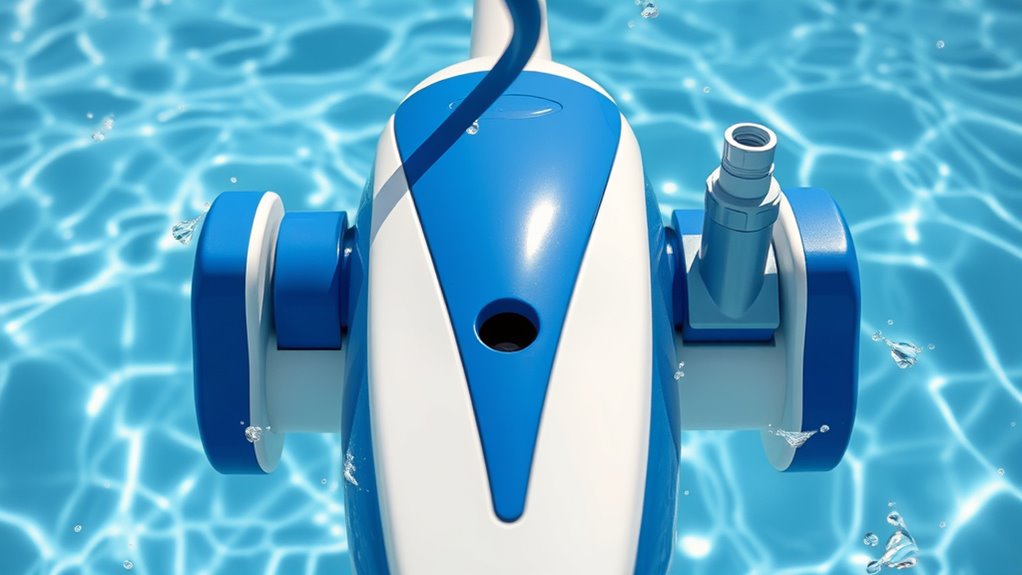

To switch from a suction to a pressure pool cleaner, first verify your filter and pump are compatible with a pressure cleaner. Connect the cleaner to a dedicated pressure line or return outlet, and aim return jets correctly for ideal flow. Secure hoses without kinks, and adjust pump pressure to recommended levels. Proper setup and regular maintenance of equipment will boost your pool’s cleaning efficiency. Keep following for more tips on making this switch smoothly.
Key Takeaways
- Turn off the pool pump and disconnect the suction cleaner before installing the pressure cleaner.
- Connect the pressure cleaner’s hose to a dedicated pressure line or return outlet.
- Ensure return jets are aimed correctly to optimize water flow and cleaning efficiency.
- Maintain proper pump pressure (30-50 PSI) and flow rate according to manufacturer guidelines.
- Regularly check and clean filters, hoses, and connections to ensure optimal performance and longevity.

If you’re considering switching from a suction pool cleaner to a pressure pool cleaner, understanding the differences can help you make an informed decision. Pressure cleaners operate using the water pressure from your pool’s pump, which powers a turbine that moves the cleaner around the pool and agitates debris loose. In contrast, suction cleaners rely on the vacuum created by the skimmer or dedicated suction line to pull debris into the filter. This fundamental difference impacts how each system handles debris, their efficiency, and their maintenance needs.
Pressure cleaners use your pool’s pump pressure to move and loosen debris, unlike suction cleaners that rely on vacuum power.
When transitioning to a pressure cleaner, you’ll need to pay attention to filter maintenance. Since pressure cleaners can stir up more debris and dirt, your filter has to work harder to trap particles. Regularly checking and cleaning your filter guarantees peak performance and prevents clogging. This might mean more frequent filter cleanings or replacing cartridges when necessary. Keep an eye on pressure gauges; a rising pressure reading indicates your filter needs cleaning. Proper filter maintenance guarantees your pressure cleaner runs smoothly, prolongs the lifespan of your equipment, and keeps your pool sparkling. Additionally, using appropriate filter media can enhance debris filtration and reduce strain on your system.
Installation tips are vital to getting the most out of your new pressure cleaner. First, guarantee your pool’s return jets are aimed correctly to provide adequate water flow and pressure to the cleaner. Most pressure cleaners connect to a dedicated pressure line or the pool’s return outlet. If your setup involves a dedicated line, verify that it has the correct fittings and that the hose lengths are appropriate for your pool’s size. Also, check your pump’s pressure; most pressure cleaners require between 30-50 PSI for peak operation. Adjust your pump’s flow rate if needed, following the manufacturer’s guidelines, to avoid underpowering or overpowering the cleaner.
Another installation tip is to secure the hose properly, avoiding kinks or tangles that can restrict water flow. When setting up, always follow the manufacturer’s instructions carefully—improper installation can reduce cleaning efficiency and cause unnecessary wear. Additionally, ensure the cleaner’s roller or track wheels are adequately lubricated and move freely to prevent sticking. Proper installation not only improves cleaning performance but also reduces strain on your pool’s filtration system. Regularly inspecting the connections and hoses will help you catch issues early, ensuring your pressure cleaner operates reliably and efficiently.
Choosing the right pressure cleaner with suitable features for your pool size and type can significantly influence cleaning effectiveness and ease of use. Proper filter maintenance is crucial because it directly affects the performance of your pressure cleaner and the overall cleanliness of your pool. Switching to a pressure pool cleaner can streamline your pool maintenance, but it requires attention to filter maintenance and careful installation. With proper setup and regular upkeep, you’ll enjoy cleaner water and less manual effort while extending the life of your pool’s filtration system.
Frequently Asked Questions
What Are the Main Advantages of Pressure Pool Cleaners Over Suction Ones?
Pressure pool cleaners offer several advantages over suction models. They tend to be more energy-efficient, using less power to operate effectively. Plus, they’re easier to use because they cover larger areas quickly and require less manual effort. You’ll find that pressure cleaners navigate your pool more smoothly, making cleaning faster and more thorough. Overall, they save you time and energy while keeping your pool sparkling clean with less hassle.
Can I Switch Back to a Suction Cleaner if Needed?
Is the switch of a pool cleaner like flipping a coin? Yes, you can usually revert to a suction cleaner if needed. Check your pool cleaner compatibility first, and follow the proper switching procedures to guarantee a seamless transition. Most systems allow for easy swaps, but always double-check manufacturer instructions to avoid any mishaps. Switching back is straightforward, giving you flexibility based on your pool’s needs.
Do Pressure Cleaners Require More Maintenance Than Suction Models?
Pressure cleaners generally require more maintenance than suction models because they have more moving parts and higher pressure components. This can lead to increased maintenance costs and potentially affect the cleaner lifespan if not properly cared for. You’ll need to regularly check for wear and tear, clean filters, and inspect hoses. While they might cost more to maintain, pressure cleaners often provide more thorough cleaning, making the extra upkeep worthwhile.
Is There a Difference in Cleaning Efficiency Between the Two Types?
Think of cleaning efficiency like a painter choosing brushes; some cover more surface quickly, others pick up debris better. Pressure pool cleaners generally excel in debris pickup and surface coverage, making them faster and more thorough. I’ve seen pressure cleaners tackle leaves and dirt in large pools effortlessly, while suction models sometimes miss spots. So, if you want efficient cleaning, a pressure cleaner might be the better choice for all-encompassing coverage.
How Do I Determine if My Pool’S Plumbing Supports a Pressure Cleaner?
To determine if your pool’s plumbing supports a pressure cleaner, start by inspecting your pool’s plumbing system. Check for a dedicated pressure line or a return jet capable of handling increased flow. Consult your pool’s manufacturer or a professional to assess pressure compatibility. If the plumbing can handle higher pressure without leaks or damage, then your pool is suitable for a pressure cleaner. Proper assessment guarantees efficient cleaning and avoids plumbing issues.
Conclusion
Switching from a suction to a pressure pool cleaner is a smart move for better coverage and efficiency. It might seem like a small change, but it can make a big difference in keeping your pool sparkling. Remember, “A stitch in time saves nine”—addressing your pool’s needs now prevents bigger problems later. Make the switch confidently, and enjoy a cleaner, clearer pool with less hassle. Your perfect pool season is just a decision away.