To troubleshoot your automatic pool cleaner, start by inspecting accessories like hoses, brushes, and jets for clogs or damage, ensuring they’re clean and intact. Check the power supply, cords, and movement parts such as wheels or tracks for debris or slippage. Also, examine filters or debris bags for blockages and replace them if needed. Addressing these common issues can restore proper function. Continue exploring to discover more tips for keeping your cleaner in top shape.

Get the little things that make your day delivered free — and shop member deals
- Fast, free delivery on millions of items
- Access to Prime Big Deal Days deals on October 6–7
- Prime Video, Amazon Music and more included
Key Takeaways
- Inspect hoses, brushes, and jets regularly for damage or clogs to ensure optimal water flow and cleaning performance.
- Confirm power connections, cords, and electrical components are secure and free of damage to restore proper operation.
- Check and untangle hoses or cords to prevent movement restrictions or stalls during cleaning.
- Verify that filters, debris bags, and brushes are clean and replaced as needed to maintain suction and coverage.
- Identify your cleaner type (suction, pressure, or robotic) to follow specific troubleshooting steps effectively.
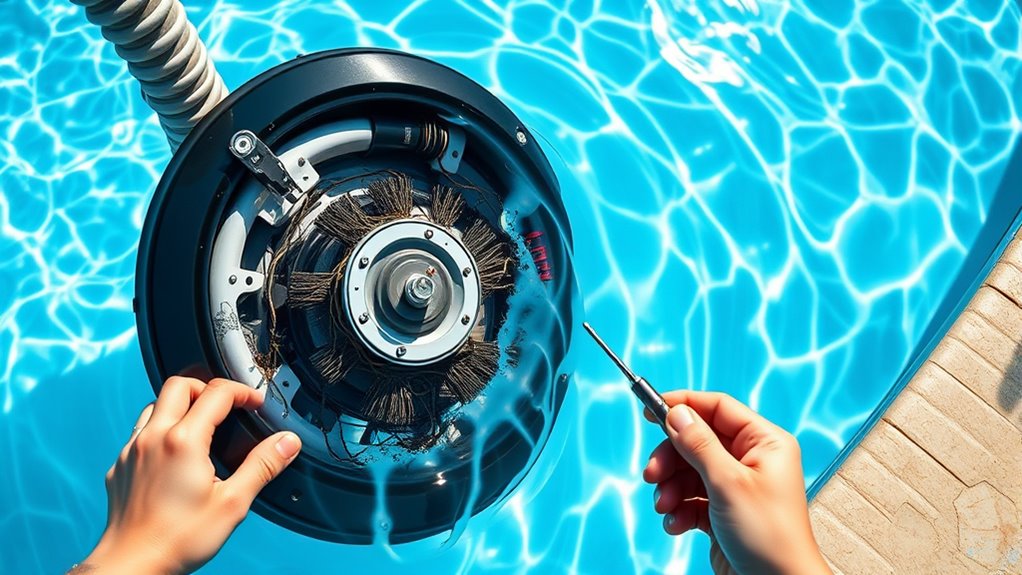
Pool cleaners are essential for maintaining a sparkling, debris-free pool, but they can sometimes encounter problems that hinder their performance. One common issue is when your automatic pool cleaner isn’t moving properly or isn’t cleaning as effectively as it should. The first step is to check the pool cleaner accessories, such as hoses, brushes, and jets. Damaged or clogged accessories can substantially reduce cleaning efficiency. For example, a torn hose or a clogged jet restricts water flow, causing the cleaner to stall or miss areas. Regularly inspect these parts and replace any worn or damaged accessories to restore peak function.
Understanding the types of automatic pool cleaners you own can also help troubleshoot issues. There are suction-side cleaners, pressure-side cleaners, and robotic cleaners, each with distinct mechanics. Suction-side cleaners connect to your pool’s skimmer or dedicated suction line, relying on your pool’s pump to operate. If your suction-side cleaner isn’t moving correctly, check the skimmer basket and pump strainer for obstructions, as debris buildup can reduce suction power. For pressure-side cleaners, ensure the return jet is functioning properly, and check the hose for leaks or blockages. Robotic cleaners, on the other hand, are self-contained units that operate independently. If a robotic cleaner isn’t moving or cleaning effectively, verify the power supply, check for tangled cords, and clean the brushes and filters thoroughly.
Another common problem involves the cleaner’s movement pattern. If it’s not covering the pool evenly or seems stuck, examine the hose or power cord for tangles or knots. A tangled hose can prevent the cleaner from traversing smoothly across the pool surface. Adjust the hose length or weight it appropriately to guarantee proper movement. For robotic cleaners, make sure the wheels and tracks are free of debris and that the wheels aren’t slipping. Additionally, understanding the influence of currency fluctuations on the cost of replacement parts or accessories can help in planning maintenance expenses.
Lastly, always keep an eye on the cleaner’s filter or debris bag. Clogged filters or full debris bags reduce suction and movement. Regular cleaning or replacing these parts guarantees the cleaner functions efficiently. If you’ve checked all these components and the cleaner still isn’t working properly, consult the manufacturer’s troubleshooting guide or seek professional help. Proper maintenance of accessories, understanding your cleaner’s type, and routine inspections are key to solving most common problems and keeping your pool sparkling clean.
Frequently Asked Questions
How Often Should I Replace My Automatic Pool Cleaner?
You should replace your automatic pool cleaner based on its replacement schedule and lifespan considerations. Typically, these cleaners last about 3 to 5 years with proper maintenance. Keep an eye on performance issues like reduced cleaning efficiency or frequent breakdowns, which indicate it’s time for a replacement. Regularly inspect for wear and tear, and don’t hesitate to upgrade when repairs become costly, ensuring your pool stays clean and well-maintained.
Can I Use My Pool Cleaner in Saltwater Pools?
Saltwater pools and automatic cleaners might seem like strange bedfellows, but yes, you can use your cleaner in a saltwater pool. Just verify it’s saltwater compatible to prevent corrosion, which is a common concern. Opt for models designed for saltwater pools or those with corrosion prevention features. Regularly rinse your cleaner after use, and check for any signs of wear to keep it operating smoothly and extend its lifespan.
Is It Safe to Leave the Cleaner in the Pool Overnight?
You might wonder if overnight usage of your pool cleaner is safe, but it depends on your pool’s safety features. Generally, leaving it in the pool overnight isn’t an issue if the cleaner is designed for continuous operation. Just make certain it’s properly maintained and that there are no safety concerns, like electrical risks. Always follow manufacturer instructions to keep pool safety a priority while enjoying the convenience of overnight cleaning.
What’S the Best Way to Store My Pool Cleaner During Winter?
Storing your pool cleaner for winter is like tucking a bird into a cozy nest. Follow these storage tips to keep it in top shape. First, clean and dry the cleaner thoroughly, removing any debris. Then, follow proper winterizing procedures—disconnect hoses, store in a cool, dry place, and avoid freezing temperatures. This way, your cleaner will be ready to dive back into action when spring arrives.
How Do I Troubleshoot Sensor or Navigation Issues?
When facing sensor or navigation issues, start by checking if the sensor needs calibration. Clean the sensors gently to remove dirt or debris. If problems persist, perform a navigation reset, which involves turning off the cleaner, unplugging it, and restarting after a few minutes. This process often recalibrates the sensors and resets the navigation system, helping your pool cleaner operate smoothly again.
Conclusion
If you follow these steps, your pool cleaner will be running perfectly, making your pool as spotless as a mirror in the blink of an eye. No more wandering around with a net for hours or staring at a dirt-filled pool that looks like a swamp. With a little troubleshooting, your cleaner will glide through the water like a speedboat, leaving behind nothing but crystal-clear perfection. Say goodbye to pool messes forever—your sparkling oasis awaits!
NFL season / tailgating Picks
team gear
As an affiliate, we earn on qualifying purchases.