To avoid air leaks when vacuum sealing, guarantee your equipment is well-maintained and handle it properly. Use high-quality bags and remove wrinkles or moisture before sealing. Keep the sealing surfaces clean and position the bag correctly in the channel. Listen for the seal’s beep and double-check for gaps or bubbles afterward. Properly prepared bags and equipment care will help you seal confidently every time—stick with these tips to master leak-free sealing.

Get the little things that make your day delivered free with Prime
- Fast, free delivery on millions of items
- Prime Video, Amazon Music and more included
- Member-only deals all year
Key Takeaways
- Ensure the bag is fully aligned and free of wrinkles or moisture at the seal area before sealing.
- Confirm the sealing surface is clean and the bag is properly positioned in the machine’s seal channel.
- Remove as much air as possible from the bag before sealing to minimize potential leaks.
- Use high-quality vacuum sealing bags designed for airtight sealing and check for any damages.
- Regularly maintain and clean the sealing machine to ensure optimal performance and seal integrity.
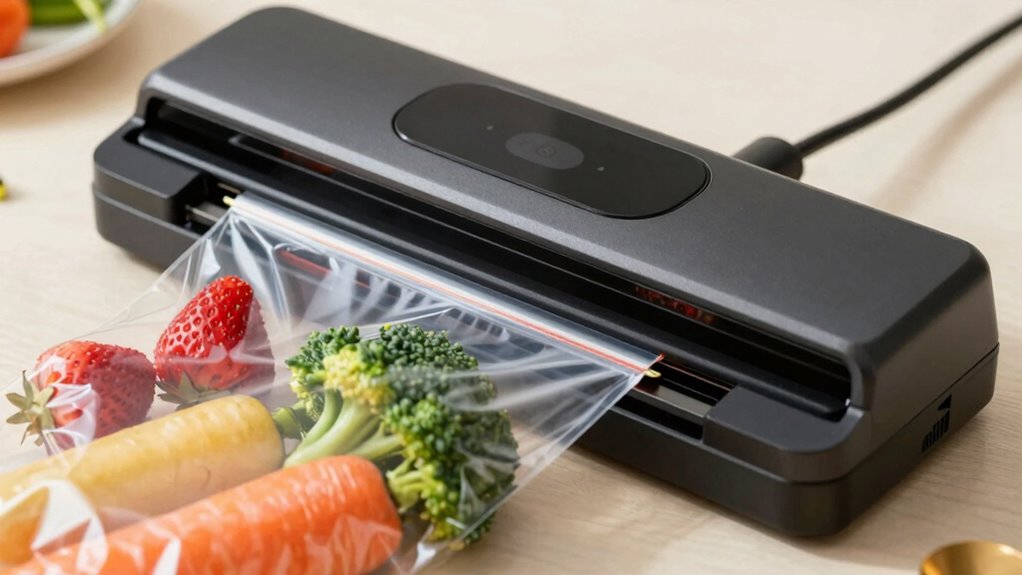
Vacuum sealing food is an effective way to extend its freshness and prevent spoilage. When you’re looking to maximize shelf life, proper storage techniques are essential. This process removes air from specially designed bags or containers, creating a tight seal that inhibits bacteria growth and freezer burn. To do this successfully, you need reliable sealing machines—either manual or automatic—that can handle the job consistently. Choosing the right equipment and knowing how to operate it correctly make a big difference in avoiding the common ‘air leak’ fail that can compromise your food’s preservation.
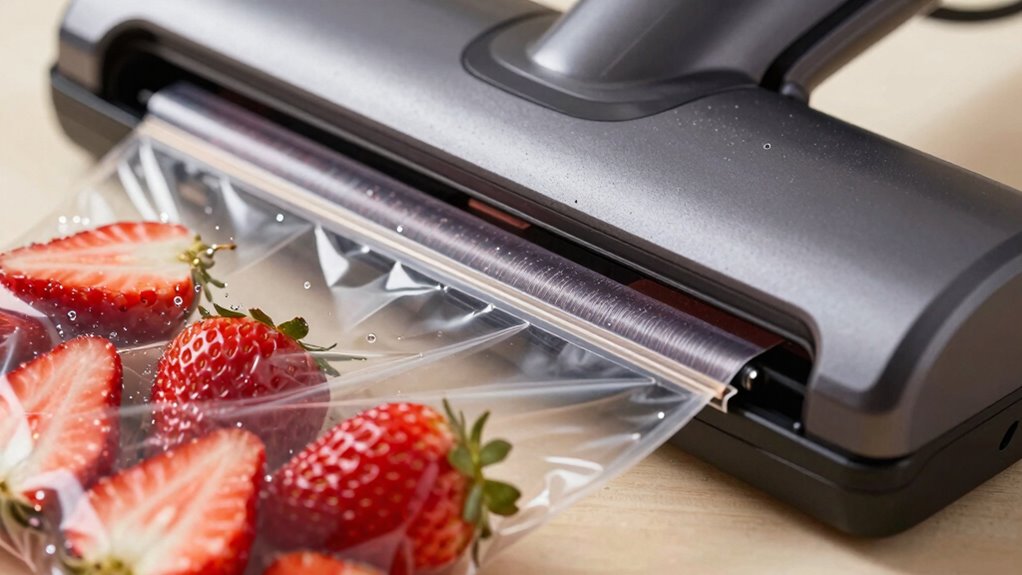
The key to avoiding air leaks starts with understanding your sealing machine. Before sealing, ensure the machine’s gasket and sealing strip are clean and in good condition. Dirt or residue on these parts can cause imperfect seals, leaving tiny gaps for air to seep through. When you’re ready to seal, place your food in a bag designed specifically for vacuum sealing, making sure the bag is free of wrinkles or folds at the seal area. Proper placement of the food and a flat, smooth surface helps create an even seal, reducing the risk of leaks. Many sealing machines have a built-in indicator or guide to help you position the bag correctly.
Another important step in your storage techniques involves the pre-freezing of liquids or moist foods before sealing. Excess moisture can interfere with the sealing process, causing weak spots or incomplete seals. To prevent this, you can freeze liquids in smaller portions or use a paper towel to absorb moisture before sealing. When the bag is properly loaded, position it correctly in the machine’s sealing channel, ensuring the open end is fully inserted and aligned. If you notice any wrinkles or air pockets, smooth them out before sealing, as these can cause weak seals that eventually leak.
Once you activate the sealing machine, listen for the audible beep that indicates a successful seal. If you hear hissing or see bubbles forming after sealing, it’s a sign that the seal isn’t tight enough. In this case, you should reseal the bag, making sure the edge is clean and free from debris. It’s also wise to double-check the bag’s integrity after sealing by gently pressing around the seal to see if air escapes. This extra step helps you catch potential leaks early, ensuring your food stays fresh longer. Additionally, maintaining your sealing machine according to manufacturer guidelines can help prevent issues like air leaks and ensure consistent performance.
As an affiliate, we earn on qualifying purchases.
Frequently Asked Questions
Can Vacuum Sealers Be Used on Liquids Safely?
Yes, you can safely use vacuum sealers on liquids, but you need proper liquid sealing techniques to prevent air leaks. Use a moist towel or paper towel over the opening to control moisture and prevent the vacuum from pulling in liquid. Additionally, consider using specialized bags designed for liquids. This moisture control ensures a tight seal, helping you preserve liquids without risking air leaks or spoilage.
How Often Should I Replace the Sealing Gasket?
You should replace your sealing gasket whenever you notice signs of wear, cracks, or if your vacuum sealer starts losing its seal. Regular gasket maintenance is key to preventing air leaks. Typically, it’s best to check the gasket every few months and perform a seal replacement if it shows damage or isn’t sealing properly. Keeping the gasket clean and in good condition ensures your vacuum sealer works efficiently every time.
Is There a Difference Between Chamber and External Vacuum Sealers?
Imagine you’re sealing your favorite snacks, and suddenly, you wonder if there’s a difference between sealer types. Yes, chamber and external vacuum sealers differ: chamber models use a sealed environment for consistent vacuum, ideal for large quantities, while external sealers are compact, perfect for small jobs. To keep them working well, follow maintenance tips like cleaning gaskets regularly. Choosing the right sealer type depends on your needs and routine.
Can Vacuum Sealing Extend the Shelf Life of Fresh Produce?
Yes, vacuum sealing can extend the shelf life of fresh produce by slowing spoilage and preventing bacteria growth. You’ll preserve your food longer and maintain its freshness through effective food preservation. Just make certain you remove as much air as possible during sealing to prevent spoilage. Properly sealed produce stays fresh for weeks, helping you avoid waste and enjoy your food longer.
What Are Common Mistakes That Cause Air Leaks During Sealing?
Like a tight ship in a storm, improper bag placement often leads to air leaks. You might not press the bag evenly or seal near the edges, letting air slip in. Insufficient sealing pressure also causes leaks, as the vacuum isn’t strong enough to create a perfect seal. To avoid this, make certain the bag is correctly positioned and apply consistent, firm pressure during sealing. This keeps your food fresh and your seal airtight.
Conclusion
Just like Da Vinci’s masterful strokes, your sealing skills can achieve perfection with practice. Avoiding air leaks guarantees your food stays fresh and your efforts don’t go to waste. Think of each seal as the final brushstroke on a masterpiece—precise and flawless. With patience and attention, you’ll master the art of vacuum sealing, turning your kitchen into a fortress of freshness. Remember, even the greatest artists start with a single, careful stroke.
Fall Picks
fall essentials
As an affiliate, we earn on qualifying purchases.